Check IE code/BIN Status
Check IE code/BIN Status
| For Non EDI Locations | ||
|---|---|---|
| To facilitate trade and to avoid separate registration of importers and exporters at various custom houses under the Indian Customs EDI system, Customs & DGFT have established connectivity. To track the status of IE code registration, please click the following IE code registrations from the various offices of DGFT to various automatic customs location : | ||
| 1. | PAN Based IE code is generated by DGFT offices located all over the country and is aggregated at DGFT headquarters. To check whether your IE code has reached DGFT head quarters and the correctness of your IE code details, Click IE Code @ DGFT button. | IE Code@DGFT |
| 2 | From the DGFT HQ, the data comes to customs ICEGATE. For the status and correctness of your IE code at customs ICEGATE location, please enter the IE code in the textbox and Click IE Code @ ICEGATE button |
|


In Case your IE code with correct details are not available at Option # I,. please contact DGFT. The particulars are given at DGFT website http://dgft.delhi.nic.in
FIEO’s Forthcoming Events Domestic AT KANJIKODE-PALAKKAD – Awareness Session on International Trade, Export Promotion Schemes, Foreign Exchange Management etc.. under Niryat Bandhu Scheme – 16th May 2019
FIEO’s Forthcoming Events Domestic
AT KANJIKODE-PALAKKAD – Awareness Session on International Trade, Export Promotion Schemes, Foreign Exchange Management etc.. under Niryat Bandhu Scheme – 16th May 2019
FIEO/KER/ORP/2019-20/03 30.04.2019
INVITATION
Dear· Sir/Madam,
|
AT KANJIKODE-PALAKKAD – Awareness Session on International Trade, Export Promotion Schemes, Foreign Exchange Management etc.. under Niryat Bandhu Scheme
|
|
Day & Date
|
Thursday, the 16th May 2019.
|
|
Time
|
10.00 AM to 1.00 PM ,(Registration- 9.30AM) Followed by Lunch
|
|
Venue
|
Conference Hall, Kanjikode Industries Forum
Kanjikode, Palakkad, Kerala. Pin- 678621
|
|
Registration Charges
|
NIL, But Prior Registration is Mandatory
|
With a view to sensitize the trade about Foreign Trade Policy, Incentive Schemes, Various Export Promotion measures, Foreign Exchange Risk Management, Credit Risk Management etc.. , we are pleased to inform you that FIEO Kerala Chapter jointly with Office of the Joint Director General of Foreign Trade kochi in association with Kanjikode Industries Forum is organizing the session as per the above schedule . The Session will also have open interaction with the Joint Director General of Foreign Trade, on matters related to Foreign Trade policy, Export Incentive Schemes etc…
Exporters, Importers, IEC Holders, Those who wish to Start Export Business , etc. can attend the session.
Senior officials from Bank, ECGC (Export Credit Guarantee Corporation etc…) will participate the session and interact with the participants.
There is no participation Charges to attend the session. But Prior Registration is mandatory.
As seats are limited, the Registration process will be on First Come First Serve basis. Please send your registrations, as per the below confirmation slip, at the earliest to Mr.A.K.Vijaykumar, Deputy Director, FIEO Kerala Chapter, Mob: 8547731069 Email- akv@fieo.org, so as to enable us to confirm your seats.
CONFIRMATION SLIP
AT KANJIKODE-PALAKKAD- Awareness Session on International Trade, Export Promotion Schemes, Foreign Exchange Management etc.. under Niryat Bandhu Scheme on 16th May 2019.
|
Name of the Company
|
|
||
|
Name of the Officials with designation
|
1.
2.
|
||
|
Mobile No and Email ID
|
|
||
|
Membership with FIEO
|
FIEO Member / Non member
|
Yours Sincerely,
Unnikrishnan.K
Deputy Director General, FIEO-SR
|
||||||||||||||||||||||||
|
||||||||||||||||||||||||
Documents required for import customs clearance in India and import duties calculation
http://www.cybex.in/indian-custom-duty/
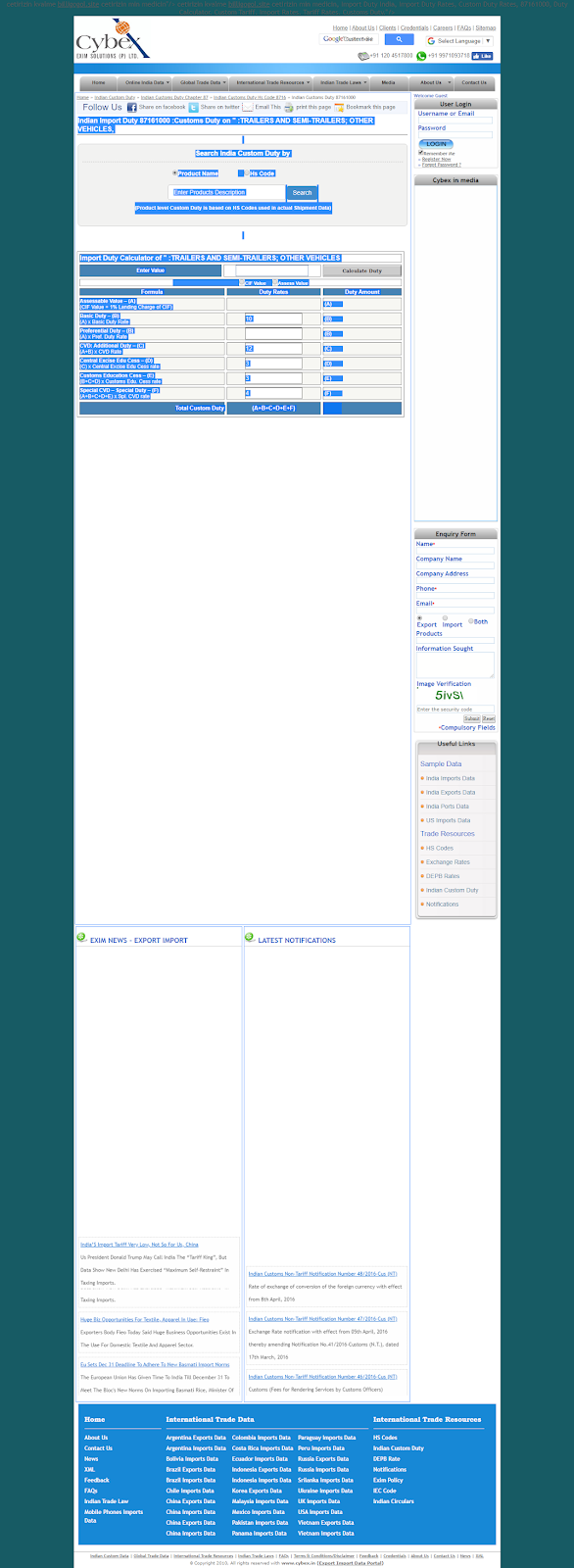
This is one of the important articles in export and import trade –What are the documents required for Import clearance? One of frequently asked questions is ‘documents required for import clearance’
Unlike other articles, I can not provide a ‘capsule’ solution on this article about documents required for import customs clearance. I will explain reason behind it. First of all, let me clarify: the documents required for import clearance under all products are not same. However, we can discuss about the common documents required for import customs clearance in importing countries. I will provide you a some general information on documentation of import customs clearance from which you can have a common idea on the subject. I hope, this information helps you a lot to know about documents required for import clearance generally.
Since various types of commodities are imported from different countries, a complete list of documents for import customs clearance procedures can not be provided. More over, different countries have their own policies in turn different procedures and formalities for import clearance. Each product under import and export is classified under a code number accepted globally which is called ITC number.
There may have bilateral import export agreements between governments of different countries. Imports and exports from such countries may have exemptions on documentation for export and import clearance.
However there are legal documents, common documents and specific documents on commodity basis required to complete import customs procedures.
Let us discuss some of the common documents required for import customs clearance procedures and formalities in some of the importing countries.
Bill of Entry:
Bill of entry is one of the major import document for import customs clearance. As explained previously, Bill of Entry is the legal document to be filed by CHA or Importer duly signed. Bill of Entry is one of the indicators of ‘total outward remittance of country’ regulated by Reserve Bank and Customs department. Bill of entry must be filed within thirty days of arrival of goods at a customs location.
Once after filing bill of entry along with necessary import customs clearance documents, assessment and examination of goods are carried out by concerned customs official. After completion of import customs formalities, a ‘pass out order’ is issued under such bill of entry. Once an importer or his authorized customs house agent obtains ‘pass out order’ from concerned customs official, the imported goods can be moved out of customs. After paying necessary import charges if any to carrier  of goods and custodian of cargo, the goods can be taken out of customs area to importer’s place. For further read: How to file Bill of Entry online? How to file Bill of Entry manually? Can Bill of Entry be filed before arrival of goods at destination?
 of goods and custodian of cargo, the goods can be taken out of customs area to importer’s place. For further read: How to file Bill of Entry online? How to file Bill of Entry manually? Can Bill of Entry be filed before arrival of goods at destination?
Commercial Invoice.
Invoice is the prime document in any business transactions. Invoice is one of the documents required for import customs clearance for value appraisal by concerned customs official. Assessable value is calculated on the basis of terms of delivery of goods mentioned in commercial invoice produced by importer at customs location. I have explained about the method of calculation of assessable value in another article in same web blog. The concerned appraising officer verifies the value mentioned in commercial invoice matches with the actual market value of same goods. This method of inspection by appraising officer of customs prevents fraudulent activities of importer or exporter by over invoicing or under invoicing. So Invoice plays a pivotal role in value assessment in import customs clearance procedures. Read more: How to prepare Commercial Invoice? Contents of Commercial Invoice. Difference between proforma Invoice and Commercial Invoice. Howmany types of Bills of Entry in India?
Bill of Lading / Airway bill :
BL/AWB is one of the documents required for import customs clearance.
Bill of lading under sea shipment or Airway bill under air shipment is carrier’s document required to be submitted with customs for import customs clearance purpose. Bill of lading or Airway bill issued by carrier provides the details of cargo with terms of delivery. I have discussed in detail about Bill of Lading and Airway bill separately in this website. You can go through those articles to have a deep knowledge about documents required for import customs clearance. Read more about: Different types of Bill of Lading When to release Bill of Lading? Importance of Bill of Lading
Import License
As I have mentioned above, import license may be required as one of the documents for import customs clearance procedures and formalities under specific products. This license may be mandatory for importing specific goods as per guide lines provided by government. Import of such specific products may have been being regulated by government time to time. So government insist an import license as one of the documents required for import customs clearance to bring those materials from foreign countries.
Insurance certificate
Insurance certificate is one of the documents required for import customs clearance procedures. Insurance certificate is a supporting document against importer’s declaration on terms of delivery. Insurance certificate under import shipment helps customs authorities to verify, whether selling price includes insurance or not. This is required to find assessable value which determines import duty amount.
Purchase order/Letter of Credit
Purchase order is one of the documents required for import customs clearance. A purchase order reflects almost all terms and conditions of sale contract which enables the customs official to confirm on value assessment. If an import consignment is under letter of credit basis, the importer can submit a copy of Letter of Credit along with the documents for import clearance. Also read How does Letter of Credit work?
Technical write up, literature etc. for specific goods if any
Technical write up, literature of imported goods or any other similar documents may be required as one of the documents for import clearance under some specific goods. For example, if a machinery is imported, a technical write up or literature explaining it’s function can be attached along with importing documents. This document helps customs official to derive exact market value of such imported machinery in turn helps for value assessment.
Industrial License if any
An industrial license copy may be required under specific goods importing. If Importer claims any import benefit as per guidelines of government, such Industrial License can be produced to avail the benefit. In such case, Industrial license copy can be submitted with customs authorities as one of the import clearance documents.
RCMC. Registration cum Membership Certificate if any
For the purpose of availing import duty exemption from government agencies under specific goods, production of RCMC with customs authorities is one of the requirements for import clearance. In such cases importer needs to submit Registration Cum Membership Certificate along with import customs clearance documents.
Test report if any
The customs officials may not be able to identify the quality of goods imported. In order to assess the value of such goods, customs official may draw sample of such imported goods and arranges to send for testing to government authorized laboratories. The concerned customs officer can complete appraisement of such goods only after obtaining such test report. So test report is one of the documents under import customs clearance and formalities under some of specific goods.
DEEC/DEPB /ECGC or any other documents for duty benefits
If importer avails any duty exemptions against imported goods under different schemes like DEEC/DEPB/ECGC etc., such license is produced along with other import clearance documents.

Central excise document if any
If importer avails any central excise benefit under imported goods, the documents pertaining to the same need to be produced along with other import customs clearance documents.
GATT/DGFT declaration.
As per the guidelines of Government of India, every importer needs to file GATT declaration and DGFT declaration along with other import customs clearance documents with customs. GATT declaration has to be filed by Importer as per the terms of General Agreement on Tariff and Trade.
Any other specific documents other than the above mentioned
Apart from the above mentioned documents, importer has to file additional documents if any required as per the guidelines of government / customs department under import of specific goods.
I hope, I could explain you a general idea on documents required for import customs clearance procedures and formalities.
http://www.cybex.in/indian-custom-duty/
What are the Benefits of Importing and Exporting Products?
With the expansion of the Internet, many businesses have now started to compete on a global scale. Whenever a business starts growing and expanding, entrepreneurs begin striving to become more competitive – either by importing or exporting goods. As these are the basics that make a business successful, here are some of the key benefits of importing and exporting that are worth considering.
Why is importing and exporting goods important?
As soon as a business starts operating internationally, there are many additional factors which can have a huge impact on its success. Exporting and importing goods is not just the core of any large, successful business; it also helps national economies grow and expand.
Each country is endowed with some specific resources. At the same time, a country may lack other resources in order to develop and improve its overall economy. For example, while some countries are rich in minerals and precious metals or fossil fuels, others are experiencing a shortage of these resources. Some countries have highly developed educational systems or infrastructures, while others do not.
Once countries start exporting whatever they are rich in, as well as importing goods they lack, their economies begin developing. Importing and exporting goods is not only important for businesses; it is important for individual consumers, too. Consumers can benefit from certain products or components that are not produced locally, but are available to purchase online from a business abroad.
Benefits of importing
When people talk about importing in terms of trade, they refer to purchasing products or services from another country. These products or services are then offered to customers by the importing business or individual, broadening their choice of purchase. However, this is not the only benefit of importing; there are many more to consider. Here are some of them.
1. INTRODUCING NEW PRODUCTS TO THE MARKET
Many businesses in India and China tend to produce goods for the European and American market. This is mostly due to the size of these markets and the purchasing power of the population there. But once a new product is introduced to these two markets, it may take a year or more before the product is introduced to other, smaller markets.
If a product produced in China seems attractive/useful to entrepreneurs in Australia, they can import it and introduce it to their potential consumers. Thanks to the internet expansion, entrepreneurs can conduct market research prior to importing a certain product. This will help them determine if there is an actual need on the market for such an imported product, so they can develop an effective marketing strategy in advance.
2. REDUCING COSTS
Another major benefit of importing is the reduce in manufacturing costs. Many businesses today find importing products, parts of products and resources more affordable than producing them locally.
There are numerous cases when entrepreneurs find products of good quality which are inexpensive even when the overall import expenses are included. So instead of investing in modern, expensive machinery, entrepreneurs choose to import goods and reduce their costs. In most cases, they end up ordering large quantities in order to get a better price and minimize the costs.

3. BECOMING A LEADER IN THE INDUSTRY
One of the key benefits of importing products is the opportunity to become a market leaderin the industry of interest. Since manufacturing new and improved products is a never-ending process, many businesses worldwide use the chance to import new and unique products before their competitors do. Being the first to import a fresh product can easily lead you to becoming a leader in a certain industry.
4. PROVIDING HIGH QUALITY PRODUCTS
Another benefit of importing is related to the ability to market products of high quality. Lots of successful entrepreneurs travel abroad, visit factories and other highly professional sellers in order to find high quality products and import them into their own country. Moreover, manufacturers may provide informative courses and training, as well as introduce standards and practices to ensure the company abroad is well prepared to sell their products.
If you choose to base your business on importing products, chances are you are going to get high quality products. This is due to the fact that manufacturing businesses are very aware that their reputation largely depends on the quality of the items they produce. This is a reason more to consider importing the essence of your new business.
Benefits of exporting
Just as there is a variety of benefits of importing products and services, there are numerous reasons for exporting, too. Here are the two key benefits of exporting products to other countries:
1. INCREASING YOUR SALES POTENTIAL
While importing products can help businesses reduce costs, exporting products can ensure increasing sales and sales potential in general. Businesses that focus on exporting expand their vision and markets regionally, internationally or even globally. Instead of earning money by selling their offerings on the local market, these businesses are focused on discovering new opportunities to present their work abroad.
Exporting products is especially good for medium and large businesses – the ones that have already expanded within the local market. Once they have saturated the market in their country, exporting products abroad can be a great opportunity for these businesses to increase the sales potential. Additionally, exporting can be one way of scanning opportunities for overseas franchising or even production.

2. INCREASING PROFITS
Exporting products can largely contribute to increasing your profits. This is mainly due to the foreign orders, as they are usually larger than those placed by the local buyers. While local customers buy a few products or a pallet, businesses abroad oftentimes order a container of products which inevitably leads to increased profits. Moreover, if your products are considered unique or innovative abroad, your profits can increase rapidly in no time.
Achieve your business goals by importing and exporting products
Importing and exporting products can be highly beneficial for businesses today. While importing can help small and medium businesses develop and expand by reaching larger markets abroad, exporting can increase the profits of medium and large businesses.
If you’re striving to make your business the leader in its industry, or you are thinking of lowering production costs, importing is certainly worth considering. Otherwise, if your local market is too small for your business and you’re searching for new opportunities to expand – exporting may be your key to success.
Steps for successful exporting
- Apply for IEC Number through DGFT
- Register with the concerned EPC and get the registration cum membership certificate
- Sampling and procuring orders from international buyers
- Manufactures good or collect them from other manufacturers as per order
- Manages quality control through inspection and quality certifications
- Dispatches goods to port/airport
- Applies for an insurance cover during transit of goods – marine/air insurance
- Contacts C&F agent for warehousing and customs clearance
- Loads the goods on the ship and get the Mate’s receipt
- Gets Bill of Lading or Airway Bill from the official agent of the shipping company
- Gets the certificate of origin from the chambers of commerce
- Sends a set of documents to the importer with all the details like date of shipment, name of vessel etc – also sends documents like Bill of lading, invoice and packing list.
- Presents all the important document to the bank which scrutinizes all the documents
- Exporter’s bank sends all the documents to the importer’s bank and payment is released
what is iec number
The IEC number is the most important registration required by an exporter/importer. No export or import for commercial purposes shall be made by any person without an IEC number. IEC Code is unique 10 digit code issued by DGFT – Director General of Foreign Trade, Ministry of Commerce, and Government of India to Indian Companies. An IEC number can be obtained through an application to DGFT in India. There is no expiry date of IEC number. The registered/ head office of the applicant can apply for the IEC number to the licensing authority – the regional office of the DGFT- in the prescribed format. The application should be accompanied by relevant documents, which are as follows
- Application form (in duplicate)
- Company profile (in duplicate)
- True copy of the income tax PAN A/c Number
- True copy of VAT certificate, if any
- Prescribed Fees
- Bank certificate as per format
- Full address of branches in India and abroad, if any
- Three passport size photographs duly signed on the reverse
- SSI registration copy, duly certified, if any
- Declaration in duplicate
Important Features of IEC number
- The IEC number is the first and foremost requirement for exporters and importers
- It is a permanent number and has no expiry date
- It is valid for imports as well as exports
- It is valid for all products
- It is a 10 digit number
Registration with Export Promotion Councils (EPC)
Government has set up EPCs to provide information and to facilitate exports. The basic objective of EPCs is to promote and develop the exports of the country. Each council is responsible for the promotion of a particular group of products, projects and services. The EPCs keep abreast of the trends and various opportunities that exist in the international markets. They also offer professional advice to members in areas such as technology upgradation, quality and design improvement, standards and specifications etc. They also organize overseas delegations of its members in order to explore global market opportunities and promote interaction between exporting community and government.
EPCs are non profit, autonomous and professional bodies. They are non-profit organizations registered under the companies Act or the Societies Registration Act.
The Ministry of Commerce and Industry regularly interacts with the EPCs and review their performance.
An exporter may on application, register and become a member of an EPC. On being given membership, the applicant shall be granted forthwith Registration cum Membership Certificate (RCMC) of the EPC concerned, subject to certain terms and conditions.
Registration with Export Credit Guarantee Corporation
Exporters should register with the Export Credit Guarantee Corporation (ECGC) to secure payment against political and commercial risks.
Central Excise
Goods are subject to exemption from excise duty on the final product meant for export. Where exemption is not availed, the excise duty paid is refunded after actual export. Secondly, the refund of excise duty is made on inputs used in the manufacture of goods meant for export. Form ARE-1 has to be used in India for this excise clearance.
Registration with Chambers of Commerce, Productivity Council etc
It may be helpful to become a member of various chambers of commerce or a productivity council, or trade promotion organization recognized by Ministry of Commerce. This helps in getting a certificate of origin and many other social and networking events.
Registration for Business Identification Number
It is important to obtain a PAN, based on Business Identification Number (BIN) from the DGFT registration office prior to filing for customs clearance of export goods.
- Export licence is required for negative list, products that are
- Prohibited (i.e. cannot be exported)
- Restricted (through license) or
- Canalized (a license can be obtained for a short period through canalizing agency of the government)
Any exporter has to procure a license, if his item is not listed under the freely exportable items by the government.
Export License
An export license is a document issued by the appropriate licensing agency after which an exporter is allowed to transport his product in a foreign market. The license is only issued after a careful review of the facts surrounding the given export transaction. Export license depends on the nature of goods to be transported as well as the destination port. So, being an exporter it is necessary to determine whether the product or good to be exported requires an export license or not.
Canalisation is an important feature of Export License under which certain goods can be imported only by designated agencies. For an example, an item like gold, in bulk, can be imported only by specified banks like SBI and some foreign banks or designated agencies.
To determine whether a license is needed to export a particular commercial product or service, an exporter must first classify the item by identifying what is called ITC (HS) Classifications. Export license are only issued for the goods mentioned in the Schedule 2 of ITC (HS) Classifications of Export and Import items. A proper application can be submitted to the Director General of Foreign Trade (DGFT). The Export Licensing Committee under the Chairmanship of Export Commissioner considers such applications on merits for issue of export licenses.
The Director General of Foreign Trade (DGFT) from time to time specifies through a public notice according to which any goods, not included in the ITC (HS) Classifications of Export and Import items may be exported without a license. Such terms and conditions may include Minimum Export Price (MEP), registration with specified authorities, quantitative ceilings and compliance with other laws, rules, regulations
Starting Exports – Important steps
The right name
Words like ‘international’ or ‘overseas’ used in the name of the firm (Example- Vijay International) convey the message that the firm is engaged in the business of import/export.
Registration
The firm has to be registered under the country’s prevalent law, such as the Company Act of India. The company would be registered in one of its various forms like proprietorship, partnership, private limited, public limited etc
Permanent Account Number (PAN)
The Permanent Account Number (PAN) needs to be quoted to open a bank account, to apply for the import export code (IEC) number and to claim tax exemptions and deductions under the Income Tax Act.
Opening a Bank Account
The company needs to open an account with a bank dealing in foreign exchange. It makes sense to open an account with a branch which directly undertakes export-import documents and converts foreign exchange.
Registering with the Value Added Tax (VAT) Office
The exporter need not pay VAT while making purchase for exports. To avail this benefit, the firm has to be registered with the VAT. The exporter needs to give the seller Form-H, along with a copy of the import letter of credit or export order.https://www.vskills.in/lms/topic/basic-requirements/
Role of Government Agencies
The Government of India has set up several institutions whose main functions are to help an exporter in his work. It would be advisable for an exporter to acquaint him with these institutions and the nature of help that they can render to him so that he can initially contact them and have a clear picture of what help he can expect of the organized sources in his export effort.
Institutions engaged in export effort fall in six distinct tiers. At the top is the Department of Commerce of the Ministry of Commerce. This is the main organization to formulate and guide India’s trade policy. At the second tier, there are deliberative and consultative organisations to ensure that export problems are comprehensively dealt with after mutual discussions between the Government and the Industry. At the third tier are the commodity specific organisations which deal with problems relating to individual commodities and/or groups of commodities. The fourth tier consists of service institutions which facilitate and assist the exporters to expand their operations and reach out more effectively to the world markets. The fifth tier consists of Government trading organizations specifically set up to handle export/import of specified commodities and to supplement the efforts of the private enterprise in the field of export promotion and import management. Agencies for export promotion at the State level constitute the sixth tier.
The Department of Commerce is the primary government agency responsible for evolving and directing foreign trade policy and programmes, including commercial relations with other countries, State trading, various trade promotional measures and development and regulation of certain export oriented industries. Apart from the Finance and Administrative Divisions, the principal functional divisions of the Department of Commerce are Economic Division, Trade Policy Division, Foreign Trade Territorial Division, Export Products Division, Export Services Division and Export Industries Division.
The main task of the Trade Policy Division is to keep abreast of the developments in the international organisations like UCTAD, WTO, the Economic Commissions for Europe, Africa, Latin America and Asia and Far Past (ESCAP). It is also responsible for India’s relations with the European Economic Community, European Free Trade Association, Latin American Free Trade Area, other regional groupings and the Commonwealth.
It also looks after the generalized system of preferences and non-tariff barriers.
The Foreign Trade Territorial Division is entrusted with the work relating to the development of trade with different countries and regions of the world. This Division also handles matters pertaining to State trading and barter deals, organization of trade fairs and exhibitions, commercial publicity abroad, etc. It also maintains contacts with Indian Trade Missions abroad and attends to the connected administrative work including the protocol functions.
The Export Products Division pays attention to the problems connected with production, generation of surplus and development of markets for the various products under its jurisdiction. These products include, inter alia, plantations, marine products, chemicals, plastics, leather and leather goods, sports goods, films, steel, metals, engineering products, minerals and ores, coal, petroleum products, mica, salt, etc. Although in administrative terms the responsibility for these products remains with the Ministries concerned, this Division keeps itself in close touch with them to ensure that production is sufficient to realize the full export potential besides meeting the home consumption. This Division is also responsible for the working of export organisations and corporations dealing with above commodities and products.
The Export Industries Division is responsible for development and regulation of rubber, tobacco and cardamom. The Division is also responsible for handling export promotion activities relating to textiles, woolens, hand-looms, readymade garments, silk and cellulosic fibres, jute and jute products, handicrafts, coir and coir products.
The Export Services Division deals with the problems of export assistance including import replenishment licensing, cash assistance, export credit, ex-port houses, Marketing Development Assistance and grants there from, transport , free trade zones, dry ports, quality control and pre-shipment inspection, joint ventures abroad and capacity creation in export-oriented industries ‘“including assistance to import capital goods and essential raw materials.
The Economic Division, headed by the Economic Adviser, is responsible the formulation of export strategies, export planning, periodic appraisal and view of policies as also for maintaining coordination and constant contacts the other Divisions as well as with various organisations which have been under the Commerce Department to assist the export drive. This Division also monitors work relating to technical assistance, management services for export and overseas investments by Indian entrepreneurs.
Lesson Topics
- Director General of Foreign Trade
- Export Promotion Councils
- Board of Trade
- Commodity Boards
- Institutes for export promotion
- India Trade Promotion Organization (ITPO)
- National Centre for Trade Information (NCTI)
- Export Inspection Council (EIC)
- Export Credit Guarantee Corporation
- Directorate General of Commercial Intelligence and Statistics (DGCI&S)
- Indian Trade Promotion Council (ITPC)
- Federation of Indian Exporters’ Organization (FIEO)
- Export Import Bank (EXIM)
- Export Inspection Council
- Customs and Central Excise Department
- Marine Products Export Development Authority
- Agricultural and Processed Food Products Export Development Authority
- Indian Council of Arbitration
- Federation of Indian Export Organisations
- Department of Commercial Intelligence and Statistics
- Directorate General of Shipping
- Freight Investigation Bureau
- State Trading Corporation of India Limited (STC)
- Major State trading organizations in India
 Directorate General Of Foreign Trade | Ministry Of Commerce And Industry | Government Of India,Trade