Special Economic Zones

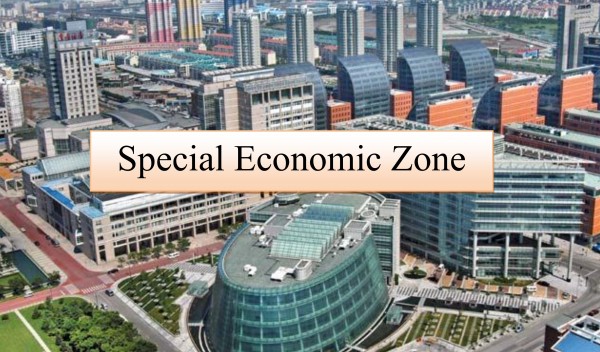
A policy was introduced in the EXIM Policy effective from 1.4.2000 for setting up of Special Economic Zones in the country with a view to provide an internationally competitive and hassle free environment for exports. Units may be set up in SEZ for manufacture of goods and rendering of services. All the import/export operations of the SEZ units will be on self certification basis. The units in the Zone have to be a net foreign exchange earner but they shall not be subjected to any pre-determined value addition or minimum export performance requirements. Sales in the Domestic Tariff Area by SEZ units shall be subject to payment of full Custom Duty and import policy in force. Further Offshore banking units may be set up in the SEZs.

The policy provides for setting up of SEZ’s in the public, private, joint sector or by State Governments. It was also envisaged that some of the existing Export Processing Zones would be converted into Special Economic Zones. Accordingly, the Government has converted Export Processing zones located at Kandla and Surat (Gujarat), Cochin (Kerala), Santa Cruz (Mumbai-Maharashtra), Falta (West Bengal), Madras (Tamil Nadu), Visakhapatnam (Andhra Pradesh) and Noida (Uttar Pradesh) into a Special Economic Zones.  In addition, approval has been given for setting up of 21 Special Economic Zones in various parts of the country in the private/JT sectors or by the state.https://youtu.be/T_xycm_cC_E
Eligibility for Export/Trading/Star Trading/Super Star Trading Houses

Export/Trading/Star Trading/Super Star Trading Houses have been accorded special status. When exporters achieve the specified level of exports over a period, they may be recognized as EH/TH/STH/SSTH. Exports made both in free foreign exchange and in Indian rupees shall be taken into account for recognition. The objective of this scheme is to recognize them as the respective houses” with a view to building marketing infrastructure and expertise required for export promotion. The exporters, registered with FlEO or EPC are, eligible for this purpose. The export performance criteria may be based on either f.o.b. value of exports or net foreign exchange earnings.

F.O.B. Criteria
The manufacturing or merchandising units, who have achieved the following targets can be accorded the status of above mentioned Export Houses. Deemed exports are not counted for this purpose.

Category of Houses

Average FOB value of exports during the preceding 3 licensing years, in rupees

FOB value of eligible export during preceding licensing year in rupees
Export House Rs. 15 crores Rs. 22 crores
Trading House Rs. 75 crores Rs. 112 crores
Star Trading House Rs. 375 crores Rs. 560 crores
Super star Trading House Rs. 1125 crores Rs. 1680 crores

Net Foreign Exchange Earnings
Exporters have an option for obtaining the status of Export and other Houses based on the following Net Foreign Exchange Earnings.

Category of Houses

Average net foreign exchange value during the preceding 3 licensing years, in rupees

Net foreign exchange value of exports made during preceding licensing year in rupees
Export House Rs. 12 crores Rs 18 crores
Trading House Rs. 62 crores Rs. 90 crores
Star Trading House Rs. 312 crores Rs. 450 crores
Super star Trading House Rs. 937 crores Rs. 1350 crores
Exporters have also an option to get recognition for one year.  In this case relaxation in above earnings has been permitted. EH/TH/STH/SSTH are entitled to the following special benefits
  • Import Facilities
  • Marketing Development Assistance
  • Foreign Currency, Accounts
  • Foreign Exchange Facilities
  • Golden Status Certificate
  • Other facilities as specified in the policy

Export Houses Status for Export of Services
Service providers sha1l be eligible for recognition as service Export House, International Service Export House, International Star Service Export House International Super Star Service Export House on achieving the  performance level as below

Category

Average free foreign exchange earning during the preceding three licensing years in rupees

Free Foreign exchange earning during the preceding licensing year in rupees

Average NFE earned made during the preceding licensing year in rupees

NFE earned during the preceding licensing year in rupees

Service Export House
4 crores 6 crores 3 crores 5 crores

International Service Export House
20 crores 30 crores 15 crores 25 crores

International Star Service Export House
100 crores 150 crores 75 crores 125 crores

International Super Star Service Export House
300 crores 450 crores 225 crores 375 crores

Export Processing Zone /Export Oriented Units

Export Processing Zones are industrial estates which form enclaves from the national customs territory of a country and are usually situated near seaports or airports. The main objectives of an EPZ are
  • To earn foreign exchange
  • To generate employment opportunities
  • To facilitates transfer of technology by foreign investment and other means
  • To contribute to the overall development of the economy
The entire production of such a zone is normally intended for exports. Such provided with world class infrastructural facilities.   Industrial plots are generally available at concessional rate. Units in these zones are allowed foreign equity even up to 100 percent. Domestically produced items are also eligible for duty exemption.

Course contents of export import

Introduction

  • Welcome and Introduction
  • What is Business?
  • What is Export and Import?
  • Benefit of Export
  • Exporter and Importer and their types
  • Introduction Foreign Trade Policy
  • IEC RCMC GST
  • Selection of product
  • Selection of market
  • How to select product for Export
  • Market research
  • Market selection
  • Exporter profile & Certificates
  • Role of Trade Promotion Organization
  • Registration cum Membership Certificate

Government bodies

  • DGFT – Director General of Foreign Trade
  • Ministry of Commerce
  • CBEC – Central Board of Excise and Customs
  • GST Goods and Services Tax
  • MSME – Micro, Small & Medium Enterprises
  • Chamber of Commerce GCCI
  • Export Promotion Councils (EPC)
  • Commodity Boards
  • Development Authorities
  • Trade Associations
  • Export Inspection Agencies
  • Indian Embassy – Role & Departments
  • Status Holder Certificate
  • FIEO – Federation of Indian Export Organisations

International Bodies

  • International Chamber of Commerce
  • World Trade Organization (WTO)
  • International trade council (ITC)

International Marketing

  • What is Marketing
  • What is International marketing
  • Why you?
  • How to Identify Potential Buyers
  • Where to find Buyer
  • Export Import Statistics
  • Market Entry Strategy & Marketing Mix
  • How to find Buyers
  • Ways of Finding Buyer
  • Sources of finding buyers
  • Offline Marketing
  • Importance of Trade Fairs & Exhibition
  • How to do Personal visit
  • How to appoint Agent
  • Sources to Build Genuine Data Base of Buyers
  • Foreign Buyers Contacts list
  • Foreign Importer Directories
  • How to get Buyer’s Data,
  • Digital Marketing
  • What is Online Marketing?
  • How to use Google
  • What is SEO
  • Social Media Websites
  • Facebook LinkedIn YouTube
  • How to create Effective Videos
  • Google AdWords (Only pay for results)
  • IMP websites
  • B2B Sites Registration and Free Listing
  • Promotion- sales, advertising, PR.
  • Email Marketing & Tools
  • Classified Website
  • B2B and B2C Concept
  • Email Marketing
  • Communication
  • Approach Effectively To Overseas Buyer
  • Communicate with Buyers professional way
  • Reaching the Right Person
  • Language Problem with Solution

INCOTERMS

  • Delivery Terms in Export – Import Business
  • IncoTerms 2010 made by ICC
  • EXW FOB CFR CIF CPT DAP DDP

Shipping & Logistics Management

  • Multi Modal Transportation
  • Types of Shipping Line / Airlines / Forwarder
  • Transhipments / Partial Shipments
  • Types of Containers
  • Types of Vessels / Ships
  • CHA – Custom House Agent (Role & Responsibilities)
  • Freight Forwarder’s (Role & Responsibilities)
  • EDI Registration
  • Freight Calculation – FCL / LCL
  • Packing
  • Procedure of Export Clearance
  • Shipping Bill Filing
  • Custom Clearance Procedure
  • Method of Quotation, Sampling & Negotiation

Documentation

  • Pre & post shipment Procedure and Documentation
  • Pre-Shipment Procedure and Documentation
  • Post-Shipment Procedure and Documentation
  • Documents Practical
  • Pre shipment Documentation
  • Post Shipment Documentation
  • AD Code – Authorized Dealer Code
  • Preparation of Proforma Invoice
  • Commercial Invoice
  • Packing List
  • Certificate of Origin COO
  • Certificate of Inspection
  • Certificate of Insurance
  • Certificate of Inspection
  • GSP (Generalized System of Preferences)
  • Health/ Veterinary/ Sanitary Certification
  • Fumigation Certificate
  • Shipping Bill
  • Airway Bill
  • Bill of Lading
  • Bill of Exchange / Sight Draft
  • e-BRC Certificate
  • EP Copy
Procedure Claim of GST Refund

Payment Methods in Export Import

  • Various Types of Payment Terms
  • Documents Against Payment D/P
  • Documents Against Acceptance D/A
  • Letter of Credit C. Payment
  • Risk Involved in Various Payment Terms
  • Introduction to Letter of Credit – UCPDC

Banking and Risk Management

  • RBI – Reserve Bank of India
  • Bank Role in Foreign Trade
  • Letter of Credit (L.C.) with crucial knowledge
  • Type of L.C.
  • Export Import Finance
  • Pre Shipment Finance
  • Post Shipment Finance
  • Difference Between CC / PCFC
  • EEFC Account
  • Suppliers Credit & Buyer’s Credit
  • Understanding Risk in International Market

Risk Management

  • Product Risk
  • Foreign Exchange Risk
  • ECGC i.e. Export Credit Guarantee Corporation
  • Confirm Letter of Credit L.C.

Import procedure & documentation

  • Opportunities in Import
  • Import Cycle
  • Import Duty Calculator
  • Documents for Import
  • Preparation of Bill of Entry
  • Custom Bonded Warehouse
  • Bond & Ex-Bond Bill of Entry
  • Container Detention Charges
  • Import Cargo Tracking
  • Arrangement of Import Delivery Order
  • Cargo Examination & Delivery
  • Factory & Dock De-Stuffing
  • Billing for Import Consignments
  • Import on Re-Export Basis
  • High Sea Sale
  • Third Country Export
  • Anti-Dumping Duty
  • IGM

Govt. Schemes & Benefits

  • MEIS – Merchandise Exports from India Scheme
  • Service Export from India Scheme (SEIS)
  • Duty DrawBack DBK
  • Free Trade Agreement
  • Advance Authorization Scheme
  • EPCG – Export Promotion Capital Goods
  • Special Economic Zones (SEZs)
  • Export-oriented Units (EOUs)
  • Software Technology Parks (STPs)
  • Electronics Hardware Technology Parks (EHTPs)
  • Biotechnology Parks (BTPs)

Business Cycle

Revision and Q&A

Eligibility

  • Who want to learn and Do Export and Import Business can join us.
  • Businessman, Entrepreneurs, and Industrialist.
  • Documents:Valid Photo ID Aadhar Card / Passport / Pan Card

Registration Procedure

  • Fill up the Application Form on Website or send your detail by Email or what’s app with photo id.
  • For Fees Contact us
  • Fee Can Paid by Bank Deposit / through Net Banking/Paytm /Cash in Person at our Head office Ahmedabad
  • Pay fees and confirm your registration with office for Training
  • Limited seats so register as early as possible and meet the international Trainer
  • We are arranging this Four Day training in all over the India and Wold
  • Become our partner in your city for more detail contact us +91 9737313573

Additional Services

  • Personal Exim consultancy On Your Product
  • Get Export Import Licence (IEC)
  • Digital Signature for DGFT, Class 2 and Class 3
  • Get RCMC Certificate For Government benefits
  • APEDA FIEO EEPC Certificate
  • MSME / Udhyog Adhar SSI Certificate
  • Export import Consultancy
  • Export Import Trade Delegation & Tour
  • Data of Exporter Importer Buyer (Genuine List)
  • Export Import Agent
  • Get SEO Friendly Website for your Company
  • MEIS SEIS Benefits
  • EPCG Advance Authorisation
  • Port/ICD/Air Cargo visit as per approval
  • ISO Certificate

Letters of Credit

Letters of Credit (LC) are widely used in international practice for convenience of international trade transactions and elimination of possible risks.
PASHA Bank offers its customers various types of LCs. The Bank issues LC both within its own capabilities and within the cooperation of the world well known 1st class banks. Bank personnel provide complete consulting support in information about LC and selection of LC type depending on the customer needs.
In addition to LC for international trade operations, PASHA Bank also offers Trade financing services.

Main types of LC

Due to frequent usage within the international collaboration, the names of LC types are given in English as well
1. Irrevocable LC. This LC cannot be cancelled or modified without consent of the beneficiary (Seller). This LC reflects absolute liability of the Bank (issuer) to the other party.
2. Revocable LC. This LC type can be cancelled or modified by the Bank (issuer) at the customer’s instructions without prior agreement of the beneficiary (Seller). The Bank will not have any liabilities to the beneficiary after revocation of the LC.
3. Stand-by LC. This LC is closer to the bank guarantee and gives more flexible collaboration opportunity to Seller and Buyer. The Bank will honour the LC when the Buyer fails to fulfill payment liabilities to Seller.
4. Confirmed LC. In addition to the Bank guarantee of the LC issuer, this LC type is confirmed by the Seller’s bank or any other bank. Irrespective to the payment by the Bank issuing the LC (issuer), the Bank confirming the LC is liable for performance of obligations.
5. Unconfirmed LC. Only the Bank issuing the LC will be liable for payment of this LC.
6. Transferable LC. This LC enables the Seller to assign part of the letter of credit to other party(ies). This LC is especially beneficial in those cases when the Seller is not a sole manufacturer of the goods and purchases some parts from other parties, as it eliminates the necessity of opening several LC’s for other parties.
7. Back-to-Back LC. This LC type considers issuing the second LC on the basis of the first letter of credit. LC is opened in favor of intermediary as per the Buyer’s instructions and on the basis of this LC and instructions of the intermediary a new LC is opened in favor of Seller of the goods.
8. Payment at Sight LC. According to this LC, payment is made to the seller immediately (maximum within 7 days) after the required documents have been submitted.
9. Deferred Payment LC. According to this LC the payment to the seller is not made when the documents are submitted, but instead at a later period defined in the letter of credit. In most cases the payment in favor of Seller under this LC is made upon receipt of goods by the Buyer.
10. Red Clause LC. The seller can request an advance for an agreed amount of the LC before shipment of goods and submittal of required documents. This red clause is so termed because it is usually printed in red on the document to draw attention to “advance payment” term of the credit.

Top Cannabis Oils Exports by Country

Cannabis oils exported by all countries totaled US$2.4 billion in 2017, up by 19.1% for all cannabis oil shippers over the five-year period starting in 2013. Globally, the value of exported cannabis oils appreciated 0.9% from 2016 to 2017.

Sometimes called hash oil, cannabis oil is a concentrated form of the cannabis plant typically consumed by smoking, vaporizing, eating or absorption through the skin. Besides recreation, cannabis is used to help relieve pain, anxiety and nausea among a growing number of other medicinal applications subject to scientific testing. Innovative uses for cannabis oils include beauty and skin care goods, beverages, chocolates and even cannabis dog treats according to TheStreet writer Steve Fiorillo.

Among continents, Asian countries accounted for the highest dollar worth of exported cannabis oils during 2017 with shipments valued at $1.2 billion or 51% of the global total. In second place were European exporters at 26.6% while 12.5% of worldwide cannabis oils shipments originated from North America. Smaller percentages came from Africa (3.9%) trailed by the Mideast (2.4%), Latin America (2.2%) excluding Mexico then Oceania (0.5%).

The 6-digit Harmonized Tariff System code prefix is 130219 for cannabis oils, extracts and tinctures.

Top Cannabis Oils Exports by Country

Below are the 15 countries that exported the highest dollar value worth of cannabis oils during 2017.
  1. China: US$791.2 million (32.4% of exported cannabis oils)
  2. India: $254.4 million (10.4%)
  3. United States: $228.5 million (9.4%)
  4. Germany: $212 million (8.7%)
  5. Spain: $145.1 million (5.9%)
  6. Italy: $80.6 million (3.3%)
  7. Switzerland: $73.2 million (3%)
  8. South Korea: $59 million (2.4%)
  9. Mexico: $46.4 million (1.9%)
  10. Netherlands: $43.9 million (1.8%)
  11. Ireland: $43.4 million (1.8%)
  12. Madagascar: $39.4 million (1.6%)
  13. Vietnam: $37.7 million (1.5%)
  14. Belgium: $32.4 million (1.3%)
  15. Canada: $30.4 million (1.2%)
The listed 15 countries shipped 86.7% of all cannabis oils exported in 2017 by value.

Among the top exporters, the fastest-growing cannabis oils exporters since 2013 were: Madagascar (up 446.8%), Vietnam (up 367.5%), Netherlands (up 71.3%) and Belgium (up 67.3%).

Three countries posted declines in their export sales of cannabis oils: Italy (down -29%), India (down -0.2%) and Switzerland (down -0.2%).

Searchable List of Cannabis Oils Exporters

You can change the presentation order by clicking the triangle icon at the top of the columns.


See also Drugs and Medicine Exports by CountryHeart Pacemaker Export Sales by Country and Cannabis Oils Imports by Country

Research Sources:
Cision, Companies That Stand to Benefit From Record Growth in CBD Market (press release). Accessed on October 14, 2018

Investopedia, Net Exports Definition. Accessed on October 14, 2018

The Motley Fool, The 10 Largest Marijuana Stocks by Sean Williams. Accessed on October 14, 2018

The Street, 5 Cannabis Products on the Rise in 2018 by Steve Fiorillo. Accessed on October 14, 2018

The World Factbook, Field Listing: Exports – Commodities, Central Intelligence Agency. Accessed on October 14, 2018

Trade Map, International Trade Centre. Accessed on October 14, 2018

Top Soft Drinks Exporters by Country

An ever-expanding myriad of flavors are quenching the thirst of soft drink enthusiasts around the globe. Consumers can now indulge in tastes ranging from bubble gum and plum to curry and teriyaki carbonated drinks.

Global sales from top soft drinks exporters in 2017 totaled US$19.8 billion.

Overall, the value of soft drinks exports rose by an average 7.5% for all exporting countries since 2013 when soft drinks shipments were valued at $18.4 billion. Growth in the global value of exported soft drinks gained 5.6% from 2016 to 2017.

From a continental perspective, European countries generated the highest international sales of soft drinks during 2017 with shipments valued at $13.2 billion or 66.9% of the global total. In second place were Asian exporters at 18.5% while 9.1% of worldwide soft drinks exports originated from North America. Smaller percentages came from Latin America excluding Mexico but including the Caribbean (2.4%), Africa (1.5%) and Oceania notably New Zealand and Australia (0.7%).

The four-digit Harmonized Tariff System code prefix is 2202 for soft drinks. That code prefix encompasses waters (including mineral and aerated waters) containing added sugar or other sweeteners as well as non-alcoholic beer and other non-alcoholic beverages.

Top Soft Drinks Exporters by Country

Below are the 15 countries that exported the highest dollar value worth of soft drinks during 2017.
  1. Austria: US$2.7 billion (13.9% of total soft drinks exports)
  2. Switzerland: $1.84 billion (9.3%)
  3. Germany: $1.81 billion (9%)
  4. Netherlands: $1.7 billion (8.6%)
  5. Thailand: $1.3 billion (7%)
  6. United States: $1.2 billion (6.3%)
  7. Belgium: $840.3 million (4.2%)
  8. France: $780.1 million (3.9%)
  9. United Kingdom: $553 million (2.8%)
  10. Italy: $513.5 million (2.6%)
  11. Poland: $397.5 million (2%)
  12. South Korea: $388.6 million (2%)
  13. Denmark: $371 million (1.9%)
  14. Mexico: $370.6 million (1.9%)
  15. Malaysia: $325.6 million (1.6%)
By value, the listed 15 countries shipped over three-quarters (76.7%) of total exported soft drinks in 2017.

Among the top exporters, the fastest-growing soft drinks exporters since 2013 were: Thailand (up 64.6%), Italy (up 49.1%), Poland (up 32.1%) and Mexico (up 31.5%).

Four countries incurred declines in their exported soft drinks sales namely Belgium (down -12.6%), France (down -11.3%), United Kingdom (down -6.4%) and Malaysia (down -2.9%).

Interactive meetings calendar 2019 WTO

Interactive meetings calendar 2019

By default this page lists all meetings of WTO committees and councils as well as events taking place at the WTO such as book launches, workshops and seminars. You can apply a filter to show or hide meetings for individual bodies and types of event. You can save your settings on your machine so the calendar retains your customization.

WTO Regular bodies
WTO Negotiating bodies
Other WTO events


Filter

NEW YEAR’S DAY (WTO non-working day)
 

WTO Non-Working Day
 

GOOD FRIDAY (WTO non-working day)
 

EASTER MONDAY (WTO non-working day)
 

ASCENSION DAY (WTO non-working day)
 

WTO Non-Working Day
 

WHIT MONDAY (WTO non-working day)
 

JEUNE GENEVOIS (WTO non-working day)
 

WTO Non-Working Day
 

CHRISTMAS DAY (WTO non-working day)
 

Expanding Trade Across The Maghreb

In 1989, the five Maghreb countries—Algeria, Libya, Mauritania, Morocco and Tunisia—established the Arab Maghreb Union to promote cooperation and economic integration. Thirty years later, there is still a largely untapped potential for regional trade among Maghreb countries.
This matters more than ever as all Maghreb countries need to create jobs for their young and growing populations.
Accelerating regional integration would raise growth, create jobs, and provide opportunities for nearly 100 million people.
Room for more trade
Currently, Maghreb countries only trade a few goods between each other. These include fuels and mineral oils exported from Algeria to Tunisia and Morocco, vegetable oils, machinery, iron and steel exported by Tunisia to Algeria and Libya, and iron, steel, apparel and clothing, as well as vehicles and electric equipment exported by Morocco to Algeria, Tunisia, and Mauritania.
Our calculations, presented in a recently published paper , show that there are many opportunities for further trade. For example, additional export flows could include transport services, food, metals and chemicals from Morocco to Tunisia. Minerals from Morocco could also be exported to Algeria, and different type of fuels could be traded in reverse. Tunisia could also export vegetables to Morocco and minerals to Algeria.
During the IMF-World Bank 2019 Spring Meetings, participants discussed the potential benefits from deeper economic integration in the Maghreb. Greater openness to intra-regional trade in goods and services would create a large market that would make the region more attractive to investors. It would help build regional value-chains and insert them in global value-chains, and it would make the Maghreb more resilient to economic shocks. In short, integration would be a welcome source of additional growth and jobs. The IMF paper estimates that growth in Maghreb countries could increase by one percentage point in the long term as a result.
Learning from regional experiences in Europe and Asia, participants considered that integration could be achieved gradually, weaving together links in sectors and among countries as conditions allow. Times of economic crisis or political transition may provide opportunities for faster integration. Panelists also saw new technologies as potentially powerful accelerators of economic integration, for technology knows no borders.

5 facts about jobs and economic transformation in IDA countries

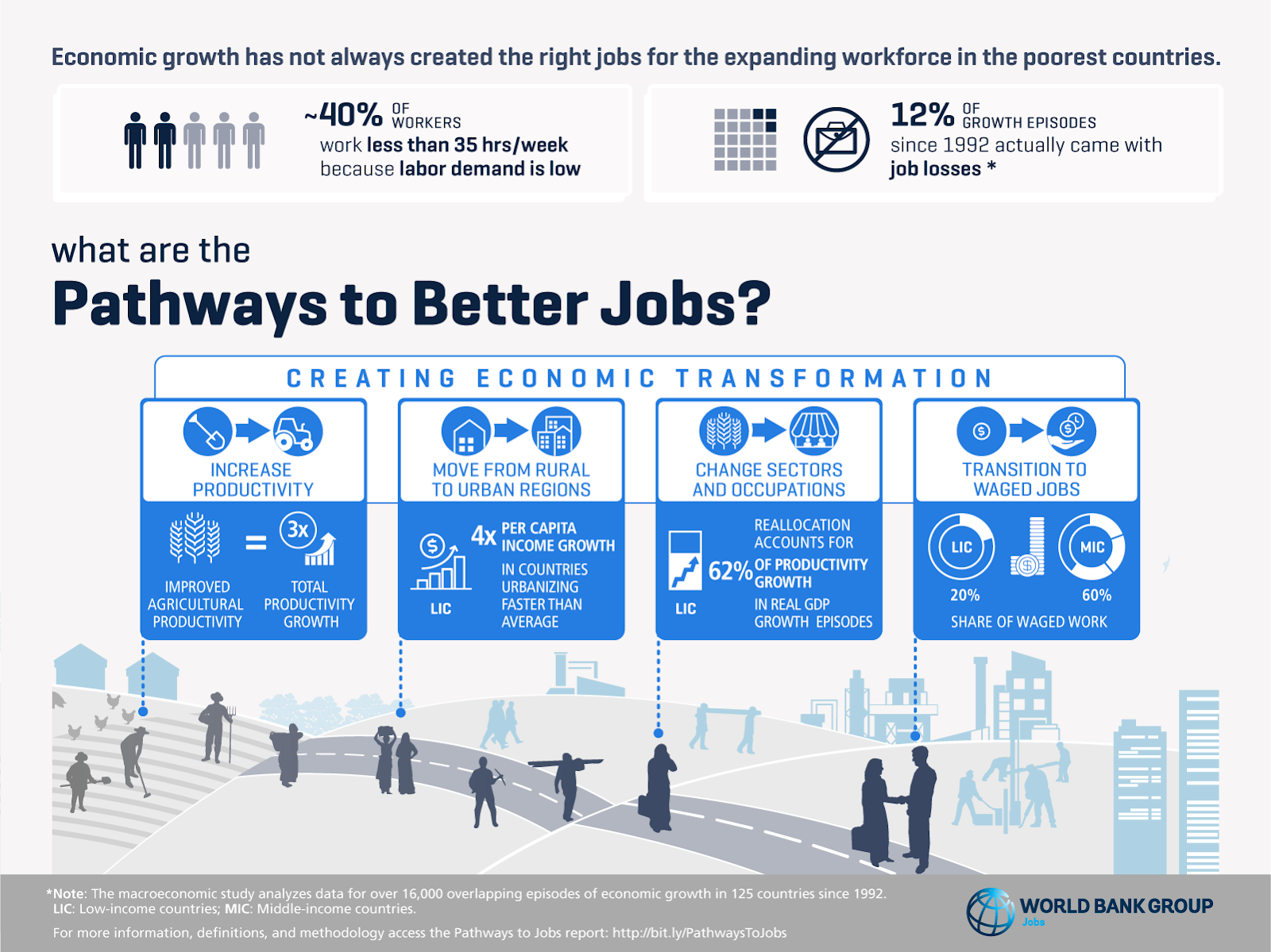
What are the pathways people follow to better jobs? Economies grow when more people find work, when they get better at what they do, and when they move from low-productivity work to better, higher-productivity jobs. Our newest report `Pathways to better jobs in IDA countries’ takes a closer look at how people benefit through jobs in the process of development. It identifies how the available jobs change with economic transformation and shows how the structure of labor markets differs between low, lower-middle, and middle-income countries. It points to key challenges in ensuring that workers can transition between sectors, between locations, and between self- and waged employment.

The study uncovers many findings, some familiar, some new. These will be featured in more detail in future blogs. Meanwhile, here are five important facts drawn from this extensive research, which combines data from over 16,000 episodes of real GDP growth, labor supply information for over 140 countries, and firm-level analysis from Jobs Diagnostics.

1. Economic growth doesn’t always bring enough good jobs.

Our analysis of growth episodes shows that growth in real GDP is no guarantee of an increase in employment in all cases. The relationship between real GDP and employment growth is positive across growth episodes on average, but the spread of employment with GDP growth is wide. Analysis of per capita growth episodes globally suggests that changes in the working-age population, labor force participation, and employment rate explain only about 20% of GDP per capita growth: 80% is explained by growth in labor productivity.
 
2. Underemployment, not unemployment, is the main challenge.

In many LICs, the problem is not the quantity of jobs but their quality. Most people in LICs work because they cannot afford not to. Employment rates are high. But people in LICs work irregular hours in low-quality, low-productivity jobs. Many are underemployed. On average, in low- and middle-income countries 40% of employed workers work fewer than 35 hours per week. Around a third of employed people work over 45 hours a week, indicating that their hourly productivity is low, so they need to work long hours to survive. Low-income countries with rapidly growing youthful populations need more better jobs, not simply more of the same types of jobs. That requires growth with economic transformation into higher productivity work.
 
3. Structural transformation drives productivity growth.

The main source of better jobs in LICs is the movement of underemployed agricultural labor into services and industry. Our growth analysis suggests that almost 80% of labor productivity growth in low-income countries comes from the reallocation of labor from lower-productivity agriculture into relatively higher-productivity services and industry. However, overall labor productivity growth within sectors tends to be low because the underdeveloped `modern’ sector of the economy is often unable to absorb the workers released from agriculture into higher-productivity, capital rich, waged jobs.
 
4. Structural transformation starts with productivity gains in agriculture and is linked to urbanization.

Raising agricultural productivity in LICs and LMICs is critical to catalyze growth and economic transformation. When agricultural productivity is growing, under-employed labor moves out of agriculture and GDP grows faster. The opposite is also true. When agricultural productivity is falling, labor is moving into agriculture: family members stay on the farm, which reduces agricultural productivity and lowers economic growth.
Urbanization, especially in secondary cities, happens with sectoral transformation in low- and lower middle-income countries. The migration of surplus labor from farms to towns and cities raises agricultural productivity and provides a pool of labor in urban centers. In low-income countries, it seems to happen first in the towns within reach of rural people, or on the periphery of the capital: the growth in the share of the urban population in secondary towns and cities is double that of the primary city. In low-income countries that are urbanizing faster than average, labor reallocation from agriculture adds four times as much to per capita income growth as it does in countries with slower than average urbanization.
 
5. Wage work matters.

A big increase in the share of wage jobs (both formal and informal) seems to coincide with the transformation from low income to middle income status. The richer a country is, the higher the share of waged employment in total employment. For countries with annual per capita income below $600, this share is only about 20%, but it reaches 63% of employment in middle-income countries. The shares of agricultural workers, unpaid family workers, and self-employed workers decline in richer countries. This suggests that the creation of waged employment may be an important aspect of the economic transformation that countries make as they progress toward higher per capita income. This is one of our most significant findings, supporting the conclusion of the 2013 World Development Report that there are important developmental gains from waged jobs (even when they are informal), because they are better than the own-account jobs they tend to replace. We are now investigating this aspect in countries where there is sufficiently long time-series data, and sufficient economic progress from lower middle-income status.
 
These five facts suggest that pathways to better jobs are linked to economic transformations that reduce economic inactivity and underemployment and reallocate labor from less productive unpaid or self-employed to more productive waged jobs. Low-income countries are too often characterized by the lag in those transformations and a lag between the transformation in GDP and transformations in jobs, and the price is paid by households and workers who remain trapped in low-productivity activities with meager livelihoods. This new publication coupled with new guidance for country Jobs Diagnostics, brings insights for policy makers seeking to identify the specific constraints holding back positive jobs transformations and hindering labor mobility in their country. We believe that the World Bank’s twin goals —ending extreme poverty and boosting shared prosperity— will be achieved faster when the low-income countries design effective interventions to support faster transformations toward higher-productivity jobs and improved livelihoods. Under IDA19, these countries need well financed jobs and growth strategies, and jobs focused IFC investments and lending operations that bring smoother pathways to better jobs within reach of poor people.
Design a site like this with WordPress.com
Get started