Indonesia, a largest South Asian economic country grown as world’s 10th largest economy in terms of purchasing power parity, and a member of the G-20. This Country registered an exportation value of US$180.2 billion and imported US$188.7 billion worth of goods in Year 2018. This amount is showing a gain of 6.8% in export and 19.9% in import from 2017 to 2018. So, these stats clearly showing that this 16th largest economy in the world by nominal GDP is growing day by day and turning into a fastest growing industry.
Lets Overview Indonesia Import & Export statistics focusing top commodities and trading partners
Top Exports from Indonesia
Indonesia exported US$180.2 billion in Year 2018 which makes this country 25th largest exporter in the world. This Exportation have contributed positively to Indonesia’s gross economic outputs and making Indonesia as developing country. This Below table displays the most in-demand goods shipped from Indonesia during 2018. These exported products represent the highest dollar value in Indonesia global stats during 2018.
Indonesia’s Top Trading Partners
Major Countries/Partners of Indonesia as Export Country are the China, Japan, United States, India and Singapore.
TOP IMPORTS/DEMANDS OF INDONESIA As Indonesia is a Mineral resources riched Country and this mineral richment increases its export growth but it doesn’t fulfill the daily need of Indonesian people as these resources are not prepared enough for that condition. The way to fulfill the needs of the people is by importing some stuff from another countries so Indonesia importing many essential products from Global countries. Indonesia’s these below listed Products imports accounted for two-thirds of the overall value of its total product purchases from other countries. Top importing Products of Indonesia are;
Indonesia’s Top Import Origin
So, thru this article we are showing you a summary of growing exporting structure & importing capacity of Indonesia Market. With the help of TradeImeX you’ll get to know about the Exporters & Importers lists of Indonesia. TradeImeX offering an exclusive list of Indonesian Buyers & Suppliers with complete shipping structure. This Indonesia Export Import Database is based on Shipping Bills/Invoices which contains information of imported goods coming in or exporting goods leaving through customs. Here are few examples of Indonesia Database;
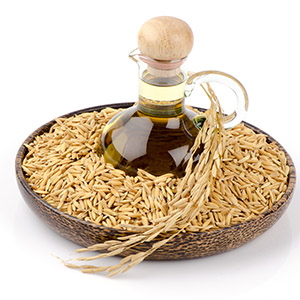
Deep dive into “rice ” products. For each product, you will be able to discover its suppliers, keep track of its market prices, understand the product basics as well as learn how to import it through our product and market guides, explore more details for each of its specification, find out about its country-specific information such as production, export, import, and many more.
Deep dive into “rice ” product specifications. For each product specification, you will be able to discover its suppliers, keep track of its market prices, understand the product basics as well as learn how to import it through our product guides, find out about its country-specific information such as production, export, import, and many more.
Understand various aspects of “rice ” products through our “rice ” product guides. These product guides contain essential knowledge about specific products to help you become more familiar with or knowledgeable about the prodycts. All information in these guides has been compiled and contributed by our global network of local experts.
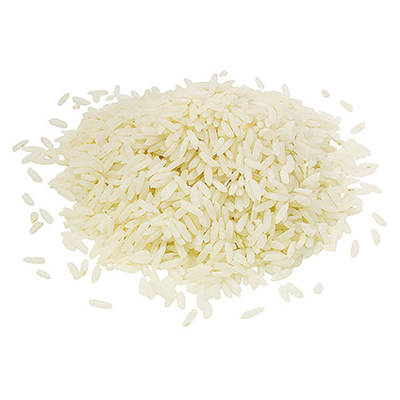
What are the specifications of Rice? (Grades, Sizes, Colors, etc..)
There are many varieties of rice cultivated worldwide, Prominent varieties of rice:
– Indian rice:
– Basmati Rice –
White or golden (sella sub variety) in colour. Long length and medium length (7 mm to 8.35 mm), aromatic, non sticky and crispy rice variety.
Grown in Northern India ling Indo Gangetic plain
-Non basmati rice – long grain white rice, sticky rice, thick rice, IR 64 rice
Grown all around the country.
Cultivated mostly in July-March depending on seasonal trends in different parts of India
Thailand rice:
-Jasmine rice – Long grain, aromatic white or brown coloured rice, moist and soft in texture when cooked, with a slightly sweet flavour. It is grown in North Eastern Thailand
-Hom Mali rice – Has a distinct aroma like a pandalus plant, grown in lower northern plains in Thailand
Japanese Koshihikari Rice:
–white, polished short grain which is used in almost everything from sushi to chirashi bowls. It is more sticky than other varieties as it has a higher starch content. It is grown in all perfectures of Japan and is grown between April-May and October
Vietnam rice:
– Jasmine rice – one of the most exported and upcoming Asian rice, length 6.8 to 7.5 mm, white in colour and grown along the Mekong and Red river deltas
– Rice, biologically known as Oryza Sativa, is a cereal which belongs to the grass family, Graminae. Rice plant can grow between 2 to 6 ft in length with long pointed leaves and edible seeds in separate stalks inside.
– Rice is thought to be originated in southern India and spread to northern parts of the country and from there to China, Korea, Philippines and whole of south east asia. It spread to Europe after being taken by European invaders to India and spread to Africa with Arab traders who took it from India.
– At present rice is grown from wetlands to dry area worldwide with many varieties being cultivated. Most common and widely traded and also used varieties come from India, China, Thailand, Vietnam, Indonesia, Philippines. Some rice varieties of South America, from Uruguay and Paraguay are also prevalent
– In many parts of India, the second largest producer after China, cultivation is still carried out manually and by using animals. Rice is increasingly cultivated through mechanised system now in China, India and other countries
– Almost all of South East Asia, many parts of northern and central Asia, Africa, and South America with some parts of Europe use rice as main source of daily foods and premiere food dishes. About 3 billion people depend on rice as staple food worldwide. 95% of rice is consumed by humans in some form or the other while rice is also used as animal feed production
Understand various aspects of “rice ” products in different markets through our “rice ” market guides. These market guides contain valuable knowledge about specific products from certain markets. Learn the market fundamentals as well as find useful information that can help you be more knowledgeable about importing the products from specific markets. All information in these guides has been compiled and contributed by our global network of local experts.
What are the unique competitive advantages of Myanmar [Burma] when it comes to Rice production?
Based on archeological evidence, collection of wild rice and the first cultivation of domesticated rice was believed in the region of the Yangtze River valley in China. In the later 300 millennium BC, there was a rapid expansion of rice cultivation into mainland Southeast Asia (Myanmar, Thailand, Laos, Cambodia and Vietnam)(Ricepedia, 2019). Around 1,200 CE, The Pagan Empire of Myanmar was an inland rice-based culture, based on a rice-sufficient area in the dry zone on the banks of the Irrawaddy River that the two rice production areas were Minbu and Kyaukse (Falvey, 2008). Pagan’s success relied on its ability to produce rice.
-Geography
The largest rice-producing is the delta region including Ayeyawady, Bago and Yangon Divisions with almost 50% harvested rice. The ecosystem of Myanmar rice is classified as rained lowland rice, irrigated lowland rice, deepwater rice and upland rice (Denning et al., 2013). Rice accounts for the largest area of crops grown in Myanmar – about 7.6 million hectares (mha) or 34 percent of the total (multiple) cropped area of 22.7 mha in 2011/2012 (Ministry of Agriculture, 2016).
In addition, the availability of water resources and soil types influences a region’s agricultural potential. Delta areas of the Ayeyarwady, Sittaung, and Chindwin rivers naturally become major rice-growing regions (Proximity Designs and Studio D Radiodurans, 2016). Ayeyarwady, Yangon and Bago Divisions, are naturally provided with fertile deltaic alluvial soil and abundant monsoon rainfall (Naing et al., 2008).
-Weather / Climate Conditions
In the southern Delta areas, major rice production area, it is warmer with monthly temperature from 24.1°C to 38.2°C in May, and monthly mean minimum temperatures from 2.3°C to 20.8°C in December (Naing et al., 2008).
The annual rainfall from 5,000 mm maximum in the delta regions while it goes the lowest to 600 mm in the central dry zone area and temperature goes up to 43 °C (Proximity Designs and Studio D Radiodurans, 2016).
-Work/labor resources
Rice is the most important food crop, providing important contributions to Myanmar GDP. 65.4% of the total population (estimated 52.2 million) is involved in the agricultural sector in Myanmar in 2015/16. Rice is cultivated on 7.2 million ha representing 34% of the total crop sown area in 2015/16. As rice production is highly labour intensive, the labor absorption rate is highest in the rice industry and nearly three-fourths of farm household income is derived from rice farming activities, especially in the major rice grown areas in Myanmar, delta regions (Myint, 2018).
-Government regulations on production, processing and exports
Since 1989, the State allowed private traders and joint-venture companies to engage in grain trade and export activities however, the government has maintained strict control over rice exports. The Myanmar Government involves the below activities to improve production and exports. (Young, Cramer and Wailes, 1998).
1) Extend new agricultural loans in addition to routine seasonal (cultivation) loans to growers of export crops, especially rice, pulses and beans, maize and oilseed;
2) Encourage imports of officially prioritized production inputs by giving exemption or reduction of import tariffs,
3) Conduct public workshops, seminars and lectures
4) Opening branches of the Myanmar Agricultural and Rural Development Bank (MARDI) servicing at the village level to encourage farmers to save and mobilize capital.
-Domestic or foreign investments
The MADB (The Myanmar Agricultural Development Bank) provides loans to rice farmers, more than 730 billion kyats (US$ 594 million). It also provides credit for rice farmers up to 150,000 kyat (US$115) for maximum 10 acres with an 8% interest rate. Farmers can also access credit from other sources i.e. cooperatives, the Myanmar Rice Federation and NGOs. The government also rents farm machinery to farmers for a nominal fee. The Department of Agriculture distributed 1,900 MT of paddy seed to famers in 2016/17 (Aung, 2018).
-There are nine intervention areas in the rice production cycle which is related to both the rainfed lowland and irrigated rice systems. (Denning et al., 2013).
1. Seed selection
Two keys components: choice of variety and quality of seed. The choice of variety is dependent on factors such as adaptation to the growing environment, eating/cooking preferences of the consumers, market preference/price, and cost of seed. Most of Myanmar’s rice farmers use their own seed from year to year. There is a national seed certification system in Myanmar. The Government advocates the use of high‐yielding certified seeds.
2. Land preparation
Traditionally plowed cattle or water buffalo can still be found at lowland rice filed. For most rice‐growing areas, two‐wheel tractors are very common to reduce the land preparation time and enable a short‐turnaround between crops. Four‐wheel tractors are less common, but are used where fields are large. Farmers can rent those from the Government.
3. Crop establishment
Rice is usually established through transplanting or direct wet seeding.
-Transplanting is for monsoon crop establishment, giving the rice plant a competitive advantage over weeds. rice seedlings grown in a nursery are pulled and transplanted into puddled and leveled fields 15 to 70 days after seeding. This operation can be done manually or using a machine.
-Wet seeding is more common for the summer rice crop because of the lower likelihood of submergence and related mortality of young seedlings. Wet seeding involves the sowing of pre‐germinated seeds onto a puddled soil. The seed may be broadcast by hand or less commonly using a seeder.
4. Water management
Myanmar has extensive water resources available for irrigated agriculture, including for rice farming. Surface water from the Ayeyarwady and Sittoung River Basins has been developed for rice irrigation over the past century.
5. Soil fertility management
The soil appear relatively fertile overall. Alluvial and swampy soils dominate in the delta region, while vertisols are more important in the irrigated rice lands in the dry zone. Nitrogen (N) fertilizer as urea is often applied during the dry season, while little phosphorus (P) or potassium (K) is used in either season.
6. Pest management
There are a large number of insects, around 29 species of insects and crabs that feed on rice in Myanmar. Since 2011, ecologically‐based approaches to pest management have been developed to Myanmar through a training workshop in 2011.
7. Harvesting and threshing
Generally, rice harvesting is done by farmer’s family or hired labour. Fully mechanization of harvesting in Myanmar is still not common, but will increase in the future. After harvesting, farmers usually stack their stalks un‐threshed on the paddy field bunds. Threshing is done traditionally through trampling by cattle.
8. Drying and storage
Farmers normally sun‐dry their grain on any available space, including on roads. International Rice Research Institute introduced a modified flat‐bed dryer using a rice husk furnace to Myanmar in 2007. Rice for consumption and sale is normally stored unhulled and seed is stored on‐farm in jute bags and traditional storage granaries, baskets, drums, and other containers.
9. Crop rotation
Aside from jute, there is little else that can be grown in low lying delta areas during the monsoon season. Rice is well suited to flooded fields, as long as the plants are not submerged for more than a few days. For more than 20 years, farmers have been strongly encouraged by the Government to intensify rice cropping through a summer rice crop.
– Additional information, according to Myanmar Agribusiness Public Corporation (MAPCO, 2017), they collaborate with farmers to obtain the stable supply of consistent quality paddy under Contract Farming Scheme which includes providing
(1) the right quality seed to farmers,
(2) the right technology and good agriculture practices,
(3) the right crop protection and agrochemical fertilizer and
(4) the required working capital for farmers.
-At the post harvest side, when the paddy gains arrives at the sites, they are properly cleaned and dried by using modernized grain drying technology.
-After cleaning and drying, the paddy grains are systematically stored in warehouses and grain silos to keep the right quality and grain moisture.
-The stored paddy grains are then milled and processed using SATAKE rice milling machines.
-Since MAPCO’s Rice is produced by using the better quality paddy, as well as by using the systematic and modern drying, cleaning, storage and milling technology, the quality and freshness are assured.
-MAPCO’s rice is packed and distributed to local and international market under the brand name of MJ Rice “Myanmar Product, Japan Standards”.
ASEAN Free Trade Area (AFTA) was established on 1-1-1998 and agreed to eliminate (0%) the tariffs as the commitment time schedule.
-ASEAN-China Free Trade Area (ACFTA)
ASEAN-China Free Trade Area was established on 1-1-2004. Under this agreement, Myanmar will reduce tariff rates in the year of 2010,2015,2018,2020.
-ASEAN-Korea Free Trade Area (AKFTA)
ASEAN-Korea Free Trade Area was established on 24-8-2006. Under this agreement, Myanmar will reduce tariff rates in the year of 2008, 2009, 2012, 2015, 2018.
-ASEAN-Japan Free Trade Area (AJFTA)
ASEAN-Japan Free Trade Area was put into effect on 1-12-2008. Under this agreement, Myanmar will need to reduce tariff rates in the year of 2014, 2017, 2019, 2021, 2023, 2026.
-ASEAN-Australia-New Zealand Free Trade Area (AANZFTA)
ASEAN-Australia-New Zealand Free Trade Area was put into effect on 1-1-2010. Under this agreement, Myanmar will need to reduce tariff rates in the year of 2011, 2013, 2015, 2017, 2019, 2021.
ASEAN-India Tariff Reduction Schedule
*Addition June 4, 2019
-ASEAN Free Trade Area (AFTA)
– zero (2018) Rice in the husk (paddy or rough): Suitable for sowing, Other
– 5% (2018) Husked (brown) rice: Hom Mali rice, Other
– 5% (2018) Semi-milled or wholly milled rice, whether or not polished or glazed: Glutinous rice, Hom Mali rice, Parboiled rice,
-5% (2018) Broken rice, a kind of used for animal or other
-ASEAN-China Free Trade Area (ACFTA)
– zero (2018) Rice in the husk (paddy or rough): Suitable for sowing, Other
– 5% (2018) Husked (brown) rice: Thai Hom Mali rice, Other (Shwebo Khunni, Ngasein, Paw Sah Hmwe, Emata, Other)
– 5% (2018) Semi-milled or wholly milled rice, whether or not polished or glazed: Glutinous rice(Kauknyin, Other),Thai Hom Mali rice, Parboiled rice,
-5% (2018) Broken rice, a kind of used for animal or other (B Extra, B & 2 Extra, B 1 & 2 Mixed, B 2, 3 & 4 Extra)
-ASEAN-Korea Free Trade Area (AKFTA)
– zero (Current) Rice in the husk (paddy or rough): Suitable for sowing, Other
– 5% (Current) Husked (brown) rice: Thai Hom Mali rice, Other (Shwebo Khunni, Ngasein, Paw Sah Hmwe, Emata, Other)
– 5% (Current) Semi-milled or wholly milled rice, whether or not polished or glazed: Glutinous rice(Kauknyin, Other),Thai Hom Mali rice, Parboiled rice,
-5% (Current) Broken rice, a kind of used for animal or other (B Extra, B & 2 Extra, B 1 & 2 Mixed, B 2, 3 & 4 Extra)
Note: 2019 is still under going.
-ASEAN-Japan Free Trade Area (AJFTA)
– zero (2019) Rice in the husk (paddy or rough): Suitable for sowing, Other
– 5% (2019) Thai Hom Mali rice, Other (Shwebo Khunni, Ngasein, Zeera, Emata, KauknyinOther)
-5% (2019) Other (B Extra, B & 2 Extra, B 1 & 2 Mixed, B 2, 3 & 4 Extra)
-ASEAN-Australia-New Zealand Free Trade Area (AANZFTA)
– zero (2018) Rice in the husk (paddy or rough): Suitable for sowing, Other
– 5% (2018) Husked (brown) rice: Thai Hom Mali rice, Other (Shwebo Khunni, Ngasein, Other)
– 5% (2018) Semi-milled or wholly milled rice, whether or not polished or glazed: Fragrant rice – Emata, Zeera, Ngakywe, Ngasein, Glutinous rice, Kauknyin, Thai Hom Mali rice
-5% (2018) Broken rice, a kind of used for animal or other (B Extra, B & 2 Extra, B 1 & 2 Mixed, B 2, 3 & 4 Extra)
-ASEAN-India Tariff Reduction Schedule
– zero (Current) Rice in the husk (paddy or rough): Suitable for sowing, Other
– 5% (Current) Husked (brown) rice: Thai Hom Mali rice, Other (Shwebo Khunni, Ngasein, Other)
– 5% (Currrent) Semi-milled or wholly milled rice, whether or not polished or glazed: Fragrant rice – Emata, Zeera, Ngakywe, Ngasein, Glutinous rice, Kauknyin, Thai Hom Mali rice
– 0% (2018) Broken rice, a kind of used for animal or other (B Extra, B & 2 Extra, B 1 & 2 Mixed, B 2, 3 & 4 Extra)
5 DAYS CERTIFICATE PROGRAMME on INTERNATIONAL TRADE (25-29 November, 2019 – New Delhi)
We have pleasure to inform you that FIEO is organizing a 5 Days Certificate Programme on International Trade (CPIT) as per the schedule placed below:
Dates & Days
25-29 November, 2019 (Monday to Friday)
Timings
10:30 am to 6:00 pm
Venue
Committee Room-I, 1st Floor, Niryat Bhawan, Rao Tula RamMarg, Opp. Army Hospital, R&R, New Delhi-110057
Participation Fee
Rs. 15,000/- For FIEO MemberRs. 17,500/- For non-FIEO Member (Participation fee inclusive of GST)
The participation fee includes lunch and tea/coffee.
The programme will cover the following topics:
ERole of Foreign Trade Policy and its Relevance EExport Documentation & Procedures EHow to Process Export Orders ERole of ECGC in Export Promotion ERole of Exim Bank in ExportERole of Bar Coding in International Trade ERole of Export Packaging in International TradeEForeign Trade Supply Chain Finance Management ELetter of Credit in International Export (Payment Terms)EPost Shipment & Pre-Shipment Credit EHow to Find products for Exports EHow to Find best market for exportsEMarket scanning and enhancing sale ability in identified markets EINCOTERMSERole of Overview in Exports by FIEO
a)Indian Trade Portal
b)Niryat Mitra
c)Benefits of FTA
d)Understanding Importing countries regulation
Who Should Attend the Programme?
This programme is suitable for new entrepreneurs and managers which will comprise of a practical approach for understanding all major facets of international trade. Intense competition in world markets, in particular, poses a challenge to executives engaged in export marketing pursuits. Unless they keep themselves abreast with the new developments, rapid changes in international business practices and innovative marketing strategies pursued by the competitors, export executives cannot effectively capitalize on the available or emerging market opportunities.
National Level trade related faculties from IIFT, FIEO, ECGC, Exim Bank, Packaging, GS1 India etc. will be taking the above Sessions and will interact with the participants. The study material for the above topics will be provided to the participants. A Certificate of Participation will be distributed to the participants after the programme. As we have limited seats, the selection will be done on first-cum-served basis. Preference will be given to executives already engaged in business firms/companies. Kindly confirm your participation at the earliest.
Keeping in view the importance of above programme, interested members may sponsor their executives & send their confirmation along with the participant fee by way of DD/Cheque in favour of “Federation of Indian Export Organisations”, payable at New Delhi or online participation fee. In case of any query with regard to registration, interested companies may contact at 011:46042161/47/76 or by e-mail at fieonr@fieo.org.
Mobile ___________E-mail:_____________________DD/Cheque No.______________Date __________ Amount:________
FIEO sent this email to you at vizpathak@gmail.com as part of FIEO‘s Member Email Newsletter distribution. To unsubscribe from this email, please goto Unsubscribe section on our website. Please note that it may take up to 14 days to process your request. Visit our Privacy Policy if you have any questions.
Globalization and e-commerce have all contributed to a recent influx in international trade. What used to only be attainable by large-scale businesses is now accessible to small companies and those in thebusiness of resale. Products and services are often performed internationally at greatly reduced costs, making international expansion and production outsourcing a suitable option for businesses. But many people still don’t understand the benefits of global business in their industry, and even for those who do, they struggle to find where to start.
What most companies are looking for is a guide for international business, otherwise referred to as export marketing.
Definition of Export Marketing
Export marketing is the practice by which a company sells products or services to a foreign country. Products are produced or distributed from the company’s home country to buyers in international locations. But there is a difference between products that are available to foreign countries and products that are specifically marketed to foreign customers. This where the importance of an export marketing plan comes in.
Why Do I Need Export Marketing?
Businesses today are often doubling or tripling products by expanding to product sales on an international level. But you can’t assume that foreign markets will be as interested in your product as local customers. Cultural differences, shipping costs and transit time, politics, and international trade policies all contribute to a marketing communication barrier between suppliers and foreign buyers.
So why do you need export marketing? Simply put: Google translate is not enough. You need to know the buying behaviors, interests, and needs of your foreign customers. All of this can be addressed in an export marketing plan. An export marketing plan is created to address a specific strategy that can be utilized to make product both available and enticing to international buyers.
How to Build an Export Marketing Plan
The only difference between an export marketing plan and a regular marketing plan is the location in interest. The same type of market research performed for locating an optimal domestic market must be completed on an international scale. Here is how an export marketing plan should be built.
Foreign Country Selection
The first and most obvious step in building an export marketing plan is selection of a country. While this is the “simplest” step, it is also the most crucial. Start by focusing on continents. Although every country is different, many cultural differences and buying behaviors can be attributed to continents as a whole. After selecting a continent, do some research on the top 3 locations of your preference. This should give you more insight into what country you should sell to.
Natural Conditions Research (Optional)
The relevance of this factor will depend greatly on the product you are selling. Information such as the weather, land size, environment, ease of mobility (mountains, roads, etc.), and various other factors will all contribute to the success of your international expansion. For example, selling perishable goods to mountainous regions where transport is difficult may mean your products will expire before they are sold.
Socioeconomic Research
This should go without saying, but your products must fit the socioeconomic demographics of the region you plan on selling to. Fashion clothing may be too expensive for certain countries in Africa or Asia. The quality of materials you build your product with may have to change in an international market in order to accommodate the benchmark prices and quality of goods in the foreign location.
Define first what class of consumers you plan on selling to. Lower-class, middle-class, upper-class, and businesses will all have different price point and quality expectations, and these may not reflect those of U.S. standards.
Competitor Landscape
This is the one place in which competition is good. International business and trade has existed for hundreds of years – any profitable international business endeavor that has a promising return has already been done. Thus, you can use the density of competition in a foreign country to disseminate whether or not it is a profitable industry to be in.
Make sure that your competition density research comprises research on local companies in the foreign country as well as international businesses. Just because there is a market for, say, tires in China doesn’t mean that there is a profitable market for foreign tire manufacturers to sell there. See if any companies in your home country are selling the same type of product or service in the country of question.
Conclusion
Global trade and international expansion offer can offer great returns to businesses. However, it can also mean steep losses and costs. Keep in mind: there is a major difference between making your products available to international buyers and marketing to specific international markets. Addressing the latter is your only chance at success in international expansion. Export marketing can help to do this.
You need to be fully informed on the natural conditions, socioeconomic status, and competitor landscape of the country you plan export marketing to. You should also be well aware of additional, out-of-the-ordinary costs you may encounter in foreign countries (extra tariff costs, transportation, etc.) If you are interested in global expansion or the development of an export marketing plan
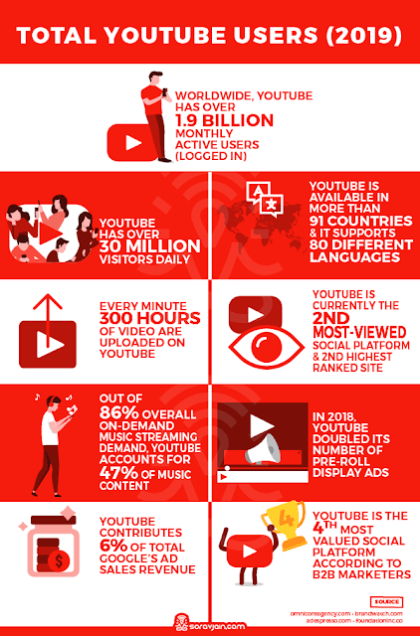
GROW YOUR BUSINESS WITH YOUTUBE MARKETING FOR EXPORTERS IMPORTERS IN INDIA
WHAT IS YOUTUBE ?
YouTube is the second largest search engine, processing more than 3 billion searches per month. Think about what that means—after direct Google searches, people are turning to YouTube to find solutions to their problems—looking for tutorials and other information in video form to address their pain points. Plus, most key demographics watch it more than cable TV. These facts alone demonstrate the huge possibility your video content will be seen by your target audience.
Before we dive into YouTube specifically, take a look at these statistics from a recent article in Forbes on the continuing rise of video marketing:
By 2019, 80% of all web traffic will be claimed by video.
Video consumption on mobile devices doubles every year, based on numbers from YouTube.
They say a picture is worth a thousand words—according to marketer James McQuivey, a single minute of video is worth 1.8 million words.
SO WHAT YOU NEED TO DO MAKE OF OWN COMPANY OF MAXIMUM 4 MINUTES WATCH TIME , MAKE VIDEO OF YOUR COMPANY, DAILY VIDEO POSTING MUST BE THERE IF YOU DON’T DO NO RETURN ON INVESTMENT
NEXT BLOG WILL BE HOW TO DO SEO OF YOUTUBE WITHOUT KNOWING ANYTHING OF SEO FOR EXPORTERS IMPORTERS . HOW TO RANK EXPOTERS IMPORTERS IN TOP RANKINGS OF CATEGORY EXPORT IMPORT BUSINESS
This is one of the important articles in export and import trade –What are the documents required for Import clearance? One of frequently asked questions is ‘documents required for import clearance’
Unlike other articles, I can not provide a ‘capsule’ solution on this article about documents required for import customs clearance. I will explain reason behind it. First of all, let me clarify: the documents required for import clearance under all products are not same. However, we can discuss about the common documents required for import customs clearance in importing countries. I will provide you a some general information on documentation of import customs clearance from which you can have a common idea on the subject. I hope, this information helps you a lot to know about documents required for import clearance generally.
Since various types of commodities are imported from different countries, a complete list of documents for import customs clearance procedures can not be provided. More over, different countries have their own policies in turn different procedures and formalities for import clearance. Each product under import and export is classified under a code number accepted globally which is called ITC number.
There may have bilateral import export agreements between governments of different countries. Imports and exports from such countries may have exemptions on documentation for export and import clearance.
However there are legal documents, common documents and specific documents on commodity basis required to complete import customs procedures.
Let us discuss some of the common documents required for import customs clearance procedures and formalities in some of the importing countries.
Bill of Entry:
Bill of entry is one of the major import document for import customs clearance. As explained previously, Bill of Entry is the legal document to be filed by CHA or Importer duly signed. Bill of Entry is one of the indicators of ‘total outward remittance of country’ regulated by Reserve Bank and Customs department. Bill of entry must be filed within thirty days of arrival of goods at a customs location.
Once after filing bill of entry along with necessary import customs clearance documents, assessment and examination of goods are carried out by concerned customs official. After completion of import customs formalities, a ‘pass out order’ is issued under such bill of entry. Once an importer or his authorized customs house agent obtains ‘pass out order’ from concerned customs official, the imported goods can be moved out of customs. After paying necessary import charges if any to carrier of goods and custodian of cargo, the goods can be taken out of customs area to importer’s place.
Commercial Invoice.
Invoice is the prime document in any business transactions. Invoice is one of the documents required for import customs clearance for value appraisal by concerned customs official. Assessable value is calculated on the basis of terms of delivery of goods mentioned in commercial invoice produced by importer at customs location. I have explained about the method of calculation of assessable value in another article in same web blog. The concerned appraising officer verifies the value mentioned in commercial invoice matches with the actual market value of same goods. This method of inspection by appraising officer of customs prevents fraudulent activities of importer or exporter by over invoicing or under invoicing. So Invoice plays a pivotal role in value assessment in import customs clearance procedures.
Bill of Lading / Airway bill :
BL/AWB is one of the documents required for import customs clearance.
Bill of lading under sea shipment or Airway bill under air shipment is carrier’s document required to be submitted with customs for import customs clearance purpose. Bill of lading or Airway bill issued by carrier provides the details of cargo with terms of delivery. I have discussed in detail about Bill of Lading and Airway bill separately in this website. You can go through those articles to have a deep knowledge about documents required for import customs clearance. Read more about:
Import License
As I have mentioned above, import license may be required as one of the documents for import customs clearance procedures and formalities under specific products. This license may be mandatory for importing specific goods as per guide lines provided by government. Import of such specific products may have been being regulated by government time to time. So government insist an import license as one of the documents required for import customs clearance to bring those materials from foreign countries.
Insurance certificate
Insurance certificate is one of the documents required for import customs clearance procedures. Insurance certificate is a supporting document against importer’s declaration on terms of delivery. Insurance certificate under import shipment helps customs authorities to verify, whether selling price includes insurance or not. This is required to find assessable value which determines import duty amount.
Purchase order/Letter of Credit
Purchase order is one of the documents required for import customs clearance. A purchase order reflects almost all terms and conditions of sale contract which enables the customs official to confirm on value assessment. If an import consignment is under letter of credit basis, the importer can submit a copy of Letter of Credit along with the documents for import clearance.
Technical write up, literature etc. for specific goods if any
Technical write up, literature of imported goods or any other similar documents may be required as one of the documents for import clearance under some specific goods. For example, if a machinery is imported, a technical write up or literature explaining it’s function can be attached along with importing documents. This document helps customs official to derive exact market value of such imported machinery in turn helps for value assessment.
Industrial License if any
An industrial license copy may be required under specific goods importing. If Importer claims any import benefit as per guidelines of government, such Industrial License can be produced to avail the benefit. In such case, Industrial license copy can be submitted with customs authorities as one of the import clearance documents.
RCMC. Registration cum Membership Certificate if any
For the purpose of availing import duty exemption from government agencies under specific goods, production of RCMC with customs authorities is one of the requirements for import clearance. In such cases importer needs to submit Registration Cum Membership Certificate along with import customs clearance documents.
Test report if any
The customs officials may not be able to identify the quality of goods imported. In order to assess the value of such goods, customs official may draw sample of such imported goods and arranges to send for testing to government authorized laboratories. The concerned customs officer can complete appraisement of such goods only after obtaining such test report. So test report is one of the documents under import customs clearance and formalities under some of specific goods.
DEEC/DEPB /ECGC or any other documents for duty benefits
If importer avails any duty exemptions against imported goods under different schemes like DEEC/DEPB/ECGC etc., such license is produced along with other import clearance documents.
Central excise document if any
If importer avails any central excise benefit under imported goods, the documents pertaining to the same need to be produced along with other import customs clearance documents.
GATT/DGFT declaration.
As per the guidelines of Government of India, every importer needs to file GATT declaration and DGFT declaration along with other import customs clearance documents with customs. GATT declaration has to be filed by Importer as per the terms of General Agreement on Tariff and Trade.
what is free trade agreements ? India Free Trade Agreement with Foreign Countries
A free trade agreement is a pact between two or more nations to reduce barriers to imports and exports among them. Under a free trade policy, goods and services can be bought and sold across international borders with little or no government tariffs, quotas, subsidies, or prohibitions to inhibit their exchange
The Goethe-Zertifikat A1:Start Deutsch 1 exam comprises reading, listening, writing and speaking sections. The speaking section of the exam is completed in a group. The exam is administered and evaluated in the same way all over the world.
READING
You will be asked to read texts such as brief notes, classified advertisements, signposts and posters and complete exercises on these texts.
Duration: 25 minutes
WRITING
You will be asked to fill in simple forms and write a short text about yourself on an everyday topic.
Duration: 20 minutes
LISTENING
You will be asked to listen to short everyday conversations, telephone messages or public announcements over a loudspeaker and complete exercises on what you have heard.
Duration: approx. 20 minutes
SPEAKING
You will be asked to introduce yourself to the group before taking part in a question-and-answer session on everyday matters and asking someone in the group forsomething.
Duration: 15 minutes
REQUIREMENTS
The Goethe-Zertifikat A1:Start Deutsch 1 is a German exam for adults.
The Goethe-Institut exams are available to all interested parties and can be taken regardless of age and nationality.
A minimum age of 16 years is recommended to take the Goethe-Zertifikat A1: Start Deutsch 1 exam.
To sit the Goethe-Zertifikat A1: Start Deutsch 1 exam, candidates must have German language skills corresponding to the first level of competence (A1) of the Common European Framework of Reference for Languages (CEFR).
To reach this level, candidates need to have completed between 80 and 200 45-minute units of teaching, depending on their previous knowledge and learning requirements.
Faster communication, extensive travel, increasing exchange of ideas, International businesses, information, outsourcing of jobs, internet, modern technology, etc., have reduced the world into a global village. With the world is becoming more connected, a new language is a significant value-add to your resume as the career scope in Foreign Languages are limitless!
Top 3 Langauges
GERMAN, SPANISH, FRENCH
Jobs and Language Career in Export and Import Industry
The world has become smaller and smaller due to its digitized global economy. These have opened up a tremendous opportunity in businesses involving various forms of importation and exportation. The majority of the giant corporations in India now prefer to hire people who can speak new or more foreign languages other than their native language.
No doubt, the impact of global economic growth and bilateral interaction under the innovative forces of technology has made the world become a global village. This new trend has further opened up enormous investment and job opportunities for career-minded. Now, people can easily participate in business ventures involving export and import of goods and services from India to other places.
Most of the MNCs and business organizations — from medium to large-scale businesses — now prefer to employ the services of employees with foreign languages than people who speak only their mother tongue.
For example, your ability to speak Mandarin Chinese will present you with a brilliant career opportunity. You can work with a company that’s engaged in importing or exporting goods or services from China to India. Or even from India to China, Taiwan, Singapore, Hong Kong, and more. Companies who are into the export business will find your proficiency and qualification in Mandarin perfect for their business. It is because the places mentioned above are where the language is widely spoken or spoken as a first or second language.
Moreover, you can also engage these companies and act as an intermediary or their representative in India. It is something you’re always going to get favored from all angles. It is a win-win situation for you any time, and in any place.
Demand for Language Experts in the International Business
On the one hand, many International companies are setting their regional offices in India. And on another side, many Indian companies are looking to expand into other countries. The knowledge will allow you to showcase yourself as a global employee. It helps find foreign language jobs in multiple international companies and build a meaningful career in export and import industries.
Trade is the engine of the global economy. Today, there is an increasing demand for Indians who are fluent in foreign languages to help in establishing, coordinating, dealing, and managing the business overseas. Due to language barriers, many Indian companies face challenges to expand business abroad or export their products.
Only 20% of the world’s population speaks English (Native and Non-Native). In crucial sectors with export potential such as manufacturing, agricultural products, IT, leather goods, textiles, gems & precious metals, pharma, engineering goods, petroleum products, etc. gaps in understanding each other due to language barriers are holding back firms from trading the world.
Many export houses and Indian firms are looking for people who can speak Foreign languages like French, Spanish, Chinese, Portuguese, etc. fluently. The work would involve calling companies, telephonic conversation with them, managing queries, assisting in sales coordination, and even visiting those countries for business purposes.
Top Languages to get you hired in Import and Export sector
In the increasingly globally connected world, there is no far-off place. Many Spanish & Portuguese speaking regions such as South and Central America, French Speaking African countries, Mandarin-speaking China, Bahasa-speaking Indonesia, Arabic speaking Middle-east, German-speaking central Europe are specifically seeking bilateral cooperation with India. This approach is opening a world of opportunities for many Indian companies.
French and Spanish are the two most popular Foreign languages in international businesses. Many Indian and MNCs are looking to expand their footprints in French-speaking Africa, Europe and other parts of the world. You can find a plentiful amount of opportunities in the export sector. Spanish language puts in a firm position to succeed in making an astonishing career in export and import business to Latin America, and also to the U.S., where it is the second most important language after English.
Driven by these global trends, the world is slowly moving away from being an English-dominated work culture. Apart from French and Spanish, there is also a growing demand for people who know Mandarin, German, Arabic, Portuguese, Italian, and Japanese. It is always better to choose a language with more countries as a de-facto language, or your company is likely to do business.
Clearly, there is a rising demand for foreign language skills. Mastering a foreign language could open the doors to job opportunities and career in export and import sectors and international trade & business.
Top Languages to get you hired in Import and Export sector
In the increasingly globally connected world, there is no far-off place. Many Spanish & Portuguese speaking regions such as South and Central America, French Speaking African countries, Mandarin-speaking China, Bahasa-speaking Indonesia, Arabic speaking Middle-east, German-speaking central Europe are specifically seeking bilateral cooperation with India. This approach is opening a world of opportunities for many Indian companies.
French and Spanish are the two most popular Foreign languages in international businesses. Many Indian and MNCs are looking to expand their footprints in French-speaking Africa, Europe and other parts of the world. You can find a plentiful amount of opportunities in the export sector. Spanish language puts in a firm position to succeed in making an astonishing career in export and import business to Latin America, and also to the U.S., where it is the second most important language after English.
Driven by these global trends, the world is slowly moving away from being an English-dominated work culture. Apart from French and Spanish, there is also a growing demand for people who know Mandarin, German, Arabic, Portuguese, Italian, and Japanese. It is always better to choose a language with more countries as a de-facto language, or your company is likely to do business.
Clearly, there is a rising demand for foreign language skills. Mastering a foreign language could open the doors to job opportunities and career in export and import sectors and international trade & business.








 GROW YOUR BUSINESS WITH YOUTUBE MARKETING FOR EXPORTERS IMPORTERS IN INDIA
 This is one of the important articles in export and import trade –What are the documents required for Import clearance? One of frequently asked questions is ‘documents required for import clearance’


 Directorate General Of Foreign Trade | Ministry Of Commerce And Industry | Government Of India,Trade