Global trade growth loses momentum as trade tensions persist

World trade will continue to face strong headwinds in 2019 and 2020 after growing more slowly than expected in 2018 due to rising trade tensions and increased economic uncertainty. WTO economists expect merchandise trade volume growth to fall to 2.6% in 2019 — down from 3.0% in 2018. Trade growth could then rebound to 3.0% in 2020; however, this is dependent on an easing of trade tensions.

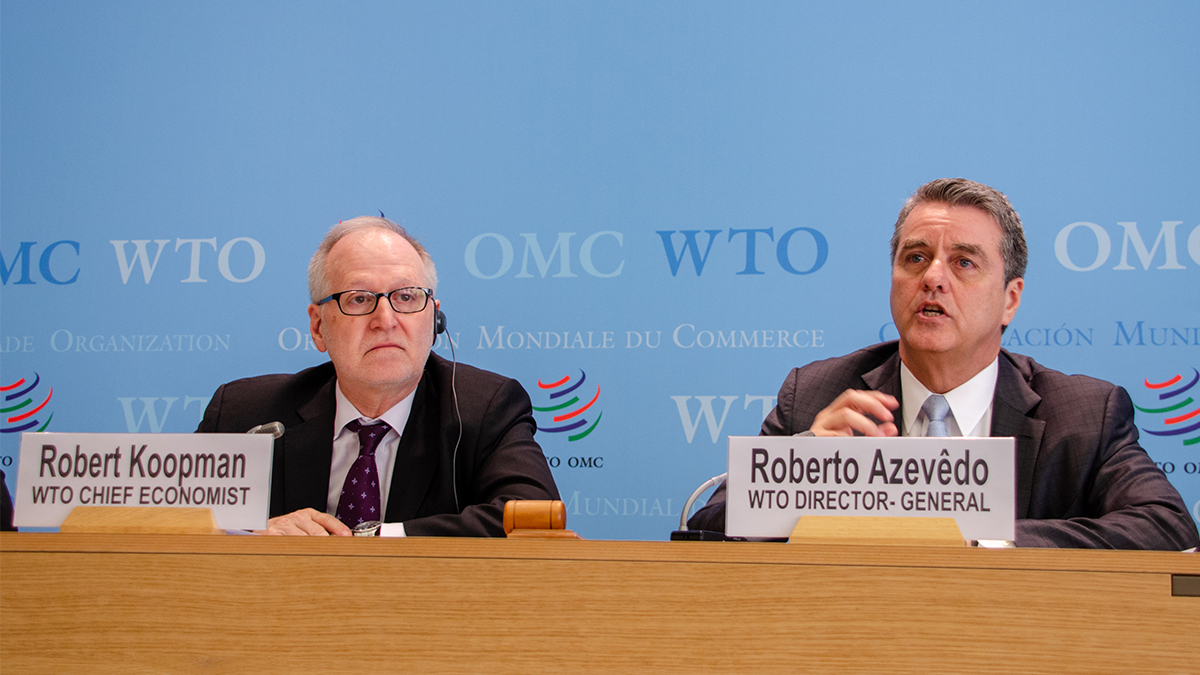
WTO Director-General Roberto Azevêdo said: “With trade tensions running high, no one should be surprised by this outlook. Trade cannot play its full role in driving growth when we see such high levels of uncertainty. It is increasingly urgent that we resolve tensions and focus on charting a positive path forward for global trade which responds to the real challenges in today’s economy – such as the technological revolution and the imperative of creating jobs and boosting development. WTO members are working to do this and are discussing ways to strengthen and safeguard the trading system. This is vital. If we forget the fundamental importance of the rules-based trading system we would risk weakening it, which would be an historic mistake with repercussions for jobs, growth and stability around the world.”
Trade growth in 2018 was weighed down by several factors, including new tariffs and retaliatory measures affecting widely-traded goods, weaker global economic growth, volatility in financial markets and tighter monetary conditions in developed countries, among others. Consensus estimates have world GDP growth slowing from 2.9% in 2018 to 2.6% in both 2019 and 2020.
The above-average trade growth of 4.6% in 2017 suggested that trade could recover some of its earlier dynamism, but this has not materialized. Trade only grew slightly faster than output in 2018, and this relative weakness is expected to extend into at least 2019 (Chart 1). This is partly explained by slower growth in the European Union, which has a larger share in world trade than in world GDP.

Chart 1: World merchandise trade volume and real GDP growth, 2011-2020
Annual % change
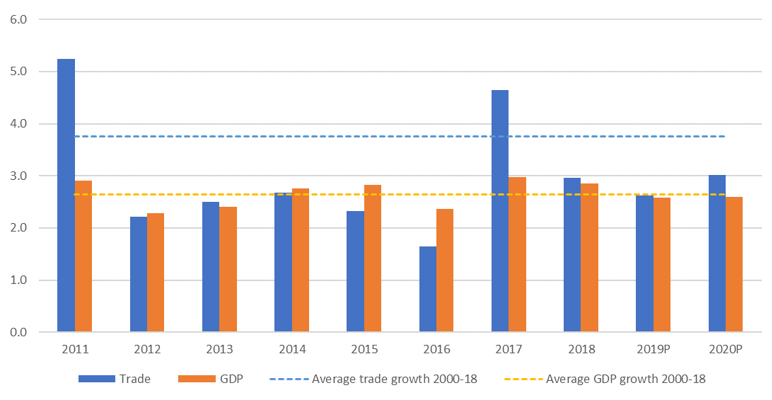
Note: GDP is measured at market exchange rates. Data for 2019 and 2020 are projections.
Source: WTO and UNCTAD for trade, consensus estimates for GDP.

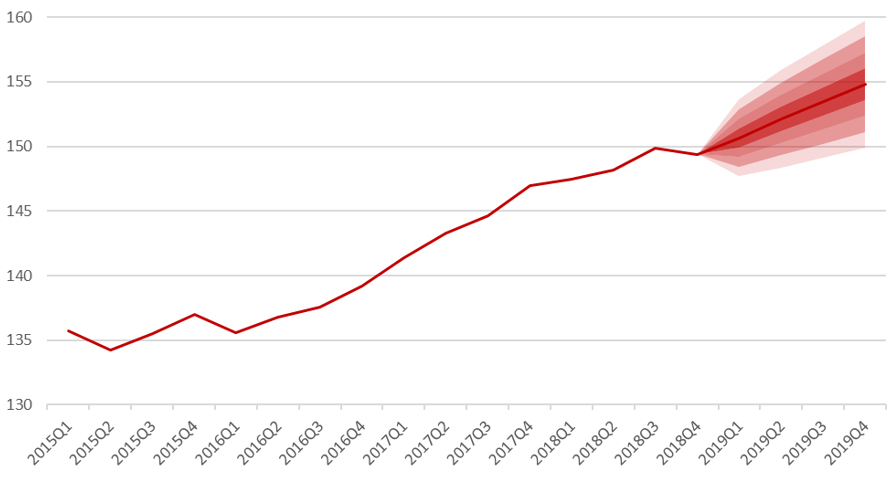
The preliminary estimate of 3.0% for world trade growth in 2018 is below the WTO’s most recent forecast of 3.9% issued last September. The shortfall is mostly explained by a worse-than-expected result in the fourth quarter, when world trade as measured by the average of exports and imports declined by 0.3%. Until then, third quarter trade had been up 3.8%, in line with WTO projections.
In recognition of the high degree of uncertainty associated with trade forecasts under current conditions, Chart 2 uses shaded bands to illustrate a range of possible trade outcomes in 2019. Trade expansion in the current year is most likely to fall within a range from 1.3% to 4.0%. It should be noted that trade growth could be below this range if trade tensions continue to build, or above it if they start to ease.

Chart 2: Volume of world merchandise trade, 2015Q1-2019Q4
Seasonally-adjusted volume index, 2005=100
Source: WTO and UNCTAD, WTO Secretariat estimates.

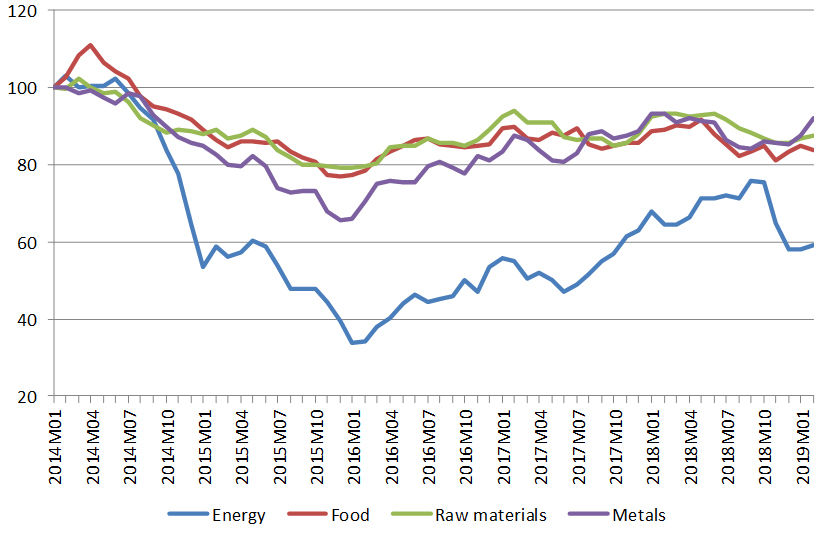
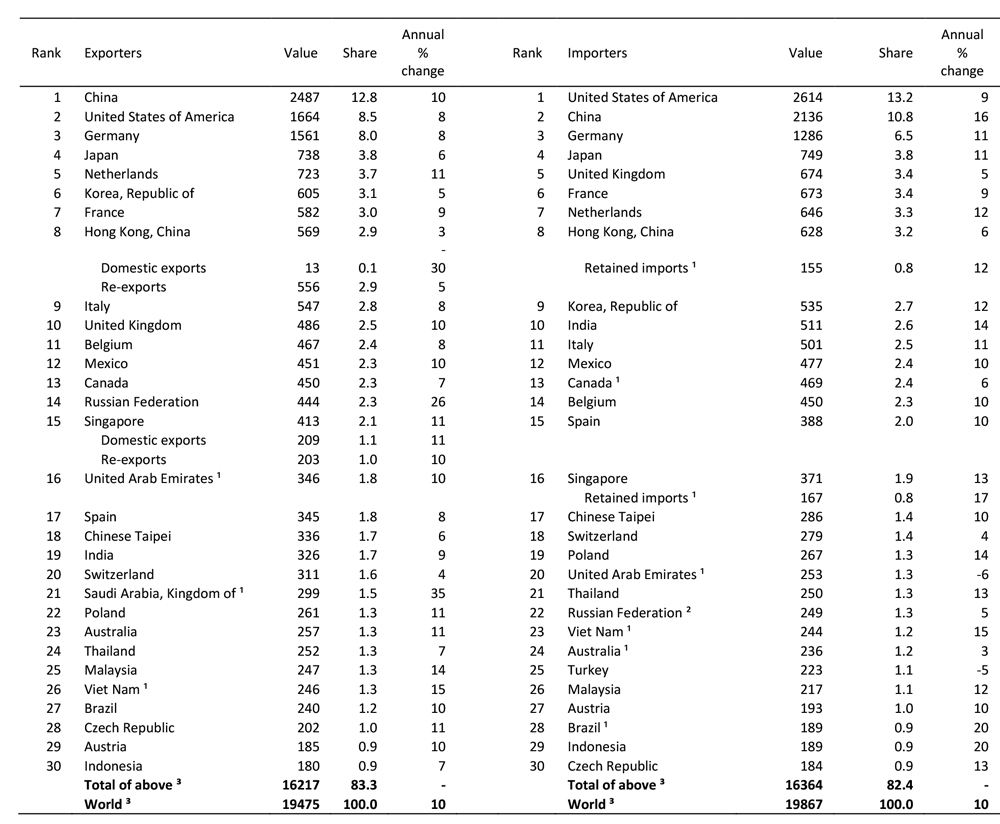
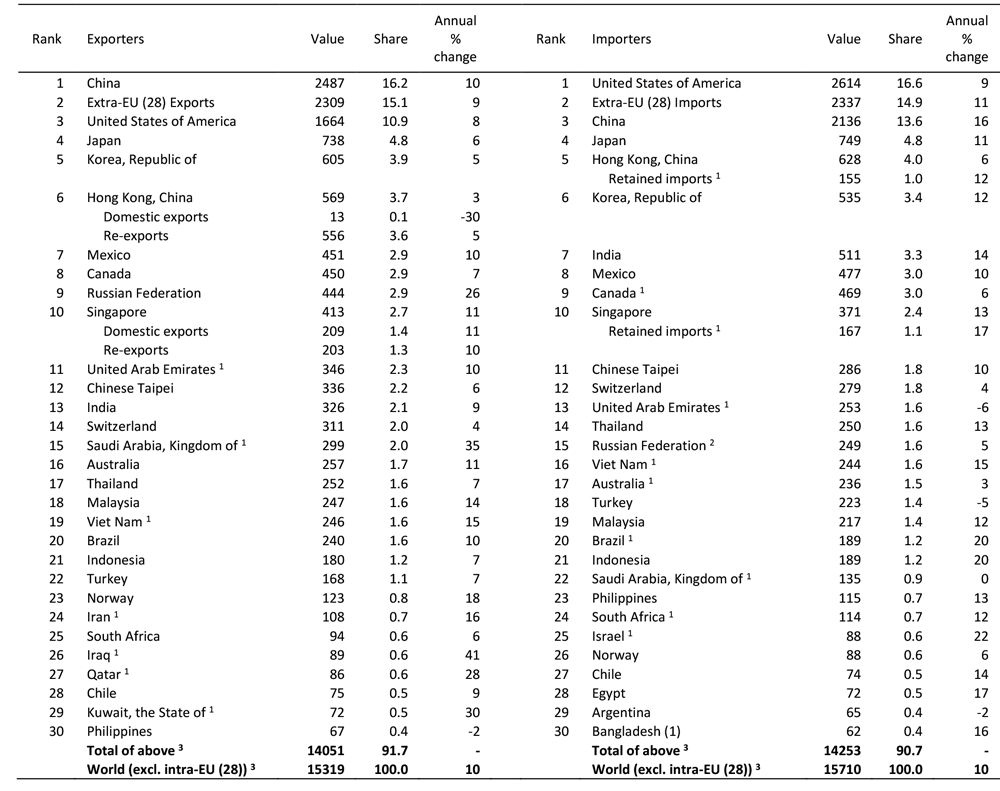
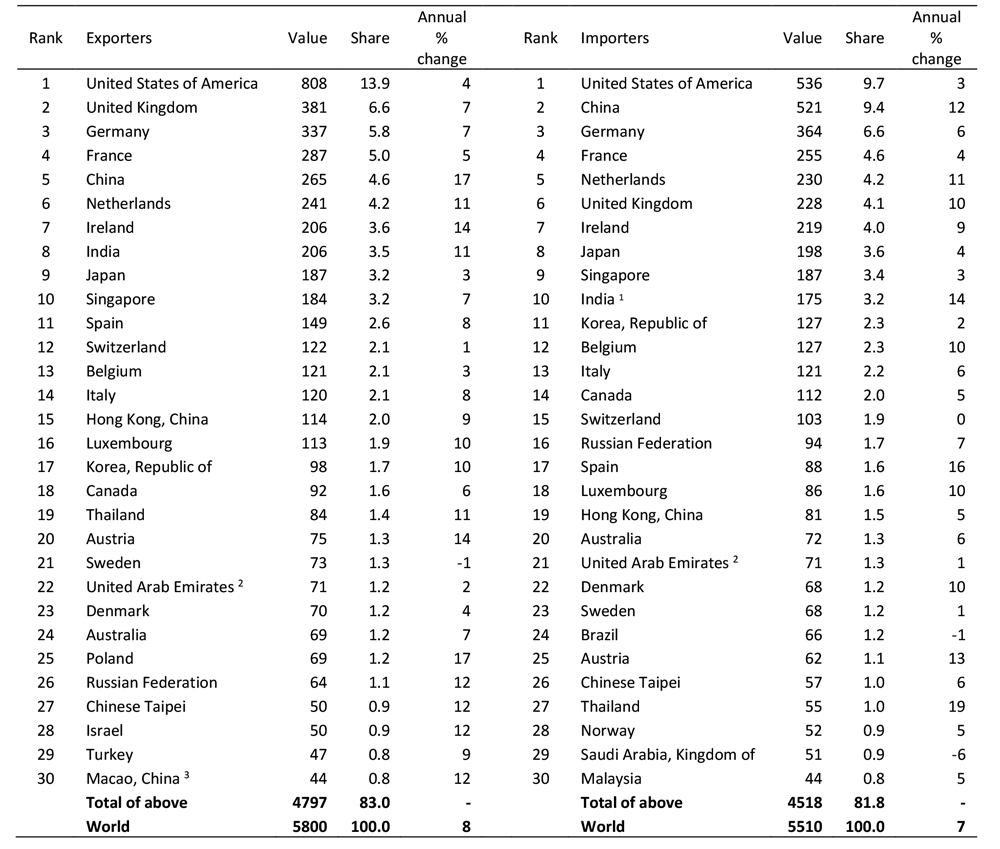
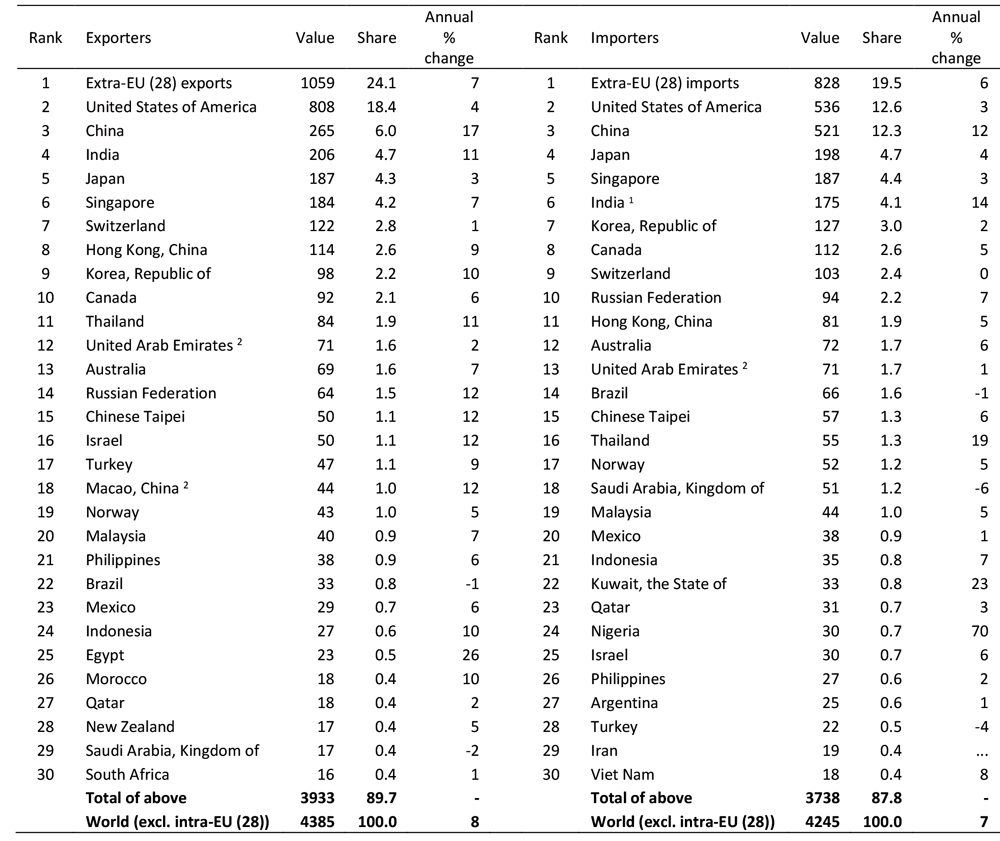
Nominal trade values also rose in 2018 due to a combination of volume and price changes. World merchandise exports totalled US$ 19.48 trillion, up 10% from the previous year. The rise was driven partly by higher oil prices, which increased by roughly 20% between 2017 and 2018 (Chart 3). The value of commercial services trade rose nearly as much, with exports totalling US$ 5.80 trillion in 2018, up 8% from the previous year. Detailed breakdowns of merchandise and commercial services trade by country and region are shown in Appendix Tables 1 through 4 and Appendix Chart 1. Trade statistics in value terms are highly sensitive to fluctuations in prices and exchange rates and as a result should be interpreted with caution.

Chart 3: Prices of primary commodities, Jan. 2014 – Feb. 2019
Indices, January 2014=100
Source: IMF Commodity Price Statistics.

There were few changes in export and import rankings among major traders in terms of US dollar values.  The fastest merchandise export growth in nominal terms was recorded by oil producers, including the Kingdom of Saudi Arabia (34.8%) and the Russian Federation (25.6%). Merchandise import values increased most for Indonesia (20.2%), Brazil (19.8%), China (15.8%) and Viet Nam (15.4%). Among commercial services traders, China registered strong increases in the value of its exports (17%) and imports (12%).  India also recorded double digit growth in commercial services trade on both the export side (11%) and the import side (14%).
The current trade forecast reflects downgraded GDP projections for North America, Europe and Asia, mostly due to macroeconomic considerations including the diminishing effect of expansionary fiscal policy in the United States, the phase -out of monetary stimulus in the euro area and the ongoing economic rebalancing of the Chinese economy away from manufacturing and investment and toward services and consumption. Monetary authorities have put further rate hikes on hold in response to soft economic data but changes in monetary policy take some time to be felt. Trade measures announced in the past year are also reflected in underlying GDP assumptions but any additional ratcheting up of trade tensions is not factored in. 
The impact of trade tensions on actual trade flows is difficult to quantify since it depends on the nature of any proposed measures and whether they are implemented or only threatened.   Threatened measures can still have real effects by increasing uncertainty and discouraging investment.
WTO economists have attempted to quantify the medium-run economic impact of a wider trade conflict in which international cooperation on tariffs breaks down completely and all countries set tariffs unilaterally (Bekkers and Teh, forthcoming). Under this study, such a “worst case” scenario would lead to a reduction in world GDP in 2022 of about 2% and a reduction in global trade of about 17% compared to baseline projections. For comparison, global GDP fell about 2% and global trade dropped about 12% in 2009 following the financial crisis.
Other risks to the trade outlook are more difficult to quantify. For example, the effects of Brexit will depend on the nature of any agreement that might be reached between the United Kingdom and the European Union, with impacts mostly confined to these economies. Lower investment in the U.K. is likely in most foreseeable Brexit scenarios, which would tend to reduce productive capacity over time (Appendix Chart 2).

Details on trade developments in 2018

The slowdown in merchandise trade volume growth in 2018 was broad based, reflecting weaker import demand in both developed and developing countries, although some regions were more strongly affected than others.
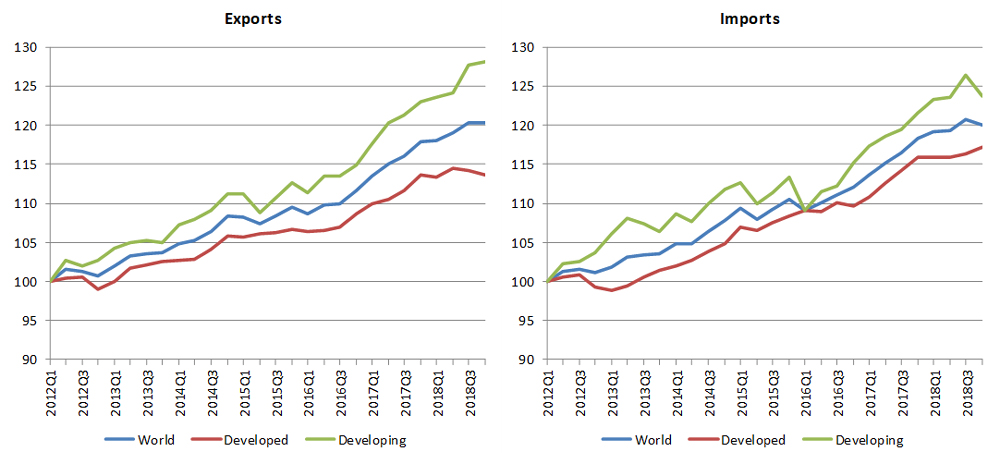
Chart 4 shows seasonally-adjusted quarterly merchandise exports and imports by level of development. Weakness was most evident in the fourth quarter of 2018, when export volumes declined by 0.1% and import volumes dropped 0.5%. On the export side, the slowdown was mostly due to reduced shipments from developed countries, which contracted year-on-year in three out of the four quarters of 2018. On the import side, developed countries recorded slow growth throughout the year, particularly in the first half. Meanwhile, developing economies saw imports fall sharply (-2.1%) in the final quarter despite stronger growth earlier in the year.

Chart 4: World merchandise exports and imports by level of development, 2012Q1-2018Q4
Volume index, 2012Q1=100
Source: WTO and UNCTAD.

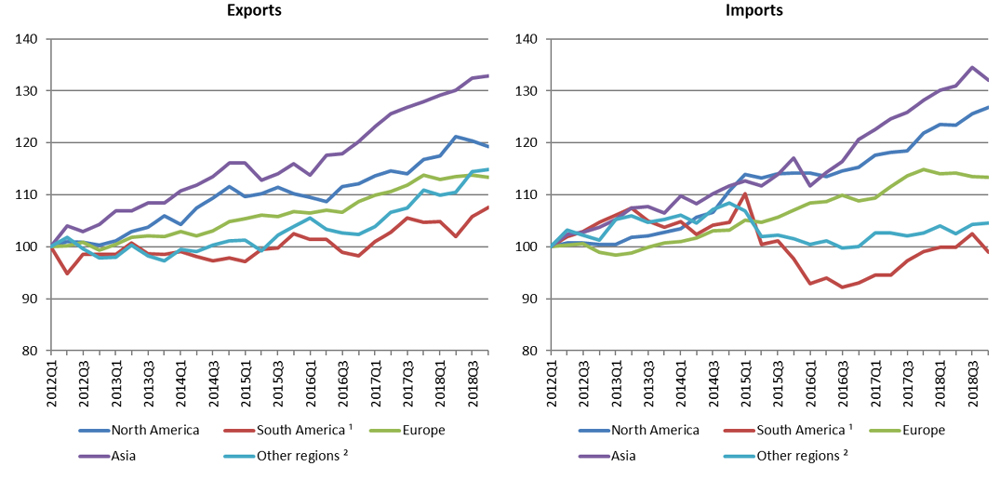
Chart 5 shows merchandise export and import volumes by region. The deceleration of trade in 2018 was driven primarily by Europe and Asia due to their large share in world imports (37% and 35%, respectively). After recording strong increases in 2017, Asia saw its trade growth moderate in 2018. Meanwhile, Europe’s exports stagnated throughout the year while its imports declined gradually.

Chart 5: Merchandise exports and imports by region, 2012Q1-2018Q4
Volume index, 2012Q1=100
1 Refers to South and Central America and the Caribbean
2 Other regions comprise Africa, Middle East and the Commonwealth of Independent States, including associate and former member States.
Source: WTO and UNCTAD.

A major exception to the trend was North America, where a buoyant US economy contributed to strong import growth of 5.0% in 2018 (Table 1). “Other regions”, encompassing Africa, the Middle East and Commonwealth of Independent States saw export growth accelerate to 2.7%. South America’s trade flows have continued to recover gradually but have been buffeted by weaker external demand and domestic economic shocks.
Heightened trade tensions cannot explain all of the trade slowdown in 2018 but they undoubtedly played a significant role as consumers and firms anticipated new trade measures taking effect. Trade and output were also influenced by temporary shocks, including the federal government shutdown in the United States and production problems in the automotive sector in Germany toward the end of the year. These shocks are more likely to have transitory effects, causing consumers and businesses to postpone purchases and production decisions rather than cancelling them outright.
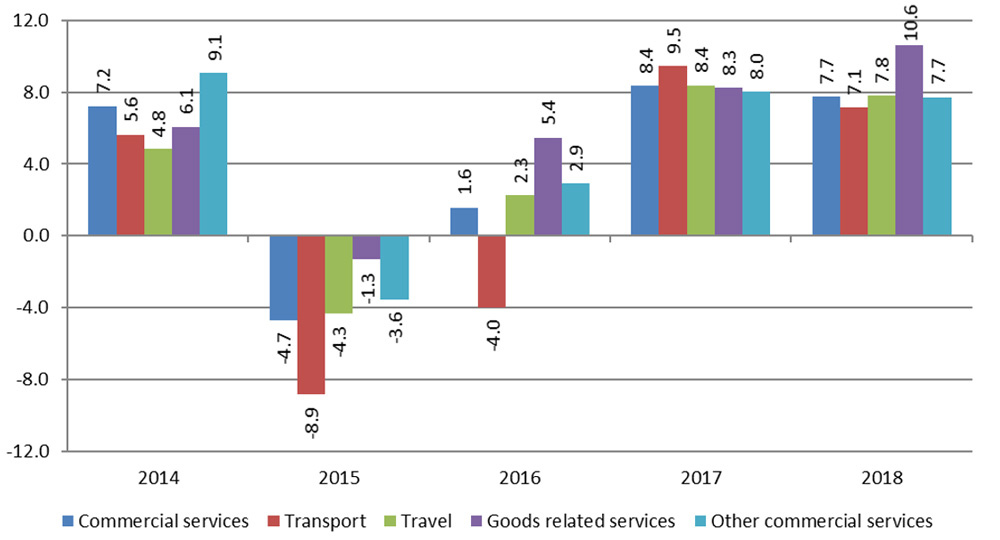
World commercial services trade recorded strong growth in 2018 for the second consecutive year. This is illustrated by Chart 6, which shows growth in the dollar value of services exports by major categories. Goods related services registered the strongest expansion, with an 10.6% increase in current dollar terms. The weakest growth was in transport, which rose by 7.1%.  Commercial services overall grew 7.7% in 2018.

Chart 6: Growth in the value of commercial services exports by category, 2014-18
% change in US$ values
Source: WTO, UNCTAD and ITC.

Outlook for trade in 2019 and 2020

Forward-looking trade indicators have turned negative in recent months, including the WTO’s World Trade Outlook Indicator (WTOI). In February the WTOI index fell to 96.3, below its baseline value of 100, signalling slowing trade growth into the first quarter of 2019. Air freight shipments also started the year on a soft note, with international freight tonne kilometres (FTKs) down 3.0% year-on-year in January, according to statistics from the International Air Transport Association (IATA). A measure of global export orders derived from purchasing managers’ indices has also fallen to 49.1 in February, below the threshold value of 50 separating expansion from contraction (Chart 7). Taken together, these data point to continued trade weakness in the first half of 2019.

Chart 7: Global PMI new export orders index, Jan. 2010 – Feb. 2019
Index, base=50
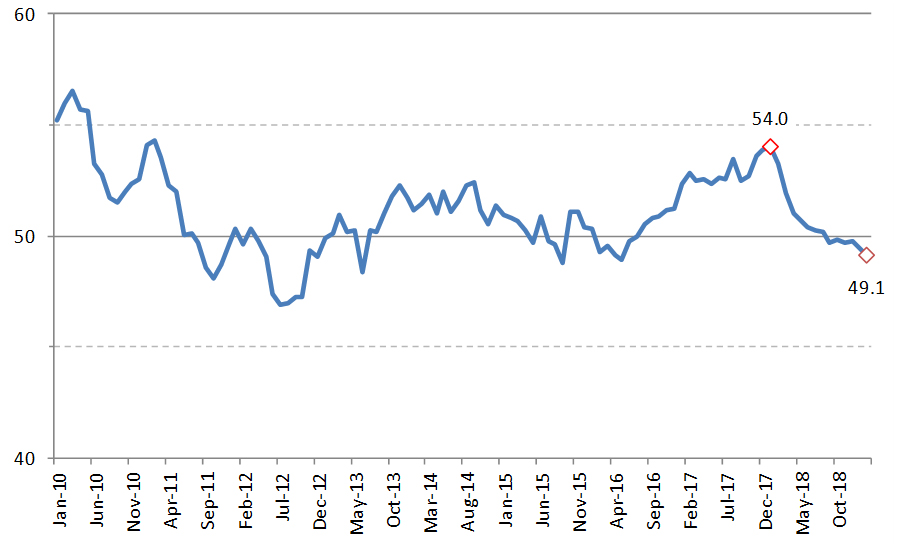
Note: Values greater than 50 indicate expansion while values less than 50 denote contraction.
Source: IHS Markit.

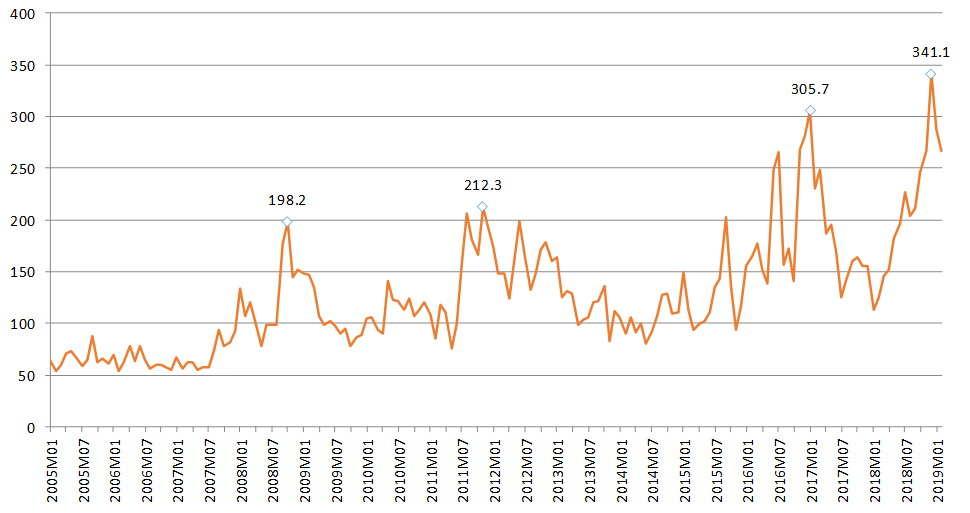
An index of economic policy uncertainty based on the frequency of phrases related to uncertainty in press accounts is shown in Chart 8. The index has risen consistently over time, peaking at 341 in December 2018, coinciding with the US government shutdown and US trade negotiations with China. To the extent that economic uncertainty deters investment, it can have a negative impact on trade since capital goods tend to have high import content. Conversely, a lowering of trade tensions would be expected to stimulate both investment and trade.

Chart 8: Global economic policy uncertainty, Jan. 2005 – Feb. 2019
(index, average 1997-2015=100)
Source: PolicyUncertainty.com.

If current GDP forecasts are realised, the WTO expects the volume of world merchandise trade to grow by 2.6% in 2019, with stronger expansion in developing economies (3.4% for exports, 3.6% for imports) than in developed ones (2.1% for exports, 1.9% for imports). World trade growth should pick up slightly in 2020 to 3.0%, with growth in developing economies (3.7% for exports, 3.9% for imports) again outpacing developed countries (2.5% for exports, 1.9% for imports) (Table 1). Most risks remain firmly on the downside, with upside potential hinging on a relaxation of trade tensions.

Table 1: Merchandise trade volume and real GDP, 2015 – 2020 1
Annual % change
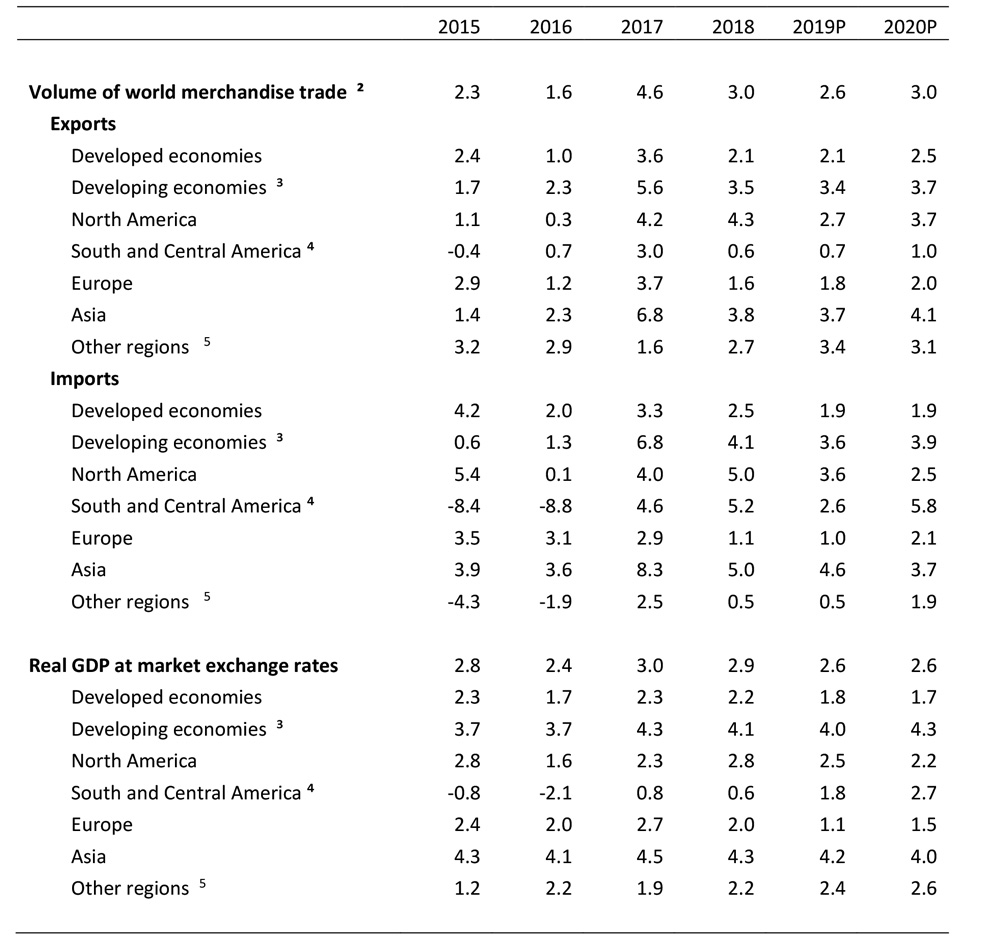
1 Figures for 2019 and 2020 are projections.
2 Average of exports and imports.
3 Includes the Commonwealth of Independent States (CIS), including associate and former member States.
4 Refers to South and Central America and the Caribbean.
5 Other regions comprise Africa, Middle East and Commonwealth of Independent States (CIS).
Source: WTO and UNCTAD for trade, consensus estimates for GDP.

Appendix Tables and Charts

Appendix Table 1: Leading merchandise exporters and importers, 2018
$bn and %
1 Secretariat estimates.
2 Imports are valued f.o.b.
3 Includes significant re-exports or imports for re-export.
Source: WTO and UNCTAD

Appendix Table 2: Leading merchandise exporters and importers excluding intra-EU (28), 2018
$bn and %
1 Secretariat estimates.
2 Imports are valued f.o.b.
3 Includes significant re-exports or imports for re-export.
Source: WTO and UNCTAD.

Appendix Table 3: Leading exporters and importers of commercial services, 2018
$bn and %
1 Imports adjusted to f.o.b. valuation.
2 Preliminary annual estimates. Quarterly data not available.
3 Follows BPM5 services classification.
– Indicates non-applicable.
Note: Preliminary estimates based on quarterly statistics. Figures for a number of countries and territories have been estimated by the Secretariat. More data available at http://data.wto.org/.
Source: WTO, UNCTAD and ITC.

Appendix Table 4: Leading exporters and importers of commercial services excluding intra-EU(28) trade, 2018
$bn and %
1 Imports adjusted to f.o.b valuation.
2 Preliminary annual estimates. Quarterly data not available.
3 Follows BPM5 services classification.
… indicates unavailable or non-comparable figures.
– indicates non-applicable.
Note: Preliminary estimates based on quarterly statistics. Figures for a number of countries and territories have been estimated by the Secretariat. More data available at http://data.wto.org/.
Source: WTO, UNCTAD and ITC.

Appendix Chart 1: Merchandise exports and imports of selected economies, January 2017-February 2019
Year-on-year % change in current dollar values
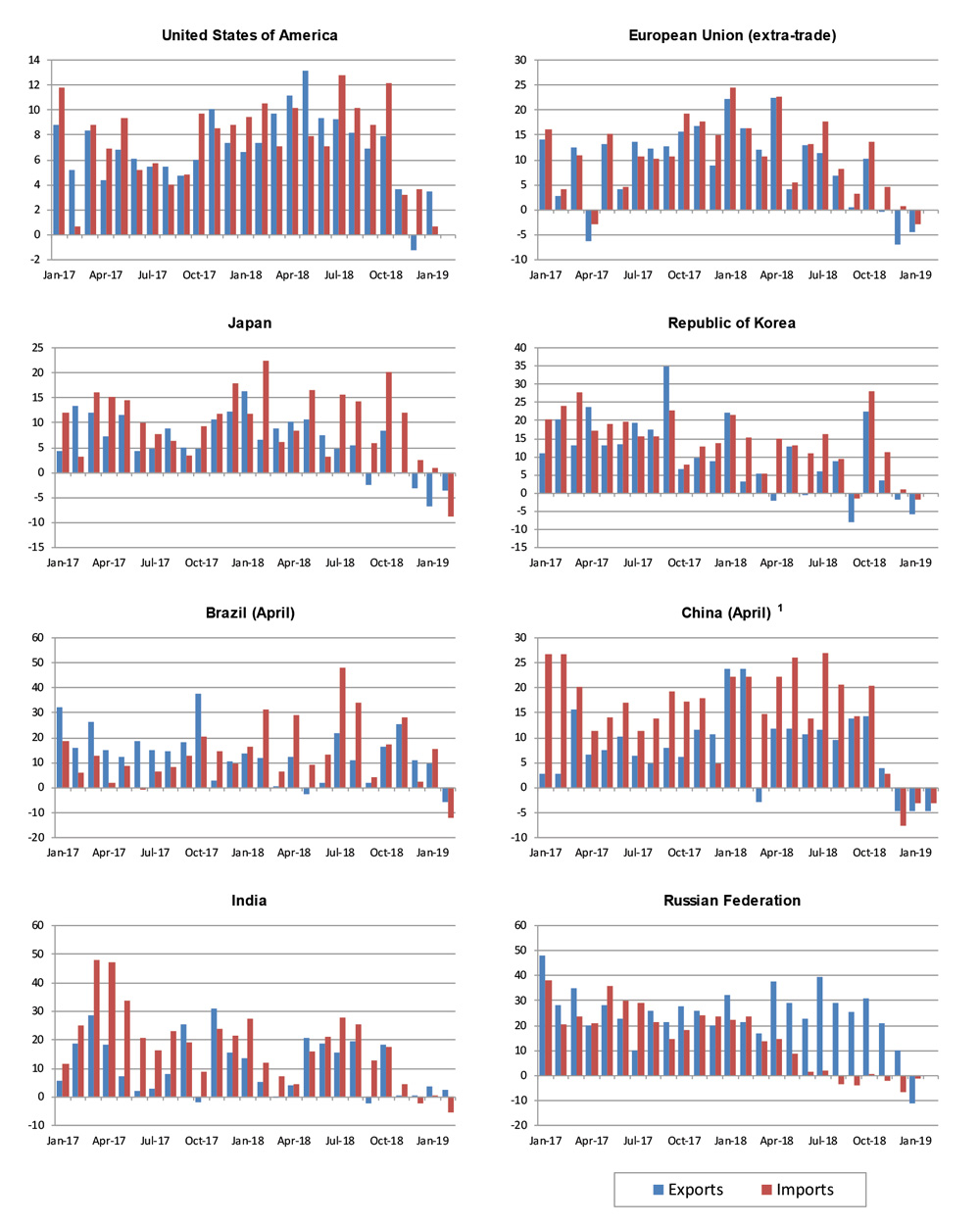
1 January and February averaged to minimize distortions due to lunar new year.
Source: WTO Short-term trade statistics.

Appendix Chart 2: Contributions to GDP growth of selected economies, 2012-2018
% changes and percentage points
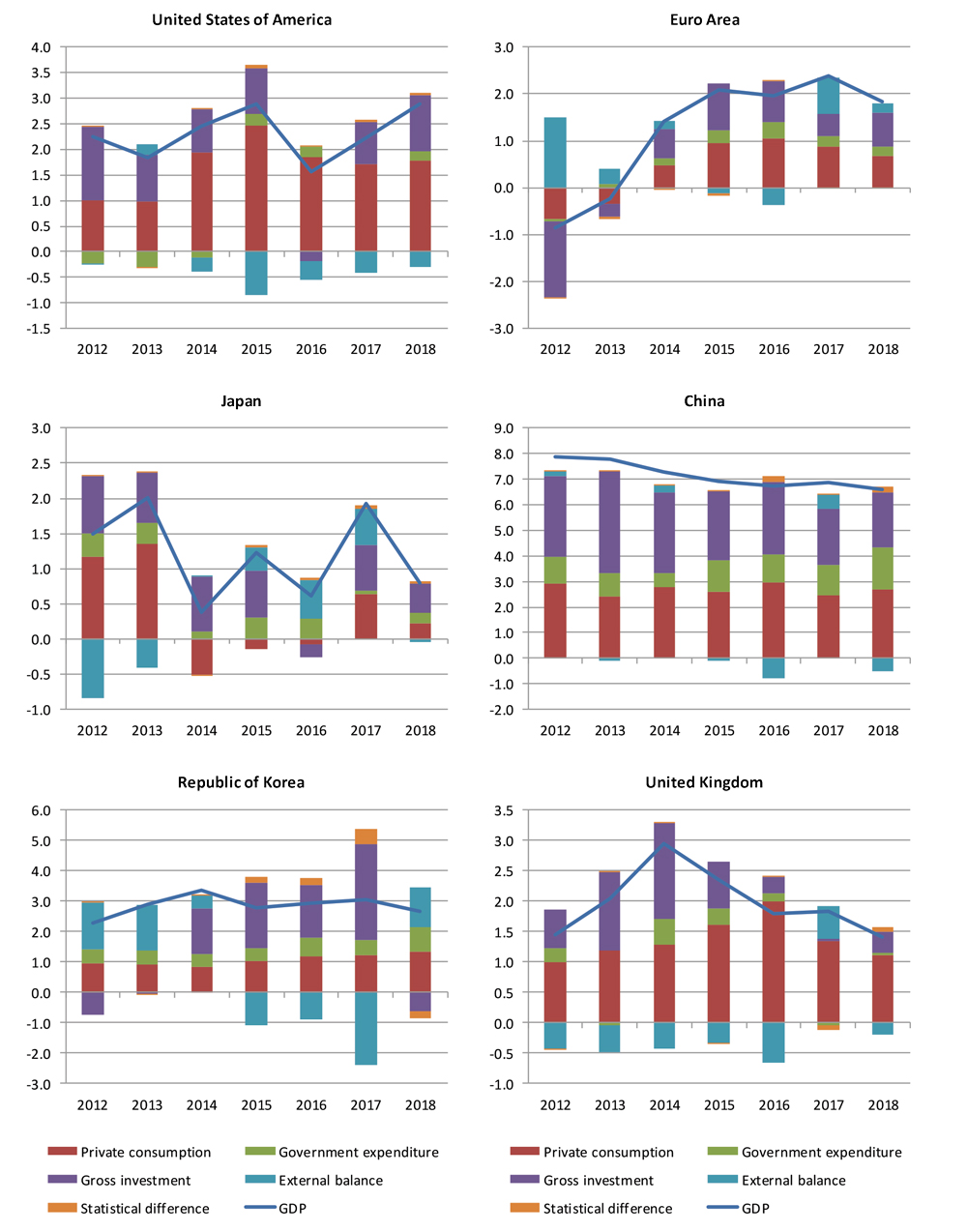
Click to see a larger image;

Source: OECD Quarterly National Accounts for all countries except China, which was sourced from UN National Accounts Statistics through 2017 and the Economist Intelligence Unit for 2018.
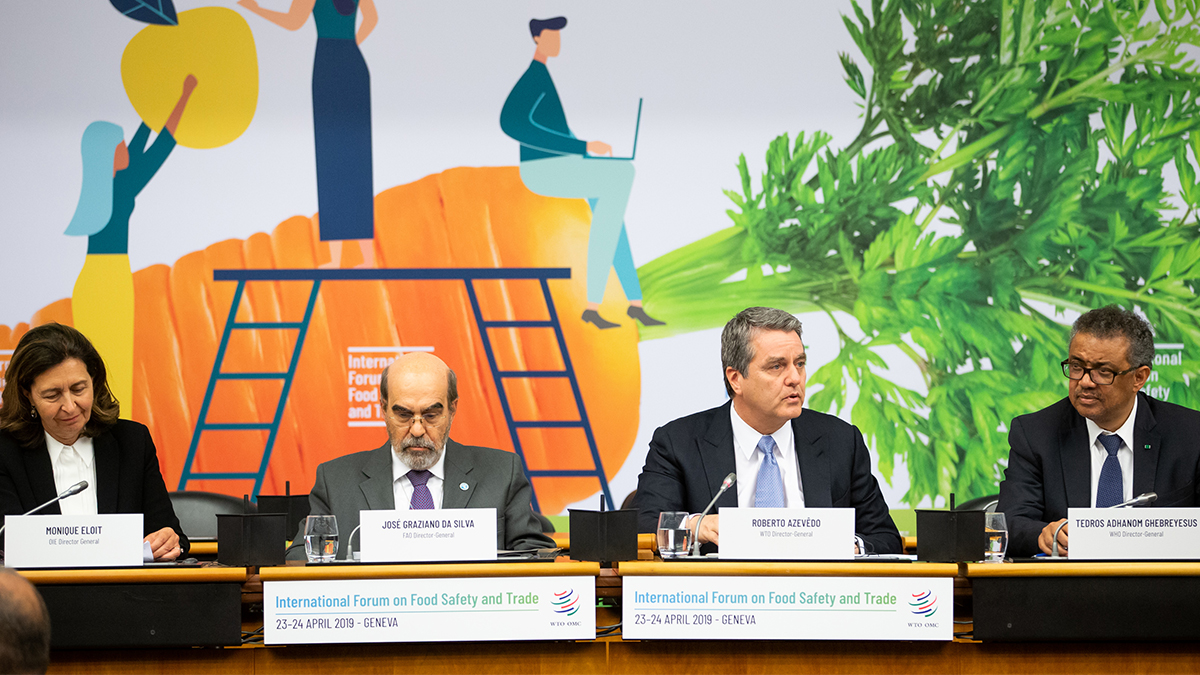
WTO Forum looks at addressing food safety concerns through trade and cooperation

WTO rules on food safety play an important part in enabling governments to protect their citizens while ensuring trade can play its critical part in maintaining timely supplies of safe and affordable food, said Director-General Roberto Azevêdo in opening the International Forum on Food Safety and Trade taking place at the WTO on 23-24 April.

Director-General Azevêdo, joined by FAO Director-General José Graziano da Silva, WHO Director-General Tedros Adhanom Ghebreyesus and OIE Director-General Monique Eloit, called for renewed international cooperation to capitalize on the power of digitalization, facilitate trade and address food safety in the future.

“Technological advances are revolutionizing the way we trade. And this has an impact on the way that food safety measures are designed and enforced,” DG Azevêdo said in his opening remarks to the Forum. To that end, he called for all the organizations to “collaborate to help build the necessary capacity and skills”.
DG Azevêdo cited WTO agreements and programmes such as the Sanitary and Phytosanitary Agreement, the Agreement on Technical Barriers to Trade and the Standards and Trade Development Facility as important contributions made by the multilateral trading system to ensure the supply of safe food.
DG Azevêdo asked officials and experts to further look at digitalization and its impact on food safety and trade, ensuring synergies between food safety and trade facilitation, and promoting harmonized food safety regulations in a period of change and innovation.
Speaking from the perspective of the UN Food and Agriculture Organization (FAO), Director-General Graziano da Silva pointed out the pivotal role that trade rules and regulations are playing along the food supply chain, particularly when new health issues such as obesity become a global challenge. “The international trade and the high consumption of ultra-processed food is a great concern that must be addressed properly, based on the fact that obesity is a public health issue and not merely a consequence of individual choices. The international community must advance the establishment of rules and regulations that encourage the consumption of healthy and nutritious foods,” he said
World Health Organization (WHO) Director-General Ghebreyesus drew the audience’s attention to the health dimension of the conversation. He emphasized the need for harmonization of food safety policy and regulations across sectors and borders in order to protect consumers’ health and facilitate fair practices in food trade. “Food safety crosses national borders. Food produced in one country today can, within 24 hours, be on the other side of the planet and on its way to shops, restaurants and homes … There should be no such thing as food safety for the rich and another for the poor. The health of all people, no matter where they live and what they eat, must be protected equally,” he said.
Monique Eloit, Director-General of the World Organisation for Animal Health (OIE), highlighted the intertwined relationship between animal health and food safety. Stressing the importance of international standards as a common language for various actors involved in trade and the food chain, she said OIE is committed to the implementation of these standards, such as OIE’s IPPC standards and Codex Alimentarius which are recognized by the WTO Agreement on Sanitary and Phytosanitary Measures. “These standards … while contributing to the health of our animals, plants or food safety also ensure fair, safe and equitable trade,” she said.

This forum builds on a previous event in Addis Ababa in February 2019. African Union Commissioner Josefa Leonel Correia Sacko provided an overview of the discussions held in the Ethiopian capital. Taking stock of the various food safety issues in a broader context, she particularly linked some of the challenges to international trade. “We must underline the importance of committing to multilateral action, promoting synergies and avoid working in silos. We also need to incorporate food safety in our national policies and enhance participation of all countries in the standard-setting process,” she said. The full programme is here

India, Japan and UAE partner to develop trade opportunities in Africa

As it seeks to extend it’s footprint in Africa where China has already made deep inroads, India has partnered with Japan and the United Arab Emirates (UAE) to implement two high priority projects.  In collaboration with Japan, India will build a hospital for cancer treatment in Kenya while in Ethiopia it will partner with the UAE to set up an information and communications technology (ICT) centre. High level officials have held talks in recent weeks and the details on implementing the two landmark projects are expected to be finalized shortly.
India’s plans have been welcomed by analysts and global economists, given the major forays of China into Africa which has been trending since 2004-05.
India has seen its influence in Africa dwindle since the 1990s, which was once seen as a major political influence in Africa, thanks to New Delhi’s support for the freedom movements in many countries in the continent. However the middle of the last decade has seen a change and India has moved to remedy the situation and reworking its ties with Africa through high-level summits and frequent top level visits.
Chinese investments in Africa between 2005 and 2018 has be pegged at more than $220 billion by a recent study conducted by a Washington-based think tank American Enterprise Institute (AEI) .According to the recet research Nigeria and Angola are major destinations for Chinese investments while Ethiopia, Kenya, Zambia and South Africa follow up the rear end of a strong list. The impact is also supported by China’s ambitious Belt and Road Initiative (BRI) that aims to link China by sea and land with South-East and Central Asia, the Middle East, Europe and Africa.
To counter the influence of China and the BRI, India and Japan have announced the Asia Africa Growth Corridor (AAGC) which is supported by four major pillars guiding the project. These include capacity building and human resource development in Africa, creating quality infrastructure and institutional connectivity, people-to-people partnership, and development and cooperation projects. the new project also covers the  development of capacities to sustain infrastructure, greenfield projects, power grids, agriculture and agro-processing, besides health and pharmaceuticals.
It is not clear whether the hospital in Kenya would be built as part of the AAGC intiative, but it is described as a “trilateral” cooperation venture with Japan, and similarly with the UAE in the case of the ICT centre in Ethiopia.
Given its resource constraints India is seeking partnerships with third countries in Africa. New Delhi has single handedly and quietly undertaken many projects like the Pan African e-network project on tele-education and tele-medicine—that provides “integrated” satellite, fibre optics and wireless network between educational and medical institutes in Africa and India. The project also supports e-governance, e-commerce, infotainment, resource mapping and meteorological services. India’s expertise in skilling manpower, if backed by financial resources and technical expertise from countries like Japan and the UAE, could create quality projects in Africa.
In the case of India and Japan, there is a “mutual interest in doing things together” as both are wary about China’s BRI. Both Japan and the UAE could make use of the political goodwill that India enjoys in Africa, making it a win-win situation for all sides. Ethiopia has become a very big focal point for Chinese investments into East Africa. With India’s ties with the UAE warming up considerably and the UAE looking to invest in India’s infrastructure, it is natural that two countries should look at collaborating in developing industries and regions like Africa.

Fayat French Manufacturer Is Set To Gain A Strong Presence In India

French road equipment manufacturer Fayat is set to gain a stronger presence in the Indian market with a wider range of offerings following its recent acquisition of Dynapac from Atlas Copco. Jean-Claude Fayat, CEO – Fayat Group, Jörg Unger, President – Fayat Road Equipment Division, Paul Hense, President – Dynapac GmbH, and Abhijit Som, Vice President – Aftermarket, Dynapac, discuss with NBM Media the company’s plans for India, during the inauguration of Dynapac Road Construction Equipment India Private Limited’s new production facility at Phulgaon in Pune.
With Dynapac and BOMAG we have widened our product offerings to customers. Dynapac will bring with it, premium products and an enhanced level of product support and services by Fayat Group.The two business entities will complement each other with their respective product portfolios. 
With Dynapac, we will incorporate advanced standards based on our in-depth research and development capabilities. We plan to make the machines more intelligent, which will be a significant differentiator as it will ensure their higher utilization and uptime, and thereby more productivity for the customers.
The Indian market is price sensitive, no doubt, but we are seeing a growing preference for advanced solutions that deliver higher productivity. We can assume that India is now next to China, and even some advanced market, in technology adaption and utilization, We are also seeing a spurt in demand for customized/premium product support services from customers.
India being a value for money market and to address the cost issue, customers needs and depands where taken into consideration. The required bought about modifications in the product line at our new facility in India. 
This however is done while maintaining the global Dynapac design principal and the product base or platform will remain the same. For instance, our single drum rollers have been designed as per the market requirement. 
Products manufactured at our Indian facility will also be exported to global markets so we will maintain a uniform quality standard across all our product lines.
India is an important market, and Fayat are in the process of setting up a complete R&D centre in Bangalore. Called Fayatec, it will be operational very soon, and will have about 100 engineers. 
The centre will be instrumental in carrying out product modifications and upgradations in our compactors and pavers in consultation with our Competence Centres in Sweden and Germany. Fayatec will be also used by other Fayat companies.
Our machines are equipped with several intelligent solutions based on IoT for surface preparation, for harnessing data on utilization and productivity, to help towards preventive and predictive maintenance, etc. A key IT-enabled solution is the Fayat Mac-Manager, which arrests production losses. 
Such intelligent solutions give us a competitive edge, besides which, we provide operator training, equipment maintenance, and process optimization through the right equipment and site planning. All of this enables our machine owners to get a decent payback on their equipment.
Presently, Fayat Marini has one manufacturing facility for producing asphalt batch mix plants. As there is growing project site requirements in India, equipment users are looking for more energy efficiency, quicker set up time of the plant, and higher productivity. In view of this, our plant is designed to be modular, easy to transport and install at site. 
They are present in India with Marini, Secmair (road maintenance), Dynapac and BOMAG brands of equipment, besides which, they are making capacity addition at our manufacturing facility, launching new products, and strengthening our distribution network.
To garner a larger market share, our foremost strategy will be to make innovations in our products and across the value chain so that our machines become completely attuned to the application requirements as per Indian jobsite conditions. 
Further enhancement of the product support will be an initiative for optimal performance of the plants, Also this will bring synergies and unique benefits to the customers, meeting their needs along the road life cycle.
However, India has been an exception, as demand for construction equipment, especially for road construction, continues to be robust due to the Indian government’s plans to build numerous roads and highways across the country.
The highly skilled Indian workforce together with the professional acumen of our marketing and product support team members, will bring a synergy in the working cultures of the two countries. The aim is to drive optimally the operating and maintenance practices of the users of our advanced machines.

Adequate Oil Supply For Indian Refineries: Government

Adequate Oil Supply For Indian Refineries: Government

The government has worked out a contingency plan to ensure that there is enough supply of crude oil to Indian oil refineries starting from May when the US withdraws the waivers from its Iran clearance given earlier to major oil importing countries, which includes India as well.
As per a Petroleum Ministry statement, “The government of India has put in place a robust plan to ensure that there is adequate supply of crude oil to Indian oil refineries from May 2019 onwards. There will be supplementary supplies from other major oil producing countries from different parts of the world.”
The Indian refineries are prepared fully without any concerns to meet the demand for petrol, diesel and other petroleum products nation wide.
Following US President Donald Trump’s decision, the government machinery issued this assurance to terminate the waiver allowed to India to buy Iranian oil coupled with the threat of sanctions if New Delhi does not comply with the embargo.
“Trump has decided not to reissue significant reduction exceptions (SREs) when they expire in early May.” said Washington, White House Press Secretary Sarah Huckabee Sanders while announcing the end of waivers. The sanction waiver ends on May 2nd .
India imports close to 10 per cent of its domestic oil requirement from Iran. Though the imports slightly fell in 2018-2019 following the US sanctions, it is still important at close to 20 million tonnes per annum.
Iran is also attractive commercially as country for oil exportion. Iran offers better terms for oil to India that includes a 60-day credit period and discounts on oil and insurance.
An official of a state-run oil company told IANS that alternatives are planned to replace Iran oil and so there would not be any disruptions from next month. 
India meets it’s oil needs mainly from countries such as Saudi Arabia, Iraq, Iran, Venezuela and a few African and Latin American countries. It has started importing oil from the US over last few years, the quantum of which is expected to rise in coming months.
Already the US has potrayed its intention to raise oil exports to India and offer Indian companies better sale terms.
As part of its initiative on energy security, India is already talking to countries like Mexico and Brazil to raise oil imports from them. Besides, a rupee trading mechanism is being explored with countries such as Venezuela and Iran, which face US sanctions, to by-pass restrictions and continue oil trade on a limited scale.

Volkswagen successfully Rolls out its One-millionth Car

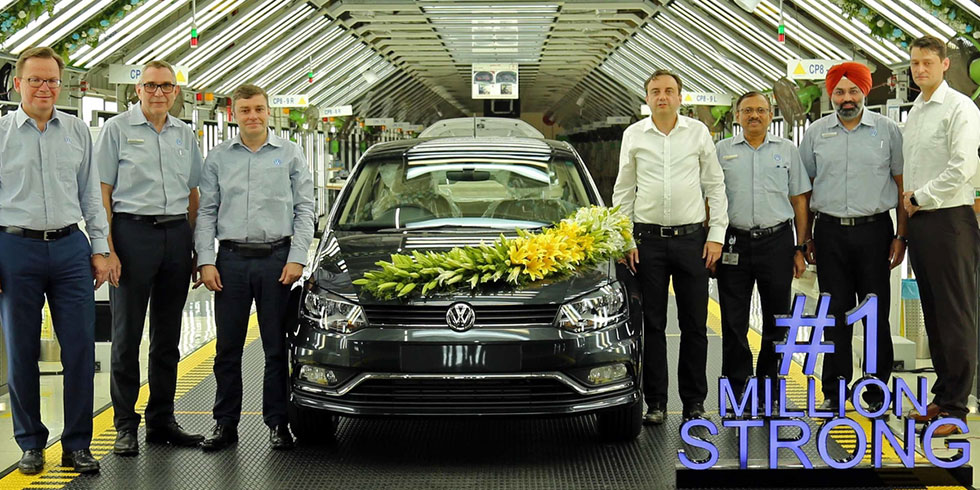
Volkswagen India has manufactured its one-millionth car at Chakan plant in Maharashtra where the company has been producing cars since 2009 and has been exporting to over 50 markets worldwide.
Volkswagen is known to make some of the most well-built, safe and technologically advanced mass market cars around the world. Decade later, the German automotive major achieved a significant milestone by manufacturing its one-millionth car from the factory. The car in question is a Volkswagen Ameo that was rolled out in presence of some of the oldest employees who have been part of the production department at the plant alongside some of the company’s top management for VW India that included Gurpratap Boparai, Managing Director, Volkswagen India and Steffen Knapp, Director, Volkswagen Passenger Cars India.

The Volkswagen India plant commenced its operations on the 31st of March 2009. Since then it rolled out three Volkswagen cars which include the Polo, Ameo and Vento .The plant was initially set up for local market but as time passed the company started manufacturing and exporting cars to over 50 countries across Asia, Africa, North America and South America.

Volkswagen Group is also investing around Rs 8,000 crore in its regional project — INDIA 2.0. The project aims at developing more cars that are relevant to the requirements of the Indian market on a platform that has been localised. A technology centre has also been set up at the Pune Plant to start local development.

India’s Bedico to Feature at 21st Autoexpo Africa 2018

Two decades of successful business, Becido Automotives is a well known name locally and internationally. This May, it will make an appearance in the 21st AUTOEXPO AFRICA 2018.The Expo will be a platform for the company to attract more export business in the rich markets of Kenya and Africa. At the same time the event will also host a number of international companies, all showcasing the best of the auto industry
The auto exhibition is held every year in the East African region, promising a wonderful experience in the world of technology, inventions and innovative dialogues in the automotive sectors. One will meet professionals, decision makers, developers, manufactures, exporters, buyers and even inventors displaying their products and visions for further progress and good business. All these added pointers has increased the number of participants every year, with countries flocking, to join the success adventure of Africa.
Starting as a manufacturer of bicycle parts in state of Punjab, Bedico has grown to into a producer of scoter, motorcycle, three wheeler and truck parts. Today, they are well known for brands such as MEGAVOLT” & “BTX”, distributed throughout the international market. They firmly believe their team is the reason for their success, may it be the technical skills or research or export and expansion plans.
The products manufactured by Bedico maintain the highest standards of uniform quality .They use automated machinery and equipment to produce goods matching international needs and specification. Their competitive rates will be an advantage to their participation in the 21st Autoexpo, diversifying their export targets. The 21st AUTOEXPO AFRICA 2018, Kenya will take place at the Kenyatta International Convention Center (KICC), Nairobi from the 17th to 19st of May, 2018.

Indian 2-Wheelers Booming Exports in Overseas Markets

The export journey of home-grown two-wheeler makers is achieving boost as they post significant growth in shipments across a larger market.

The growing two-wheeler exports, specially penetrating deeper in markets of Africa, Latin America and ASEAN strengthens the domestic market when it is going through a slowdown due to stagnant demand.

While motorcycle shipments during 2018-2019 have increased by 15 per cent at about 2.9 million units, scooter exports registered an increase of 27 per cent at 3.98 lakh units during the year. Though the growth rate in bikes has come down (from 22 per cent in 2017-18), expansion to more markets has enabled to maintain the double-digits export growth.

Bajaj is the largest exporter of two-wheelers from India, followed by TVS Motor and Hero MotoCorp.

Two-wheeler exports, which have been on a growth chart since Q4 FY2017, peaked in Q1 FY2019 with a year-on-year growth of 30 per cent. The double-digit growth in exports in FY19 has been driven by major come back in key markets such as Nigeria and Egypt. It was further boosted by the entry of Indian companies into new markets in Latin America and ASEAN, according to Subrata Ray, Group Vice-President – Corporate Ratings, ICRA.

“Though these markets are small, they have high growth potential and diversely offer diversification benefits. Going forward, improvement in export volume will likely continue, but at a moderate pace, as the collision of high base catches up,” he added.

Tea Exports by Country

Tea Exports by Country

Tea leaves photo courtesy of Pixabay

Tea leaves

Global sales from tea exports by country totaled an estimated US$7 billion in 2018.

Overall, the value of tea exports fell by an average -10.9% for all exporting countries since 2014 when tea shipments were valued at $7.8 billion. Year over year, global tea exports depreciated -13.6% from 2017 to 2018.

Among continents, Asian countries generated the highest dollar worth of exported tea during 2018 with shipments valued at $4.1 billion or close to three-fifths (58.8%) of the global total. In second place were African exporters at 21.9% while 15.1% of worldwide tea shipments originated from Europe.

Much smaller percentages of exported tea came from North America (2.4%), Latin America (1.5%) excluding Mexico and the Caribbean, then Oceania (0.2%) led by Australia and New Zealand.

For research purposes, the 4-digit Harmonized Tariff System code prefix for tea is 0902.

Tea Exports by Country

Below are the 15 countries that exported the highest dollar value worth of tea during 2018.
  1. China: US$1.8 billion (25.7% of total tea exports)
  2. Kenya: $1.1 billion (16.2%)
  3. India: $763.2 million (11%)
  4. Sri Lanka: $721.6 million (10.4%)
  5. Germany: $252 million (3.6%)
  6. Poland: $202.3 million (2.9%)
  7. Japan: $142.2 million (2%)
  8. United Kingdom: $140.7 million (2%)
  9. United States: $124 million (1.8%)
  10. Vietnam: $116.8 million (1.7%)
  11. Taiwan: $111.9 million (1.6%)
  12. Indonesia: $108.4 million (1.6%)
  13. Russia: $97.9 million (1.4%)
  14. Argentina: $94 million (1.4%)
  15. Netherlands: $93.5 million (1.3%)
The listed 15 countries shipped 84.5% of global tea exports in 2018 by value.

Among the above countries, the fastest-growing tea exporters since 2014 were: Taiwan (up 159.7%), Japan (up 89.1%), China (up 40.3%) then India (up 16.3%).

Those countries that posted declines in their exported tea sales were led by: Sri Lanka (down -55.2%), Vietnam (down -48.7%), Indonesia (down -19.4%), Argentina (down -18.3%) and Poland (down -14.2%).

Coffee Imports by Country

Coffee Imports by Country

Coffee cup conceptual (courtesy of Pixabay.com)

Coffee conceptual (Pixabay)

Global purchases of imported coffee totaled an estimated US$31 billion in 2018.

Overall, the value of imported coffee sank by -0.6% for all importing countries since 2014 when coffee purchases were valued at $31.1 billion. From 2017 to 2018, worldwide coffee imports depreciated by -5.5%.

From a continental perspective, European countries consumed the highest dollar worth of imported coffee during 2018 with purchases valued at $18.2 billion or 58.8% of the global total. In second place were North American importers at 22.6% while 13.6% of coffee imports were delivered to Asia. Smaller percentages arrived in Africa (1.8%), Oceania (also 1.8%) led by Australia and New Zealand, then Latin America (1.3%) excluding Mexico but including the Caribbean.

The 4-digit Harmonized Tariff System code prefix for coffee is 0901.

Coffee Imports by Country

Below are the 15 countries that imported the highest dollar value worth of coffee during 2018.
  1. United States: US$5.7 billion (18.5% of total coffee imports)
  2. Germany: $3.5 billion (11.2%)
  3. France: $2.8 billion (9.1%)
  4. Italy: $1.7 billion (5.6%)
  5. Netherlands: $1.3 billion (4.2%)
  6. Japan: $1.26 billion (4.1%)
  7. Canada: $1.2 billion (3.9%)
  8. United Kingdom: $1.08 billion (3.5%)
  9. Belgium: $1.07 billion (3.5%)
  10. Spain: $1.03 billion (3.3%)
  11. Switzerland: $757.6 million (2.4%)
  12. South Korea: $637.3 million (2%)
  13. Russia: $593 million (1.9%)
  14. Poland: $581.5 million (1.9%)
  15. Australia: $471.6 million (1.5%)
By value, the listed 15 countries purchased over one quarter (76.7%) of all coffee imports in 2018. Within parenthesis is the percentage of overall coffee shipments for each importing geography.

Among the above countries, the fastest-growing markets for coffee since 2014 were: Poland (up 37.5%), United Kingdom (up 29.5%), Netherlands (up 27.8%) then South Korea (up 20.9%).

Those countries that posted declines in their imported coffee purchases were led by: Germany (down -13.9%), Japan (down -12.5%), Canada (down -7.5%) then United States (down -4.9%).

Design a site like this with WordPress.com
Get started