Importance of Export
Exports form the most important source of foreign exchange for developing countries. All developing countries, including, of course, India strive to increase their exports as a means for mobilising resources for their development plans. Indian economy is basically agrarian and hence export of food and agricultural products assume crucial significance in our export efforts. Growth in agro-exports not only brings in additional foreign exchange for the country but benefits a large number of people involved in the production, processing and exports of such products.
Export of spices from India
From time immemorial India has been known as the Land of Spices. The Chinese, Arabs and The Europeans came to the Indian shores lured by the spices grown here. Pepper, ginger, turmeric and cardamom are the most renowned of Indian spices. We earn Rs. 1612 crores from the export of spices annually (2000-0I). The world consumption of spices is growing steadily year by year. Expansion of our export of spices to increase or even to retain our share of world market is imperative. This can be achieved only through increased productivity and improved quality.
Export and economy of farmers
India is predominently an agrarian country and the prosperity of our farmers brings prosperity to the nation. While no efforts should be spared to increase productivity from each hectare of land under cultivation, the marketability of the produce is crucially important. If there is a fall in demand it leads to a glut in the market and consequently prices become uneconomic. All agricultural commodities have this inherent problem. When a product depends upon an export market also, the situation becomes more complex. A setback in the markets in New York or London affects the farmers in the remote villages in Kerala or Karnataka and upsets our economy. It is, therefore, a matter of survival for us to increase productivity and also maintain the marketability of the produce through improved quality.
QUALITY REQUIREMENTS OF FOODS FOR EXPORT
Developed countries are the major markets for our food exports. USA, Japan, Canada, Australia and the European countries have their own stringent food laws and regulations. The main objective of the laws is to protect the health and safety of their citizens. They allow import of food materials only when they conform to the provisions of their food laws and regulations.
Why food quality?
The developed countries give top priority to the health of their citizens. The laws with respect to items of food are meant to protect the consumers from food of inferior quality, or those which are likely to be contaminated by impurities or poisonous substances. Therefore any food item that we export, be it marine products, cashews, pepper, cardamom or ginger, it is important that the product conforms to the quality standards demanded by the importing country. In the context of thousands of people getting infected with foodborne diseases or even dying of food poisoning, it is only just and reasonable that countries which depend on imported food stuffs should take such extreme precautions. Food materials that have become rotten, spoiled, infected with micro-organisms or contaminated by other impurities are either destroyed by the import inspection authorities or sent back to the exporting country. This not only results in loss of market but also damages the exporting country’s reputation.
Factors affecting the quality of food products
Right from the initial stages of production to the time till the produce reaches the consumer, the farmer has to combat many unfavourable circumstances. Among these are pests, micro-organisms which infest the farmland, foreign matter which may be dangerous or otherwise, poisonous substances or impurities which get into products from materials used in processing, micro-organisms and dirt introduced into the product through unhygienic practices of the people who handle the produce, as well as loss of quality that results from short-comings in storage practices.
What is adulterated food
The word ‘adulterated’ has a different connotation in the developed countries. Items of food affected by pests, microbes or fungi become impure and unfit for human consumption. The presence of foreign matter, moisture content above permissible levels, residues of pesticides, presence of other chemicals etc., also make food unfit for human consumption. Importing countries like USA and Japan detain imported foods when they have evidence that these were produced and processed under unhygienic conditions, and subject to further action depending on the degree of contamination.
The consumer and the contaminants in food stuffs
Pathogenic organisms which get into food stuffs cause diseases to the consumer. Toxins produced by the microbes cause food poisoning. The excreta of rodents and birds contain millions of microbes. These can cause deadly diseases as well as poisoning due to toxin. Rodent excreta contains chemicals which may cause cancer. Toxins secreted by certain fungi also have been proved to cause cancer. Food stuffs processed in dirty and unhygienic conditions are rejected by the consumers. They also begin to suspect any product originating from countries which have been guilty of exporting such contaminated products. Moreover, the consumers organise themselves and apply pressure on the government for stringent measures. Such a situation seriously affects the export trade of the producing countries.
New trends in the international market
Stringent health and food laws exist in all developed countries. These countries often revise such laws in the light of new scientific findings. For example, it might so happen that monitoring to find out the presence of certain disease causing organisms in food stuffs is made mandatory all on a sudden. Similarly, changes are often made in the tolerance levels of pesticide residues. These countries are also steadily bringing down the permissible levels of other impurities. Thus scientific and technological advancement brings forth new challenges in the export trade. The health and food laws which are increasingly becoming stringent reflect the grave concern of the respective government for the safety and welfare of their people.
A new consciousness is growing all over the world about disease-causing organisms, poisonous substances and impurities. Parallel to this, the degree of excellence which consumers expect from foods is also growing. Exporting countries are thus constrained to maintain quality standards set by the importing countries. According to projections made by the Food and Agriculture Organisation, food exports will register significant growth in the next decade. Increasing our share in this expanding market offers opportunity as well as a challenge.
We export spices mostly to developed countries like USA, UK, Germany, other European Countries, Japan, Canada etc. These countries have very stringent food laws and regulations to ensure that foods which include spices, are safe, whole – some and produced under sanitary and hygienic conditions. Hence spices exported into these countries should be free from bacterial contamination, mold, mycotoxins, harmful chemicals including pesticide residues and other pollutants, insect infestation and filth contributed byanimals, insects or insanitary conditions in the farm, warehouse, pack age or carrier. The concern of the importing countries about food safety and quality is understandable as several cases of foodborne diseases and food poisoning occur in these countries as a result of consuming contaminated food.
GUIDELINES ON QUALITY IMPROVEMENT
of some spices is given below:
Black Pepper
Limit of contaminants stipulated by importing countries
Pepper exported to USA shou Id conform to the cleanliness specification stipulated by the American Spice Trade Association (ASTA) and also the regulations enforced by the Food and Drug Administration (FDA),ASTA cleanliness specifications set limits for criteria such as number of dead insects in the sample analysed, amount of mammalian excreta, other excreta, percentage of weight of berries with mold and / or insect infestation and the extent of foreign matter present. Pepper imported into USA failing to meet these cleanliness specifications will be detained and subjected to reconditioning (cleaning to remove the defect) If defects can not be removed by reconditioning the ot may be destroyed or sent back to the country of its origin. In addition to ASTA cleanliness specifications pepper imported to USA has to comply with the Defect Action Level of FDA as and when prescribed.
Pesticide Residue
FDA has surviellance programme to monitor for pesticide residues. The tolerance limits for pesticide residues are established by Environmental Protection Agency (EPA), FDA is responsible for enforcing safe levels ot pesticide residues in foods.
IMPORTANT STEPS TO BE TAKEN IN THE HARVESTING, PROCESSING AND STORAGE OF PEPPER
The quality of product depends on the quality of raw materials, the methods used in processing and the packaging and marketing practices. Therefore, in order to ensure quality of the product, constant care should be maintained from the time of harvesting till the time it reaches the consumer.
Harvesting – some critical aspects
Only fully ripe pepper should be plucked from the vines for marketing of dried pepper. Only clean, cement or concrete floors should be used for threshing the plucked pepper spikes. Never do the threshing on floors smeared with cowdung.
Green pepper contains 75-85% moisture. It is best to use plastic or aluminium vessels to handle green pepper. Bamboo trays smeared with cowdung, old gunny bags etc. are sure sources of contamination.
Processing – One minute in boiling water
If, before drying, the harvested green pepper is subjected to a processing technique developed by the Central Food Technological Research Institute in Mysore, the colour and quality of the product can be improved significantly. Any farmer can quite easily adopt this technique.
Boil water in a suitable vessel. Put the green pepper into a basket in the boiling water. Keep the pepper in the boiling water for one minute. Dipping in boiling water causes certain chemical changes in the pepper. Disinfection also takes place simultaneously. The pepper treated thus can be dried in three orfour days if there is enough sunlight. This processing technique has several advantages:
One: the dried pepper gains uniform black colour; Two: the pepper is rid of microbes; Three: the pepper can be dried in 3-4 days as against 5-6 days required when following the traditional practice; Four: the pepper treated
in this manner is free from dust.
Why control the moisture content
The moisture content in well-dried pepper is never more than 11 %. Scientists of the Central Food Technological Research Institute stipulate that the optimum moisture
content is 10.5%. If the moisture content is too high pepper will be susceptible to fungal attack. Poisonous substances secreted by the fungi render the pepper will be susceptible to fungal attack. Poisonous substances secreted by the fungi render the pepper unfit for human consumption.
Hygiene – environment and personal
Premises used to dry and store pepper should be clean and hygienic and free from dust, cobwebs, undesirable foreign matter like excreta of animals and birds, bits of stone etc. It is essential that the premises be cleaned daily.
The premises should be fenced off using nylon or other netting to keep off birds. The storage area should be closed off by plastered walls of suitable height to avoid the entry of rodents. Openings in the walls should be covered with metal grills.
Persons engaged in threshing, sifting etc of pepper should clean their hands and feet with soap and water before they start their work. Vessels and utensils used in processing and storage should always be kept clean. They should never be allowed to be soiled by dust or other impurities or contaminated by pests.
Gutters and other water outlets connected to platforms used for drying pepper should always be maintained in a clean condition.
Only clean bamboo trays should be used for sifting pepper. These trays should never be smeared with cowdung.
Precautions should be taken to see that the clean and sifted pepper is not recontaminated by dust and other impurities.
Points to be observed in the storage of pepper
Only pepper whose moisture content is between 10 and 11 % should be packed in sacks for storage. The sacks should be new, clean, dry and free from any contamination.
Other substances should not be stored in store-rooms or godowns where pepper is kept.
Graded or garbled pepper should be kept separately. This means that ungraded pepper should not be kept in godowns where sorted pepper is stored.
While stacking pepper-filled sacks in godowns, wooden planks should be used on the floor as dunnage. This is to prevent moisture from the floor affecting the pepper. The sacks should be kept at least 30cms away from the walls.
If any of mechanical device is used to clean and sort pepper, care should be taken to see that ejected dust, pieces of stone etc do not get into pepper that has already been cleaned and graded.
Doors, windows and ventilators of rooms in which pepper is kept should always be kept closed. No cracks should be left unattended, as rats and other pests are capable of getting into store rooms even through the smallest openings. It is better that the steps leading upto the storage area are of removable type. The use of stairs that can be put up and removed as and when required can effectively prevent the entry of rats. It is desirable to have rodent repellent devices in the godowns.
Pests control practices should be followed systematically. Use of pesticides and chemical fumigants should be limited to the correct dosage and should be applied only under the supervision of experts.
If residues of pesticides a-re found in the pepper, such lots will be rejected by importing countries and the exporters will have to bear the heavy cost of reconditioning/cleaning such consignments.
Gunny bags used to pack pepper should not only be clean, but also have been subjected to proper treatment against infestation.
The need to improve the quality of our pepper is not a matter that just concerns only the farmer and the trader, but is of great importance to the entire nation. It is a question of our image in the global market. We cannot afford to jeopardize the fame and reputation that we have built up over the centuries through spice trade.
Apart from private entrepreneurs, public sector concerns are also now engaged in the export of pepper from India. Export of pepper is an area into which farmers’ co°Reratives too can venture. The Apple growers of California otter us a good model in this regard. The Co-operatives can easily install common infrastructural facilities for processing, cleaning and packing of pepper for export. In this regard farmers may be able to mobilise support from the government too.
CARDAMOM
FDA also administers, Surveillance programmes to monitor for pesticide residues in Spices, the US Environmental Protection Agency (EPA) prescribes tolerance levels for pesticide residues and the FDA enforces them through compliance programmes. EEC countries constitute a major market for Indian Spices. Most EEC countries import spices in accordance with prevailing food laws. The Netherlands have specifications for various quality parameters of spices. Germany has prescribed tolerance levels for pesticides residues. The German specifications are supposed to be the most stringent. The Dutch law also prescribes maximum residues for pesticides in spices. The food industry and spice processers in U.K. follow the limit for pesticides prescribed in the German specifications.
Most EEC countries have prescribed tolerance levels for Aflatoxin. German specification for Aflatoxin B I and B I + B2 + G I + G2 are 2ppb and 4 ppb respectively. Other European countries specify and for the presence of Aflatoxin B I which vary from I ppb to IOppb.
In all EEC countries, specifications for Salmonella in spices is absence in 25 gms. The food processing industry and spice grinders specify microbial load for each spice blend depending upon the end use.
Pre-Harvest, Harvest and Post-Harvest Operations
The quality of any commodity depends upon the inputs used and the practices adopted in its cultivation, processing, packing, storing and transportation. In the case of agriculture products, therefore, constant care right from the pre-harvest operation till the product reaches the consumers becomes imperative. The following are the important points to be remembered at the various stages.
Pre-Harvest
- Use planting materials of only high yielding varieties with desirable capsules characteristics dark green colour and uniform bold size such as Njallani, ICRI-I, ICRI-2, ICRI-3, CCS-I, Pv-I, Mudigere PI, NGG etc.
- Control of thrips and other pests may be carried out with minimum use of recommended insecticides. As far as possible use bio-pesticides. Pesticides banned in the importing countries should never be used.
- For obtaining good green colour to the capsules, shade regulation has to be carried out properly and in time. If there is thick shade due to dense branches and bigger leaves, chopping of branches should be done to provide filtered light of 40 to 60% of the open area.
Soil application of potasium (180 g/plant) or megnesium sulphate (lOg/plant) during June increases green colour of capsules.
Harvest
- Harvest only capsules which are just short of full ripeness (touch and drop stage) to get maximum green colour during drying. Harvest at this stage gives marginal increase in litre weight of capsule and crop increase by about 13%. It also helps in preventing splitting of capsules during the process of curing and for damages by birds and squarrels in the field. Harvesting of immatured and over matured capsules should be avoided. The insecticide spray may be adjusted in such a way as to spray after the harvest or atleast 20 days before harvest.
- Use baskets with proper aeration for harvest. preferably bamboo/cane baskets. Do not use pesticide/fertilizers bags for collection of green capsules after harvest.
- Ripening of capsules in creeping panicles (Malabar) is faster requiring closer picking intervals.
Post – Harvest
- Remove extraneous matters from the capsules and wash thoroughly with clean water the harvested produce before drying.
- Soaking of freshly harvested green cardamom capsules in 2 percent washing soda solution for 10 minutes before drying helps in retaining better green colour.
- Adopting scientific methods of curing to retain the original green colour. Rapid drying (When moisture removal rates exceeded 5 to 6% per hour on wet weight basis) positively reduced the degree of colour retention and increased the percentage of split and yellow capsules. Rate of moisture removal exceeding 6 to 7% hour during the second and third phase of curing (3 to 9 hrs) was found to reduce the green colour retention. The rate of moisture loss was observed to be almost static around 10% over a wide range of temperature (15-60°) and air flow rates (1.83 – 3.5 m-I) studied. Maximum retention of green colour was observed at curing temperature of 45°e all through the curing process. Increasing the temperature to 500e during the last phase of curing did not affect the colour retention to any appreciable degree; however, it helped to reduce the curing time by a couple of hours. Higher temperature during the early phase of curing (0 to 6 hrs.) distinctly affected the green colour of capsules. A strong interaction between air flow retention was observed. The results indicated that for a given curing temperature the air flow rate should be optimum; higher and lower air flow rates affected the colour retention and duration of curing, respectively. A relative humidity varying for cardamom curing during the initial and later stages of curing. A strong interaction between moisture pick up and loss of green colour was observed . At room temperatures, a RH of 55, to 65% was found to be the optimum for safe storage of cured cardamom capsules.
- Polishing of capsules give shining to the produce Grade according to size and colour.
- Store in moist proof containers. Jute bag with 100 gauge LOPE lining is observed to be the most cost effective packaging material for cardamom.
- The dried produce may be preferably sold soon after drying provided the growers get remunerative price.
CHILLIES
FDA also administers Surveillance programmes to monitor for pesticide residues in spices, . the US Environmental Protection Agency (EPA) enforces them through compliance programmes. EEC Countries constitute a major market for Indian Spices. Most EEC Countries import spices in accordance with prevailing food laws. The Netherlands have specifications for various quality parameters of spices. Germany has prescribed tolerance levels for pesticide residues. The German specifications are supposed to be the most stringent. The Dutch law also prescribes maximum residues for pesticides in spices. The food industry and spice processers in U.K. follow the limit for pesticides prescribed in the German specifications in the absence of U.K. Specifications.
Most EEC countries have prescribed tolerance levels for Aflatoxin. German specification for Aflatoxin B 1 + B2 + G 1 + G2 are 2 ppb and 4 ppb respectively. Other European countries have prescribed the limits for Aflatoxin B 1 which vary from 1 ppb to 10 ppb.
In all EEC countries specifications for Salmonella in spices is absence in 25 gms. The food processing industry and spice grinders specify microbial load for each spice blend depending upon the end use.
PRE-HARVEST AND POST – HARVEST OPERATIONS
The quality of any product depends upon the quality of raw material used and the practices adopted in its processing, packing, storing and transportation. In the case of agricultural products, therefore, constant care right from the pre-harvest operation till the product reaches the consumers becomes imperative.
Pre-harvest operation
Care should be taken to select seed material free from pests and diseases. In areas prone to fruit-rot or dieback disease, seeds may be treated with suitable fungicide under the recommendation and supervision of experts. The site for raising seedlings should be well drained and with facilities for irrigation.
In case the crop is affected by insect pests use biopesticides as far as possible in place of chemical pesticides. To control fungal disease suitable fungicides may be used in consultation with agricultural experts. Pesticides banned in the countries importing chillies should never be used. It has to be borne in mind that buying countries check imported spices for pesticide residues.
Harvesting – Important Points
Harvest the crop only at the right time. When the pods are well ripened and partially withered at the plant itself they would have superior pungency and colour retention properties.
Post-harvest handling – things to remember
The harvested pods have to be kept in heaps either indoor or in shade away from direct sunlight for 2-3 days so as to develop uniform red colour. The ideal temperature is 220 – 250°C. Subsequent to this, pods should be dried in the sun by spreading them out on clean, dry mats, cemented or concreted surfaces/terraces etc. ensuring that the product does not get any contamination from the drying yard or premises. The drying surface/mats should not be smeared with mud/cowdung. Pods have to be spread out in thin layers for uniform drying with frequent stirring which is essential for preventing mold growth and discolouration. The material should be heaped and covered by clean gunny bags/tarpaulin at night. Unless the pods are dried properly they may lose their colour, glossiness and pungency. The safe moisture level of dried chilli pods is below 15 per cent. Instead of conventional sun drying method, improved drying system could be used to ensure cleanliness and uniformity of colour of the product.
STORAGE PRECAUTIONS
Well dried pods after removing plant parts and foreign matter should be packed in clean, dry gunny bags and stored ensuring protection from dampness. Dunnage has to be provided to stack the packed bags to prevent moisture ingress from the floor. Care should be taken to stack the bags 50 to 60 cms away from the wall.
The product may be preferably” sold soon after drying provided the farmer gets remunerative price as long storage may lead to deterioration. However, if cold storage facilities are used the product may be stored for 8- 1 0 months.
Insects, rodents an other animals should be effectively prevented from getting access to the premises where materials is stored. Stored product should preferably be exposed to sun periodically. If care is taken during all stages of cultivation, harvesting, post harvest handling, processing, packing, storage and transportation by following good practices and sound methods we will be able to effectively prevent contamination and arrest deterioration of quality in any farm produce and ensure consumer satisfaction.
Conformance to the quality requirements of the buying countries, meeting the consumers expectations and ability to maintain price competitiveness are the key factors which determine our survival in the international market. Improved productivity and quality will enhance the farmers income and increase the country’s foreign exchange earnings.
DRIED GINGER
Export of ginger
One of the oldest known spices, ginger, has been used by man since several centuries not only as a spice but as medicine also. Its origin has not been established with confirmity but India is supposed to be the home of this unique spice. In the Indian system of medicine (Ayurveda) ginger is a time – renowned cure for digestive disorders. Ginger in its fresh (green) as well as dried forms find innumerable uses in culinary and medicinal preparations.
India and China are the world’s largest producers and exporters of ginger. India exported 6580 tonnes of ginger valued at Rs. 2295 lakhs (2000-0 I). Other important producers are Jamaica, Nigeria, Sierra Leone, Thailand and Australia, Major portion of the ginger produced in India is consumed domestically in the raw (green) form. Ginger is exported mainly in dry form. USA, United Kingdom, Germany, Japan, Saudi Arabia, Singapore, Hongkong and Canada are the major importers of ginger. While India exports ginger mostly in the dried form, exports of ginger oil and oleoresins have also commenced recently. Efforts are also under way to popularise ginger products like ginger in brine/syrup, ginger candy, etc. The popular uses of ginger are as flavourant in food products, pharmaceutical preparations, soft drinks, alcoholic beverages,confectionery, pickles, etc.
The world market for ginger
India’s ginger exports face stiff competition from other producing and exporting countries in the world especially China which in recent years has emerged as a major producer of ginger. China offers ginger in the world market at very low prices threatening India’s position. It is, therefore, imperative that we improve the productivity of our crop to make our prices competitive. Indian ginger has, of course, the advantage of superior intrinsic quality. However, contamination from external sources during harvesting, post-harvest handling, processing and storage often makes the Indian product unacceptable to importing countries who insist on ‘clean spices’. To meet this challenge we have to make intensive efforts to prevent contamination of the produce and preserve its intrinsic quality. This can be achieved only with the collective efforts of the markers and traders. Improved quality and improved productivity of India ginger will enable us to successfully withstand the competition from other producing countries.
Limit of contaminants stipulated by importing countries
Dried ginger exported to USA should conform to the cleanliness specification stipulated by the American Spice Trade Association (AST A) and also the regulations enforced by the Food and Drug Administration (FDA). AST A cleanliness specifications set limits for criteria such as number of dead insects in the sample analysed, amount of mammalian excreta, other excreta, percentage by weight of pieces with mold and I or insect infestation and the extent of foreign matter present. Dried ginger imported into USA failing to meet these cleanliness specifications will be detained and subjected to reconditioning (cleaning to remove the defect). If defects can not be removed by reconditioning the lot may be destroyed or reexported to the country from where it came.
PRE-HARVEST AND POST-HARVEST OPERATIONS IN GINGER
The quality of any product depends upon the quality of raw materials and the practices adopted in processing. packaging storage and transportation. In the case of agricultural products it becomes, therefore, imperative that constant care is taken right from pre-harvest operations till the time the products reach the consumers.
Pre-harvest operation – some critical aspects
The planting material may be treated with suitable insecticide I fungicide if necessary, but only at the recommendation and supervision of experts. Pesticides banned in the countries importing ginger from India should never be used. In case the crop is affected by diseases or insects. apply insecticides or fungicides, only after consulting exports and at the dosage and schedule recommended by them. Remember: importing countries check for pesticide residues in ginger we export.
Harvesting-important points
The rhizomes should be harvested carefully to avoid injury to them. The harvested rhizomes should be washed to remove the soil sticking to them. This helps in getting uniform colour for the dried product. If rhizomes are kept in heaps for long they are liable to ferment.
Processing – things to remember Peeling
The rhizomes have to be cleaned of adhering soil or dirt by washing to avoid extraneous matter getting deposited on the scraped surface. While scraping, extreme care should be taken not to rupture the oleoresin cells lying just below the outer skin. Destruction of oleoresin cells will affect the intrinsic quality of ginger. It is preferable to use sharpend pieces of wood or bamboo or other suitable material to peel the rhizomes. Iron knives leave black stains on the peeled surfaces affecting the appearance of rhizomes. Care should be taken to collect peeled rhizomes in clean receptacles only. Any dirt or extraneous matter that happens to stick to the wet scraped surface of the rhizome will get adhered to it on drying.
Drying
Ginger should be dried only on clean surfaces to ensure that the product does not get contaminated by any extraneous matter. Only clean bamboo mats not coated with cowdung, or cement! concrete surfaces properly cleaned by washing or other suitable clean surfaces should be used for drying ginger. Ginger should be dried to a safe moisture level of 8-10%. Wherever possible improved drying methods using solar or artificial driers may be used. Care should be taken to avoid mold growth on the rhizomes during the drying operation. Improperly dried ginger is susceptible to mold growth. The white fungus known as “Aspergillus flavus” that grows on ginger produces “Aflatoxin” highly injurious to health. Care should be taken not to mix well dried ginger with improperly dried lots as both the lots might become liable for mold infestation.
Bulk of ginger exported from India is in the peeled and dried form (unbleached). Some quantity is exported mainly to the Middle East Countries in the ‘bleached’ form.
Bleached ginger – processing
Bleached ginger is prepared by dipping scraped fresh ginger in a slurry of slaked lime. As the water adhering to the rhizomes dries off they are again dipped in the slurry. This process is repeated till the rhizomes get uniform white colour. Ginger dried by ordinary method also can be bleached by this method. Bleached ginger has longer keeping quality; however USA, Europe, Canada and Japan prefer unbleached ginger as bleached ginger contains calcium beyond permissible limits.
Packing
Only new and clean bags should be used for packing dried ginger. It is preferable to use polythene laminated gunny bags for packing dried ginger.
Storage – some precautions
Dried ginger should be stored ensuring protecting it from dampness. Dunnage of wooden crates should be used to stack the packaged bags to prevent moisture ingress from the floor. Care should be taken to stack the bags SO to 60 cms. away from the walls.
No insecticide should, under any circumstances, be used directly on dried ginger. Only authorised persons should be entrusted with the work of fumigation in case ginger is stored for longer time.
Insects, rodents and other animals should be effectively prevented from getting access to the premises where ginger is stored. Stored ginger should be periodically exposed to the sun. Prolonged storage of ginger would result in deterioration of its aroma, flavour and pungency.
If care is taken right from cultivation, harvesting, post harvest handling, processing, packing, storage and transportation by adopting good cultivation practices, good harvesting practices, good processing practices and good packing, Storage and transportation practices we will be able to prevent contamination in any farm produce including spices and protect it from all sources of contamination till it reaches the consumer.
THE FUTURE OF INDIA’S GINGER EXPORT
Only dried ginger conforming to the requirements of the buying countries will have demand in the world market which is now a ‘buyers’ market’. Conformity to the quality requirements of the buying countries and price competitiveness are the key factors which determine our survival in the international market today.
The present production of ginger (1999) is 2.9 lakh tonnes of which we need to promote exportable varieties.
India will be able to achieve this target or perhaps exceed it, if we are able to increase productivity and improve quality. In other words to achieve this objective we have to maintain price competitiveness and quality consistency. Improved productivity and quality will enhance the farmers’ income and increase the country’s foreign exchange earnings much needed for our prosperity and progress.
Come, let us join in this mission of strengthening the nation’s economy and keeping up India’s glory as the land of Spices of impeccable quality.
Cumin & Fennel
FDA has also surveillance programmes to monitor for pesticide residues in spices.
Pesticide Residue
With the formation of European Union (EU) this market has adopted harmonised standards for all foods imported including spices. Germany is at present monitoring for the presence of aflatoxin and pesticide residues in spices. The unified European market is likely to adopt the requirements enforced by Germany.
Pre-Harvest and Post Harvest Operations
The quality of any product depends upon the quality of raw materials and the practices adopted in processing, packing, storing and transportation. In the case of agricultural products, therefore, constant care right from pre-harvest operations till the product reach the consumers becomes imperative.
Pre-harvest operation-some critical aspects
The planting material may be treated with suitable insecticidel fungicide, but only at the recommendation and supervision of experts. Pesticides which are banned in the importing countries should not be used in cumin and fennel. In case the crop is affected by diseases or infested by pests, apply fungicides or insecticides, only after consulting experts and at the dosage and schedule recommended by them. It is to be borne in mind that cumin and fennel are being checked for the presence of pesticide residues by the importing countries.
Harvesting /important points
Harvest the crop only when it is fully matured. Maturity is indicated by the drying up of the plant including the base of the stem. While harvesting. care should be taken not to cause any damage to the seeds.
Processing- things to remember
Processing of cumin and fennel consist of drying and cleaning. Sun drying is done on clean cemented yards or other suitable clean surfaces. The material is occasionally turned over to ensure uniform drying. The material should be heaped and covered during night time to ensure protection from rain. No colouring material should be used to improve the appearance of the product as chemicals and artificial colours are highly objected to by the importing countries.
Storage precautions
The material should be stored ensuring protection from dampness. Dunnage should be provided to stack the packed bags to prevent moisture ingress from the floor. Care should be taken to stack the bags 50 to 60 cms. away from the wall.
No insecticide should. under any circumstances, be used directly on the dried material. Stored material should be subjected to periodic fumigation for which only authorised persons should be engaged.
Insects, rodents and other animals should be effectively prevented from getting access to the premises where the material is stored. Stored product should be periodically exposed to the sun.
If care is taken in all stages of cultivation. harvesting, post harvest handling. processing. packing. storage and transportation by following sound methods and practices, we will be able to prevent contamination and deterioration of quality in any farm produce and ensure consumer satisfaction.
Conformity to the quality requirements of the buying countries and price competitiveness are the key factors which determine our survival in the international market today. Improved productivity and quality will enhance the farmers’ income and increase the country’s foreign exchange earnings much needed for our developmental activities.
The maxim ‘produce. process and prosper’ holds true in the case of exports of spices from India. The message is eloquent – we have to produce more cumin and fennel through higher production and improved productivity to meet the demands of the domestic and export markets and should process at adopting good processing practices creating value addition and of course have to export the product meeting the requirements of the importing countries which in turn would lead to significant growth in exports.
Turmeric
Pre-Harvest and Post – Harvest Operations in Turmeric
The quality of any product depends upon the quality of raw. materials aod the practices adopted in processing. packing. storing and transportation. In the case of agricultural products. therefore. . constant care right from pre harvest operations till the products reach the consumers become imperative.
Pre-harvest operation-some critical aspects
The planting material may be treated with suitable insecticide / fungicide. but only at the recommendation and supervision of experts. Pesticides banned in the countries importing turmeric from India should never be used. In case the crop is affected by diseases or infested by pests apply fungicides or insecticide, only after consulting experts and at . the dosage and schedule recommended by them. It is to be borne in mind that turmeric is being checked for the presence of pesticide rp.sidues by the importing countries.
Harvesting-important points
Harvest the crop only when it is fully matured. l’1atUrity is indicated by the drying up of the plant including the base of the stem. While harvesting, care should be taken not to cause any damage to the rhizomes. The leafy stems are then cut off, roots removed to the adhering earth shaken off. The rhizomes are washed well with water to remove the mud and dirt adhering to them. The fingers are separated from the bulbs.
Processing – things to remember
Processing of turmeric consists of cooking, drying and polishing. The bulbs and fingers of turmeric are thoroughly cleaned and separately cooked. Cooking is done by putting raw rhizomes in suitable vessels and filling with water sufficient to cover the bulk and boiling. While boiling, water should be added to cover the rhizomes ensuring uniform heating. Cooking at the optimal level is important as overcooking spoils the colour and undercooking renders the product brittle resulting in breakage of rhizomes during drying and polishing. Once the water in the vessel starts boiling it may take 45-60 minutes to complete the cooking. Cooking at optimal level is indicated by the frothing of the liquid and the release of the characteristic turmeric aroma.
Sun drying of cured turmeric is done on clean cemented yards or other suitable clean surfaces. The material is occasionally turned over to ensure uniform drying. The material should be heaped and covered during night time to ensure protection from rain. If the rhizomes are affected by rain during the process of drying the yellow colour might change to orange red, Drying may take 10-15 days. When prcperly dried, rhizomes become hard. almost horny and brittle and have uniform yellow colour. Dried turmeric is marketed as such or after polishing. Polishing improves the appearance of product. Dried rhizomes are polished using manual or mechanical means. Manual polishing consist of rubbing the dried turmeric fingers on a hard surface or trampling them under feet wrapped in gunny bags. The improved method is by using hand operated barrel or drum mounted on a central axis, the sides of which are made by expanded metal mesh. When the drum filled with turmeric is rotated, polishing is effected by abrasion of thi3 surface against the mesh as well as by mutual rubbing against each other as they roll inside the drum. The turmeric is also polished in power operated drums.
No colouring material should be used during polishing or after to improve the appearance of the product as chemicals and artificial colours are highly objected to by the importing countries.
Packing
Only new and clean bags should be used for packing dried turmeric. It is preferable to use polythene laminated gunny bgas.
Storage precautions
Turmeric should be stored ensuring protection from dampness. Dunnage should be provided to stack the packed bags to prevent moisture ingress from the floor. Care should be taken to stack the bags 50 to 60 cms. away from the walls.
No insecticide, should, under any circumstances, be used directly on dried turmeric. Stored turmeric should be subjected to periodic fumigation for which only authorised persons should be engaged.
Insects,rodents and other animals should be effectively prevented from gctting access to the premises where tUrmeric is stored. Stored turmeric should be periodically exposed to the Sun.
Insects, rodents and othcr animals should bc effcctively prevented from getting access to the premises where turmeric is stored. Stored turmeric should be periodically exposed to the sun. If care is taken in all stages of cultivation, harvesting, post harvest handling, processing, packing, storage and transportation by following sound methods and practices we will be able to prevent contamination and deterioration of quality in any farm produce including turmeric and ensure consumer satisfaction.
Conformity to the quality requirements of the buying countries and price competitiveness are the key factors which determine our survival in the international market today. Improved productivity and quality will enhance the farmers income and increase the country’s foreign exchange earnings much needed for our developmental activities.
The maxim ‘produce,process and prosper’ holds true in the case of exports of spices from India and turmeric is an excellent example. The message is eloquent – we have to produce more turmeric through higher production and improved productivity to meet the demands of the domestic and the export markets and should process it adopting good processing practices creating value addition and of course have to export the product meeting the requirements of the importing countries which in turn would lead to significant groWth in exports.
Please visit the following websites for further details :







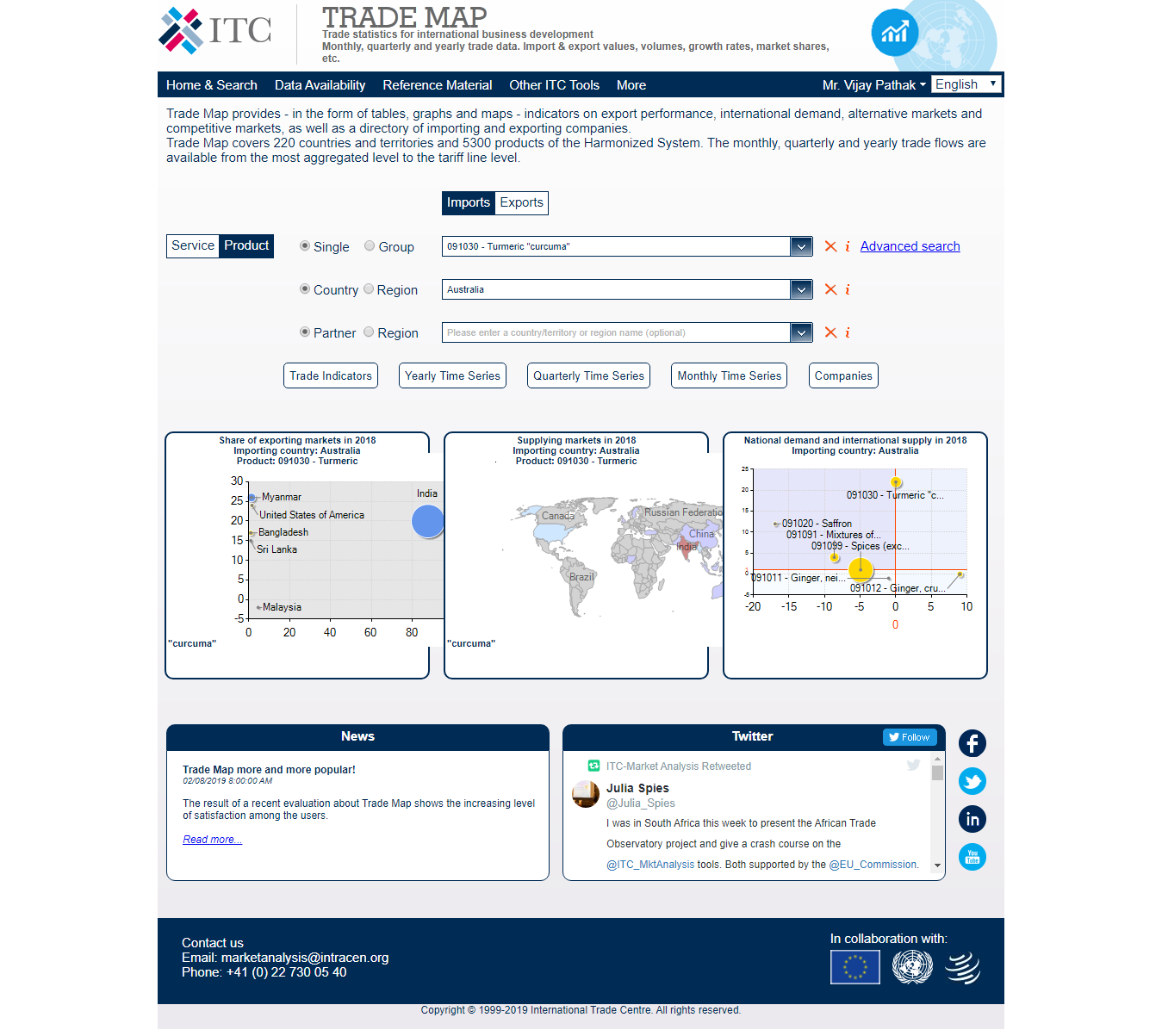
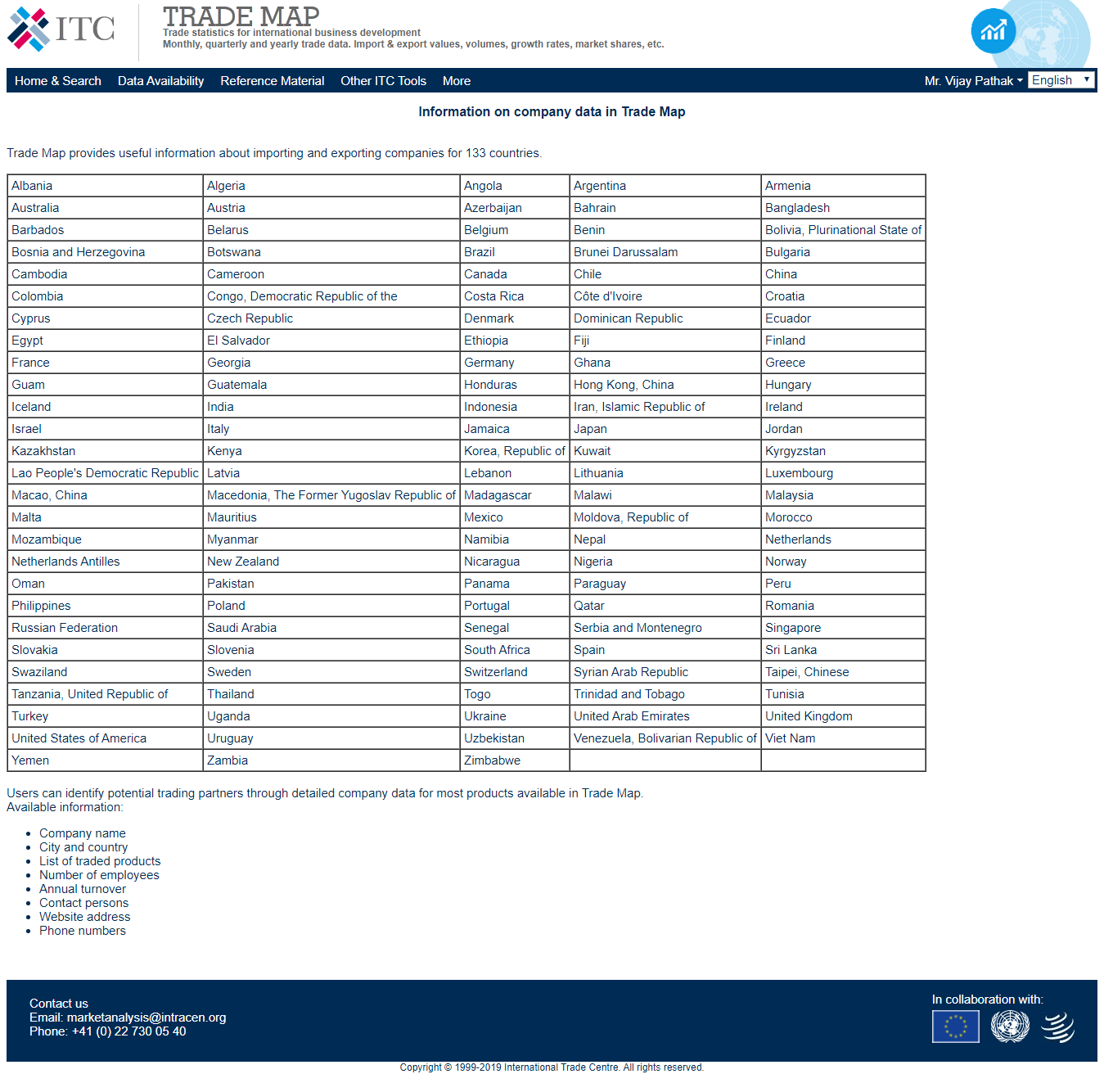


 Directorate General Of Foreign Trade | Ministry Of Commerce And Industry | Government Of India,Trade