A Comparative Analysis of Tariff Concessions offered by Sri Lanka to India under Various agreements signed by India & Sri Lanka

A Comparative Analysis of Tariff Concessions offered by Sri Lanka to
India under Various agreements signed by India & Sri Lanka
 
India and Sri Lanka enjoy a strong trade and investment relationship, with bilateral trade growing between the two countries. Trade trends for the last few years are placed below:
 
Values in US $ Millions
 
2006-07
(Apr-Mar)
2007-08
(Apr-Mar)
2008-09
(Apr-Mar)
2009-10
(Apr-Mar)
2010-11
(Apr-Mar)
2011-12(P)
(Apr-Jan)
EXPORT
2,258.30
2,830.43
2,425.92
2,188.01
4,039.90
3,612.97
%Growth
 
25.33
-14.29
-9.81
84.64
19.58*
IMPORT
470.33
634.96
356.57
392.19
501.73
623.64
%Growth
 
35.00
-43.84
9.99
27.93
56.15*
TOTAL TRADE
2,728.63
3,465.39
2,782.49
2,580.20
4,541.62
4236.61
Source: DOC: NIC
P: Provisional
*As compared to corresponding period i.e. Apr-Jan 2011
 
As per ITC trade data, Sri Lanka’s Global imports in 2010 were USD 12.35 billion and India was the top supplier to Sri Lanka accounting for 20.64 % of its total imports. Much of this could be attributed to the various bilateral and regional trading agreements that India has signed with Sri Lanka in the past.
 
India-Sri Lanka FTA
 
India-Sri Lanka Free Trade Agreement (ISLFTA), which was signed in 1998, has become operational in 2000.  Sri Lanka is India’s largest trading partner country in the SAARC region. The Agreement provides duty free market access to both the countries on a preferential basis in a phased manner.
 
The Free Trade Agreement has boosted the bilateral trade between India and Sri Lanka and also consolidated the close economic, commercial and political relations between the two countries through increased trade and investments.
 
Objectives:
 
  • To promote through the expansion of trade the harmonious development of the economic relations between India and Sri Lanka.
  • To provide fair conditions of competition for trade between India and Sri Lanka
  • In the implementation of this Agreement the Contracting Parties shall pay due regard to the principle of reciprocity
  • To contribute in this way, by the removal of barriers to trade, to the harmonious development and expansion of world trade 
SAPTA & SAFTA

The South Asian Association for Regional Cooperation (SAARC) comprising seven South Asian countries; Bangladesh, Bhutan, India, Maldives, Nepal, Pakistan and Sri Lanka was formed in 1985 with the adoption of its Charter at its first Summit in Dhaka, Bangladesh. It was created for the purpose of holding periodic, regional consultations on matters of mutual interest and to explore the possibility of cooperation in economics, social, cultural and other fields. The rationale was based on the success of similar regional groupings elsewhere and strength of the concerted action in international representation with enhanced competitive position ensued.
 
Following the Sixth SAARC summit held in Sri Lanka in 1991, an Inter-Governmental Group (IGG) was set up to prepare an agreement to establish a South Asian Preferential Trade Arrangement (SAPTA) by 1997. The framework agreement on SAPTA was approved in 1993 and implemented in December 1995, two years ahead of the scheduled.
 
SAPTA is a preferential trading arrangement, aims at promoting and sustaining mutual trade and economic cooperation through exchange of concession within the region through step-by-step approach. SAPTA was seen as a first step towards South Asian Free Trade Area (SAFTA) which was initially planned to establish before 2005. It was anticipated that SAPTA will facilitate greater specialisation and cost reduction generating substantial trade creation in the region in the view of significant tariff reductions and removal of other non tariff barriers (NTBs), given the existing complimentarity in resource endowment, technical
know-how and expanding production capability.
 
Agreement on South Asia Free Trade Area (SAFTA): The Agreement on South Asian Free Trade Area (SAFTA) came into force from 1st January, 2006. India, Pakistan and Sri Lanka are categorized as Non-Least Developed Contracting States (NLDCS) and Bangladesh, Bhutan, Maldives and Nepal are categorized as Least Developed Contracting States (LDCS). Afghanistan which became the eighth member of SAARC during the 14th SAARC Summit held on 3-4 April 2007 in New Delhi is due to become a party to the SAFTA Agreement as an LDC member.
 
Objectives:

The Objectives of this Agreement are to promote and enhance mutual trade and economic cooperation among Contracting States by, inter-alia:
 
  1. eliminating barriers to trade in, and facilitating the cross border movement of goods between the territories of the Contracting States;
  2. promoting conditions of fair competition in the free trade area, and ensuring equitable benefits to all Contracting States, taking into account their respective levels and pattern of economic development;
  3. creating effective mechanism for the implementation and application of this Agreement, for its joint administration and for the resolution of disputes; and
  4. establishing a framework for further regional cooperation to expand and enhance the mutual benefits of this Agreement.
 ASIA-PACIFIC TRADE AGREEMENT

(formerly known as the Bangkok Agreement)
 
The Asia-Pacific Trade Agreement (APTA), previously named the Bangkok Agreement, signed in 1975 as an initiative of ESCAP, is a preferential tariff arrangement that aims at promoting intra-regional trade through exchange of mutually agreed concessions by member countries namely Bangladesh, China, India, Republic of Korea, Lao People’s Democratic Republic and Sri Lanka. ESCAP functions as the secretariat for the Agreement.  
 
Objectives:

The objectives of this Agreement are to promote economic development through a continuous process of trade expansion among the developing member countries of ESCAP and to further international economic co-operation through the adoption of mutually beneficial trade liberalization measures consistent with their respective present and future development and trade needs.
 
(Details of all these agreements are available on Ministry of Commerce website i.e.www.commerce.nic.in)
 
FIEO had done a comparative Analysis of the tariff Concessions under the above three agreements. The analysis would assist Indian exporters to choose the agreement for exports of a particular tariff line product offering maximum concessions.
 
Analysis : (Please click)
 
 
Margin of preference: means the percentage difference between the Most-Favoured-Nation (MFN) rate of duty and the preferential rate of duty for the like product, and not the absolute difference between those rates.
How to become member of fieo i india

How to Become a Member of FIEO 
How to Become a Member of FIEO
FIEO’s membership rules are governed by the Government of India’s Foreign Trade Policy and FIEO’s Memorandum and Articles of Association.
Registration-cum-Membership Certificate (RCMC)
As per the Foreign Trade Policy, a Status Holder exporter is required to get a Registration-cum-Membership Certificate (RCMC) from FIEO for availing various benefits under the Policy. RCMC is also required for getting certain benefits from the Customs and Central Excise authorities. For registration purposes, FIEO has been recognized by the Government as an Export Promotion Council.
Exporters of Multiple Items
If an exporter desires to obtain an RCMC, he has to declare his main line of business in the application made to the Export Promotion Council relating to that line of business.

FIEO can issue the RCMC under its Multi Products Group Category, if the export products for which registration is sought fall under at least two product groups covered by two different export promotion councils. However, Registration with the Council concerned with his main line of business is compulsory in such cases.

Service Exporters

FIEO is the registering authority for Service exporters (providers) other than Service exporters of 14 specific services as listed in Appendix -2 of HBP Vol. I.
Exporters in State of Orissa
Orissa based exporters may obtain RCMC from FIEO Office in Bhubaneswar irrespective of product being exported by them.

Residual Products
In case an export product is not covered by any Export Promotion Council/Commodity Board, etc. RCMC in respect thereof is to be obtained from FIEO.
Advantages of Membership

By registering with FIEO, an exporter has the double advantage of getting the benefits under the Foreign Trade Policy, as also the benefit of FIEO’s services, 
(click here for the gist of FIEO’s services), facilities, credentials, and global reach.

An exporter, who does not wish to obtain the RCMC and claim benefits under the Foreign Trade Policy, can still be enrolled as a member of FIEO under its Individual Exporter Category.
The annual (April-March) membership subscription under different categories is as under:
1
Individual Exporter
Rs. 6,250/- *
2
Multi-Products Group
Rs. 6,250/- *
3
Service Providers
Rs. 6,250/- *
4
FTZ units/EOUs
Rs. 9,375/- *
5
One Star Export House
Rs. 9,375/- *
6
Two Star Export House
Rs.12,500/-*
7
Three Star Export House
Rs.25,000/-*
8
Four Star Export House
Rs.50,000/-*
9
Five Star Export House
Rs.93,750/-*
10
State Export Organization
Rs. 6,250/-*

HomeLinks and Resources Export Promotion Organisations in India Federation of Indian Export Organisations(FIEO)- Apex body of all Export Promotion Councils/Commodity Boards/Export Development Authorities(Export Promotion Organisations) in India

Comprehensive Workshop o­n Trade Data Analytics for EXIM decisions March 6, 2019 – New Delhi

I am pleased to inform you that FIEO (Northern Region) is organizing a Comprehensive Workshop  o­n “Trade Data Analytics for Exim Decisions”.
With rising global competition for firms in traditional products and markets it has become imperative to diversify both sectors/product and markets. The process of this shift from traditional products /markets to newer o­nes requires a systematic process.
This workshop therefore would equip the participants to identify right market by the use of o­nline databases and information o­n demand patterns, competitive price, competition, government policies, sector specific rules, tariffs, non tariff measures, IPR and other market access issues etc. Participants will find answers to certain strategic business queries in terms of what to export?  where to export?  when to export? whom to export? at what price to export? The workshop will also focus o­n  how to find sector specific incentives under MEIS scheme pricing, regulatory norms of importing countries in the form of environment, technology, social, quality, labor, finance compliance using practical business implications of the various trade agreements and WTO rules signed by India. The prime objective is to develop a full proof business plan towards this diversification process.
The workshop will also be useful for participants who wish to start their own business as export startups or emerge as efficient global expansion/ business development managers in IB division of the firms or global sourcing/procurement managers of trading firms operating across different sectors.
Dr Tamanna Chaturvedi, Professor from IIFT will be giving a detailed presentation o­n the above topics. In order to make the workshop more interactive and result oriented, it is suggested to bring your own laptop with data card and must know the excel format of the computer.
We regret for the inconvenience caused to you in this regard and shall shortly intimate the fresh date as soon as it is finalized.

Session on Cyber Crime and fraud in international tradeSession on Cyber Crime and fraud in international trade on 6th March 2019 [ Register for this Event ] On 06/03/2019 at FIEO (ER) Conference Room, 42A Shakespeare Sarani, Express Towers, 6th Floor, Kolkata 700017

Cybercrime is a fast-growing area of crime. More and more criminals are exploiting the speed, convenience and anonymity of the Internet to commit a diverse range of criminal activities that know no borders, either physical or virtual, cause serious harm and pose very real threats to victims worldwide.

New trends in cybercrime are emerging all the time, with estimated costs to the global economy running to billions of dollars. In the past, cybercrime was committed mainly by individuals or small groups. Today, we are seeing highly complex cybercriminal networks bring together individuals from across the globe in real time to commit crimes o­n an unprecedented scale.

Criminal organizations turning increasingly to the Internet to facilitate their activities and maximize their profit in the shortest time and they are evolving in line with the opportunities presented o­nline and therefore becoming more widespread and damaging.
In view of the rising trend of cyber crime and fraudulent payment, we are organising a session o­n “Cyber Crime and fraud in international trade”.

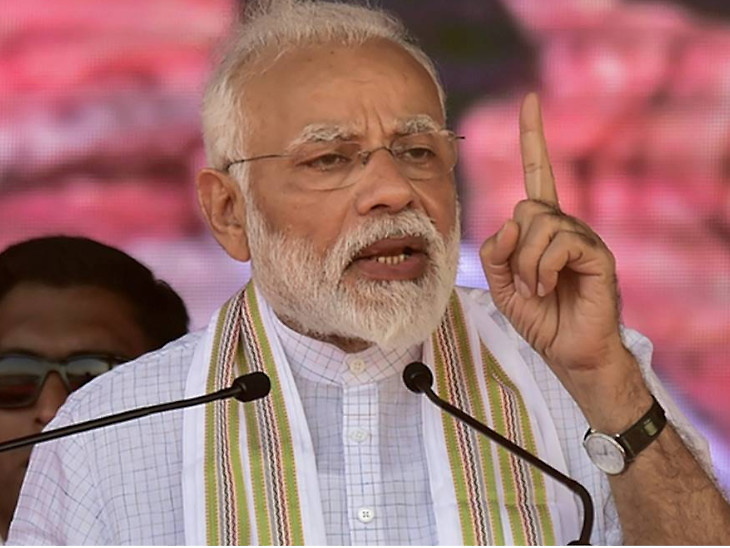
एक कार्ड से कर लेंगे देश में कहीं भी सफर, मोदी ने किया उद्घाटन

 अब आप एक ही स्मार्ट कार्ड से पूरे देश में कहीं भी सफर कर सकते हैं। प्रधानमंत्री नरेंद्र मोदी ने सोमवार को अहमदाबाद में One Nation One Card की शुरुआत की। अभी यह कार्ड अहमदाबाद में ही चलेगा, लेकिन जल्द ही ऐसे कार्ड से पूरे देश में कहीं भी सफर कर सकते हैं। दरअसल कुछ समय पहले ही मोदी सरकार ने वन नेशन वन कार्ड पॉलिसी लॉन्च की थी। इस पॉलिसी पर अब काम शुरू हो गया है। आइए, जानते हैं क्या है यह पॉलिसी और इससे आपको क्या फायदा – स्मार्ट कार्ड की तरह होगा यह कार्ड 
यह कार्ड एक स्मार्ट कार्ड जैसे कि डेबिट-क्रेडिट कार्ड की तरह होगा। दिल्ली में मेट्रो में ऐसा ही कार्ड चलता है, जिसे आप रिचार्ज कराते हैं और मेट्रो में सफर कर सकते हैं। अब यह कार्ड दिल्ली परिवहन निगम की कुछ बसों में भी चलने लगा है। 
पीएम मोदी ने किया लॉन्च 
प्रधानमंत्री नरेंद्र मोदी सोमवार को गुजरात दौरे पर हैं। यहां उन्होंने कई परियोजनाओं की शुरुआत की। अहमदाबाद में उन्होंने वन नेशन वन कार्ड की भी शुरुआत की। इस कार्ड को स्वीकार SWEEKAR  नाम दिया गया है।  इस कार्ड का इस्तेमाल मेट्रो, बस, सब अर्बन रेलवे, टोल, पार्किंग, स्मार्ट सिटी और रिटेल में किया जा सकता है। 

How to Start an Import/Export Business in india

Introduction
India’s Foreign Trade i.e. Exports and Imports are regulated by Foreign Trade Policy notified by Central government in exercise of powers conferred by section 5 of foreign trade (Development and Regulation) Act 1992. Presently Foreign Trade Policy 2015-20 is effective from 1st April, 2015.  As per FTD & R act, export is defined as an act of taking out of India any goods by land, sea or air and with proper transaction of money. 
STARTING EXPORTS
Export in itself is a very wide concept and lot of preparations is required by an exporter before starting an export business.  To start export business, the following steps may be followed:      
1) Establishing an Organisation
To start the export business, first a sole Proprietary concern/ Partnership firm/Company has to be set up as per procedure with an attractive name and logo.
2) Opening a Bank Account
A current account with a Bank authorized to deal in Foreign Exchange should be opened.
3) Obtaining Permanent Account Number (PAN)
It is necessary for every exporter and importer to obtain a PAN from the Income Tax Department. (To apply PAN Card Click Here)
4) Obtaining Importer-Exporter Code (IEC) Number
  • As per the Foreign Trade Policy, it is mandatory to obtain IEC for export/import from India. Para 2.05 of the FTP, 2015-20 lays down the procedure to be followed for obtaining an IEC, which is PAN based.
  • An application for IEC is filed online at www.dgft.go.in as per ANF 2A, online payment of application fee of Rs. 500/- through net Banking or credit/debit card is made along with requisite documents as mentioned in the application form.
5) Registration cum membership certificate (RCMC)
For availing authorization to import/ export or any other benefit or concession under FTP 2015-20, as also to avail the services/ guidance, exporters are required to obtain RCMC granted by the concerned Export Promotion Councils/ FIEO/Commodity Boards/ Authorities.
6) Selection of product
All items are freely exportable except few items appearing in prohibited/ restricted list.
After studying the trends of export of different products from India proper selection of the product(s) to be exported may be made.
7) Selection of Markets
An overseas market should be selected after research covering market size, competition, quality requirements, payment terms etc. Exporters can also evaluate the markets based on the export benefits available for few countries under the FTP. Export promotion agencies, Indian Missions abroad, colleagues, friends, and relatives might be helpful in gathering information.
8) Finding Buyers
Participation in trade fairs, buyer seller meets, exhibitions, B2B portals, web browsing are an effective tool to find buyers. EPC’s, Indian Missions abroad, overseas chambers of commerce can also be helpful. Creating multilingual Website with product catalogue, price, payment terms and other related information would also help.  
9) Sampling
Providing customized samples as per the demands of Foreign buyers help in getting export orders. As per FTP 2015-2020, exports of bonafide trade and technical samples of freely exportable items shall be allowed without any limit.
10) Pricing/Costing
Product pricing is crucial in getting buyers’ attention and promoting sales in view of international competition. The price should be worked out taking into consideration all expenses from sampling to realization of export proceeds on the basis of terms of sale i.e. Free on Board (FOB), Cost, Insurance & Freight (CIF), Cost & Freight(C&F), etc. Goal of establishing export costing should be to sell maximum quantity at competitive price with maximum profit margin.  Preparing an export costing sheet for every export product is advisable. 
11) Negotiation with Buyers
After determining the buyer’s interest in the product, future prospects and continuity in business, demand for giving reasonable allowance/discount in price may be considered. 
12) Covering Risks through ECGC
International trade involves payment risks due to buyer/ Country insolvency. These risks can be covered by an appropriate Policy from Export Credit Guarantee Corporation Ltd (ECGC). Where the buyer is placing order without making advance payment or opening letter of Credit, it is advisable to procure credit limit on the foreign buyer from ECGC to protect against risk of non-payment.(To know more about ECGC Click Here
Processing an Export Order
i. Confirmation of order
On receiving an export order, it should be examined carefully in respect of items, specification, payment conditions, packaging, delivery schedule, etc. and then the order should be confirmed. Accordingly, the exporter may enter into a formal contract with the overseas buyer.
ii. Procurement of Goods
After confirmation of the export order, immediate steps may be taken for procurement/manufacture of the goods meant for export. It should be remembered that the order has been obtained with much efforts and competition so the procurement should also be strictly as per buyer’s requirement.
iii. Quality Control
In today’s competitive era, it is important to be strict quality conscious about the export goods.  Some products like food and agriculture, fishery, certain chemicals, etc. are subject to compulsory pre-shipment inspection. Foreign buyers may also lay down their own standards/specifications and insist upon inspection   by their own nominated agencies. Maintaining high quality is necessary to sustain in export business.
iv. Finance
Exporters are eligible to obtain pre-shipment and post-shipment finance from Commercial Banks at concessional interest rates to complete the export transaction. Packing Credit advance in pre-shipment stage is granted to new exporters against lodgment of L/C or confirmed order for 180 days to meet working capital requirements for purchase of raw material/finished goods, labour expenses, packing, transporting, etc.   Normally Banks give 75% to 90% advances of the value of the order keeping the balance as margin.  Banks adjust the packing credit advance from the proceeds of export bills negotiated, purchased or discounted.
Post Shipment finance is given to exporters normally upto 90% of the Invoice value for normal transit period and in cases of usance export bills upto notional due date. The maximum period for post-shipment advances is 180 days from the date of shipment.  Advances granted by Banks are adjusted by realization of the sale proceeds of the export bills. In case export bill becomes overdue Banks will charge commercial lending rate of interest.
v. Labeling, Packaging, Packing and Marking
The export goods should be labeled, packaged and packed strictly as per the buyer’s specific instructions.  Good packaging delivers and presents the goods in top condition and in attractive way. Similarly, good packing helps easy handling, maximum loading, reducing shipping costs and to ensuring safety and standard of the cargo.  Marking such as address, package number, port and place of destination, weight, handling instructions, etc. provides identification and information of cargo packed.
vi. Insurance
Marine insurance policy covers risks of loss or damage to the goods during the while the goods are in transit. Generally in CIF contract the exporters arrange the insurance whereas for C&F and FOB contract the buyers obtain insurance policy.
vii. Delivery
It is important feature of export and the exporter must adhere the delivery schedule. Planning should be there to let nothing stand in the way of fast and efficient delivery.
viii. Customs Procedures
It is necessary to obtain PAN based Business Identification Number (BIN) from the Customs prior to filing of shipping bill for clearance of export good and open a current account in the designated bank for crediting of any drawback amount and the same has to be registered on the system.
In case of Non-EDI, the shipping bills or bills of export are required to be filled in the format as prescribed in the Shipping Bill and Bill of Export (Form) regulations, 1991. An exporter need to apply different forms of shipping bill/ bill of export for export of duty free goods, export of dutiable goods and export under drawback etc.
Under EDI System, declarations in prescribed format are to be filed through the Service Centers of Customs. A checklist is generated for verification of data by the exporter/CHA. After verification, the data is submitted to the System by the Service Center operator and the System generates a Shipping Bill Number, which is endorsed on the printed checklist and returned to the exporter/CHA. In most of the cases, a Shipping Bill is processed by the system on the basis of declarations made by the exporters without any human intervention. Where the Appraiser Dock (export) orders for samples to be drawn and tested, the Customs Officer may proceed to draw two samples from the consignment and enter the particulars thereof along with details of the testing agency in the ICES/E system.
Any correction/amendments in the check list generated after filing of declaration can be made at the service center, if the documents have not yet been submitted in the system and the shipping bill number has not been generated. In situations, where corrections are required to be made after the generation of the shipping bill number or after the goods have been brought into the Export Dock, amendments is carried out in the following manners.
1.    The goods have not yet been allowed “let export” amendments may be permitted by the Assistant Commissioner (Exports).
2.  Where the “Let Export” order has already been given, amendments may be permitted only by the Additional/Joint Commissioner, Custom House, in charge of export section.
In both the cases, after the permission for amendments has been granted, the Assistant Commissioner / Deputy Commissioner (Export) may approve the amendments on the system on behalf of the Additional /Joint Commissioner. Where the print out of the Shipping Bill has already been generated, the exporter may first surrender all copies of the shipping bill to the Dock Appraiser for cancellation before amendment is approved on the system.
ix. Customs House Agents
Exporters may avail services of Customs House Agents licensed by the Commissioner of Customs.  They are professionals and facilitate work connected with clearance of cargo from Customs.
x. Documentation
FTP 2015-2020 describe the following mandatory documents for import and export.
·         Bill of Lading/ Airway bill
·         Commercial invoice cum packing list
·         shipping bill/ bill of export/ bill of entry (for imports)
(Other documents like certificate of origin, inspection certificate etc may be required as per the case.)
xi. Submission of documents to Bank
After shipment, it is obligatory to present the documents to the Bank within 21 days for onward dispatch to the foreign Bank for arranging payment.  Documents should be drawn under Collection/Purchase/Negotiation under L/C as the case may be, along with the following documents
      Bill of Exchange
      Letter of Credit (if shipment is under L/C)
      Invoice
      Packing List
      Airway Bill/Bill of Lading
      Declaration under Foreign Exchange
      Certificate of Origin/GSP
      Inspection Certificate, wherever necessary
      Any other document as required in the L/C or by the buyer or statutorily.
xii. Realization of Export Proceeds
As per FTP 2015-2020, all export contracts and invoices shall be denominated either in freely convertible currency of Indian rupees, but export proceeds should be realized in freely convertible currency except for export to Iran.
Export proceeds should be realized in 9 months.

What is FIRC in export import business

What is FIRC in export import business
FIRC means Foreign Inward Remittance Certificate. Once your overseas client pays your sale proceeds to your account, a certificate is issued by your bank in this regard mentioning the details of remittance made by your client. This is a proof of receipt which is required to submit with various government authorities while applying for financial assistance and other government support.

Difference between EGM and IGM

Export General Manifest (EGM)

EGM in export trade means Export General Manifest. This is the document which has to be filed with customs department by shipping liners or air craft liners. Once your cargo crossed the border of your country, the ‘export’ taken place and government of the said country treat the said goods as ‘export’. As per customs point of view, once issued ‘let export order’ customs department allowed the cargo to move out of country. Further tracking on the cargo is not availabDifference between EGM and IGM le with the customs. In other words, issuing ‘let export order’ does not mean that cargo moved out of country.
The act of movement of cargo is carried out by the carrier of goods. Once after completion of customs formalities, goods are moved by the carrier. Once the cargo crossed border of the country, carrier intimates customs department by filing necessary documents regarding the departure of the goods with details of vessel/aircraft, date of sailing/flying etc. EGM is one of the proofs taken by customs department as proof of export while certifying the export promotion copy of shipping bill.  Also read EGM (Export General Manifest)   Difference between EGM and shipping bill
Import General Manifest (IGM)

If any goods arriving after crossing border to your country is called imports. Generally, imports are by air or sea. Once after arrival of goods at airport or sea port, the carrier has to intimate customs department of the respective country about the complete details of arrival of goods. This intimation is filed in a specified format instructed by customs department. Accordingly the carrier of goods files the details of cargo in specified format with customs immediately up on arrival of goods. This procedure is called import manifesting. Once after filing import manifest, the importer or his appointed customs broker files Bill of Entry with customs department to complete the customs procedures to take delivery of cargo. Once the procedures and formalities completed, the goods is ‘passed out of customs’. The importer can take delivery of goods with the permission of carrier.  Also read Import General Manifest (IGM)    Procedures to file IGM (Import General Manifest)     Difference between IGM and Gateway IGM
Design a site like this with WordPress.com
Get started